Research fees and document requirements before traveling.
Corruption remains a problem among customs and security personnel at some airports. Officials may insist that travelers pay fees or fines for fictitious violations. Some countries have strict requirements for certain documents, including vaccination records, and impose hefty (but legal) fines on travelers who do not have the required documents. If you are familiar with the published duties and fees, you can challenge the request for a fine. Bribes are illegal in every country- always use the term “fine” or “fee” when challenging the request for payment. If officials still insist on an additional fare, comply and pay the fine if the situation isn’t mitigated.
Stay vigilant entering the airport.
In places under constant threat, like Baghdad and Kabul, Afghanistan, security checkpoints begin miles from the terminal and include a myriad of scans, checks, and bomb-sniffing dogs. Following the Brussels airport bombing event, the airport added vehicle screening which occurs about a mile before the airport on the access road. US-based airports currently do not have street-side airport security; travelers can drive up to the terminal and use a convenient curbside bag-check. In this respect, it’s important to be aware of suspicious activity or baggage and report to airport security.
Be flexible.
While the aviation industry has made significant progress towards harmonizing aviation security screening standards across the world, some countries still have different procedures and standards. Travelers should not be alarmed if security procedures differ from those in their home country.
Be aware during bag check.
Have your ID at the ready and know the bag weight limit of the airline you’re flying. If prepared, you’re less likely to feel rushed or lose any belongings. Burglars have been known to hang around airports checking addresses to locate empty homes. It’s a good idea to make sure to hide your luggage tag so that passersby cannot view your home address.
Pack essentials in your carry-on.
To ensure the safekeeping of your electronics, medicine, and any other items that you will need access to during your flight, pack them in your carry-on. Keeping an eye on your carry-on is also important in wait lines. Bring a carry-on or purse that has a zipper to avoid a quick reach-and-grab. It may go without saying, but also never leave luggage unattended- even if someone next to you offers to watch it while you use the restroom.
Prepare for security checkpoints.
Once checked-in and in line for security, a standard rule of thumb is to take out electronics, cameras, and mobile devices and be ready to place them in a separate bin. Some checkpoint requirements are country-specific laws. For example, flights from some countries do not allow people to carry laptops in a carry-on. Other airports instruct the removal of shoes, belts, and anything metal. Know the security requirements of the places you are traveling to and from; you will be able to focus more on what is happening around you.
Move from landside to airside as quickly as possible.
Airside (post-security) areas of airports are less exposed to terrorism and crime than the landside, so travelers should try to get through from the landside to the airside as quickly as possible. Max Leitschuh, Sr. Intelligence Transportation Manager, says that passengers can take several steps to reduce their exposure to the possible threat of terrorist attacks in landside areas of airports. These include:
- Only bring carry-on luggage if possible
- Check in online before arriving at the airport
- Print boarding passes at home or send to a mobile device
- Proceed directly to security checkpoints after arriving at the airport instead of loitering in the landside areas
- Sign up for trusted traveler programs that are available (such as TSA Pre Check)
Passengers can sometimes use security checkpoints at terminals or concourses different from the scheduled flight concourse if they connect to the airside portion of the airport and the lines are shorter.
Be cognizant when you reach your destination.
Long flights, time differences, and travel itself can leave travelers tired. Be sure to take necessary steps to re-energize prior to arriving at your destination. This will allow you to stay alert as you transition from the airplane to the airport. Use peripheral vision to stay aware of your surroundings as you migrate through the airport. Make sure you only use official taxis or transportation that has been booked ahead of time. If staying at a hotel, pre-arrange an airport transfer using the hotel transportation service.
It’s important that travelers purchase insurance before embarking on a trip. Travel insurance covers emergency help if needed.
]]>Signs of Airline Financial Trouble
The exact timing of an airline’s cessation of operations is very difficult to predict, but travelers can discern some obvious signs that an airline is in serious financial trouble. While almost all airlines experience financial losses periodically, reports of missed payments to suppliers or lessors, aircraft groundings, and airlines missing payroll are all indicators that an airline is undergoing severe financial distress that exceeds normal financial issues. Other signs that an airline’s future may be in jeopardy include financial problems with an airline’s parent company, the withdrawal of a major investor, or the breakdown of an attempt to sell the airline. It should be noted, however, that such issues do not indicate that an airline’s bankruptcy is inevitable, as some airlines have experienced these issues and recovered from their precarious financial situations.
Missed payments to suppliers, employees, lessors, and authorities are clear signs that an airline may not be able to maintain its operations. Ensuring such payments is a top priority for an airline’s leadership; missing payments can result in suppliers or airports denying service to an airline, which can cause flight cancellations and other operational disruptions. Lessors may also repossess aircraft from airlines that miss payments. If airlines fail to pay maintenance providers or become unable to afford spare parts, they may be forced to ground aircraft for safety reasons, another sign that an airline may be unable to continue operations for much longer.
Financial problems at an airline’s parent company or the withdrawal of a major investor can also jeopardize an airline’s operations. Notable examples of this trend include the shutdown of Belgian flag carrier Sabena (SN) in 2001 after its parent company Swissair (SR) collapsed, and the shutdown of major Australian carrier Ansett Australia (AN) in the same year amid financial challenges at parent company Air New Zealand (NZ). Air New Zealand ultimately survived the crisis, but Ansett did not. More recently, several subsidiaries of Abu Dhabi’s flag carrier Etihad Airways (EY) have experienced major financial difficulties as a result of their parent company’s challenges. While Etihad itself is highly unlikely to cease operations thanks to strong financial backing from Abu Dhabi’s government, its subsidiaries Darwin Airline (F7), Air Berlin (AB), Niki (HG), and Jet Airways (9W) have all ceased operations in the last three years after Etihad withdrew funding for the carriers.
Travelers should take special notice if an airline they are flying on stops selling tickets, or if a bid to secure a last-ditch loan or investment for the airline fails. While some airlines have gone through such situations and survived, most have ceased operations shortly afterward. Thomas Cook’s failure occurred immediately after a deal to secure additional investment in the company collapsed and the British government rejected the company’s bid for a last-second loan. French carrier XL Airways France (SE) announced Sept. 19 that it was suspending ticket sales; the carrier has indicated that it will cease operations in the coming days unless it can secure a rescue deal.
A country’s bankruptcy laws and a government’s ability to assist financially distressed airlines can also impact airline shutdowns. US law allows bankrupt airlines to continue operating without interruption while they reorganize. Many other countries, however, do not have laws allowing bankrupt businesses to continue operating. The lack of such a law in Switzerland played a major role in Swissair’s downfall in 2001. Some struggling airlines can also turn to their countries’ governments for assistance in maintaining operations in the face of financial challenges, especially if they are one of the country’s main airlines or are state-owned. Some governments, however, are unwilling or unable to assist ailing carriers. EU laws prohibiting governments from providing unfair aid to private companies have played a direct role in multiple airline shutdowns in the past two decades.
Operational and Travel Impacts of Airline Failures
The impacts of airline failures on passengers depend on how prepared authorities are for the shutdown. A well-organized civil aviation authority who is prepared for an airline to cease operations can often accommodate all passengers relatively quickly. An unexpected shutdown, however, can force passengers to fend for themselves, both for getting to their destinations and obtaining refunds for canceled flights.
Civil aviation authorities that know in advance an airline is likely to cease operations can provide significant assistance to passengers. The UK government was aware of Thomas Cook’s likely demise several days in advance and developed a plan to immediately assign almost all Thomas Cook passengers stranded abroad to alternative flights, including special charter flights that authorities had arranged in advance. The UK government followed a similar plan when Monarch Airlines (ZB) ceased operations in 2017. The German government took even more extreme steps when Air Berlin failed in 2017; the government provided the carrier with a loan that allowed it to continue operations for another two months before shutting down in a controlled manner. In cases where governments aid passengers after an airline ceases operations, most of a government’s efforts focus on repatriating passengers stranded abroad; such operations generally do not provide flights to passengers who have yet to start their trips.
Disorganized airline shutdowns can leave passengers on their own to arrange travel back home. When Spanish carrier Primera Air (PF) ceased operations in 2018, the carrier simply stopped all flights, withdrew all staff from airports, deactivated its email addresses and phone numbers, and told passengers to not contact the airline. Passengers who do not receive government-arranged flights after an airline shuts down should arrange alternative transportation as quickly as possible. Alternative flights tend to book quickly after an airline ceases operations, especially if the number of alternative flights is limited. In some instances, airlines will add extra flights or use larger aircraft to accommodate the surge in passengers from a competitor’s demise, but travelers should not count on this, especially in the first day or two after their carrier ceases operations.
A traveler’s ability to get compensation or refunds for their canceled flights after an airline ceases operation depends on local laws. Some airlines will offer passengers refunds immediately after they cease operations or offer to compensate a passenger for tickets bought on a different carrier. In some countries, however, passengers will simply become creditors for the bankrupt airline. In such instances, passengers generally are among the last to receive money from the sale of the bankrupt carrier’s assets, as secured creditors such as banks and other lenders receive priority over customers in most jurisdictions.
Looking Ahead
While the airline industry has experienced some of its most prosperous years, several large airlines have failed. As the global economic conditions that allowed airlines to thrive show signs of change, airline failures are likely to be more common, especially in several major markets including India, Indonesia, and Argentina. The more challenging economic environment, including rising oil costs and an increase in the number of low-cost carriers, is likely to put financial pressure on airlines. The impacts of airline failures can vary considerably depending on how authorities in the airline’s home country react.
About WorldAware
WorldAware provides intelligence-driven, integrated risk management solutions that enable multinational organizations to operate globally with confidence. WorldAware’s end-to-end tailored solutions, integrated world-class threat intelligence, innovative technology, and response services help organizations mitigate risk and protect their people, assets, and reputations.
Background of Eco-activism
Mainstream climate activist groups like Greenpeace and more-covert groups like the Earth Liberation Front have been active for several decades. Their actions have included raising awareness, staging protests, disrupting fishing industries, and occasionally acts of arson. Climate activists have been generally committed to nonviolence and bottom-up change, especially because their ideas generally are well-accepted by the population and politicians in Western Europe and North America.
Contemporary Activism in Europe
New actors have emerged on the eco-activism scene over the past year in response to the increased visibility of climate change effects and a growing public perception that government responses are inadequate. These activists have, in a very short time frame, secured a large number of followers and brought substantial attention to the threats posed by climate change. Greta Thurnberg, a 16-year-old climate activist from Sweden, who began protesting outside the Swedish parliament in August 2018 to raise awareness on the need for immediate action to combat climate change, has over 2 million followers on Instagram and has attracted worldwide attention. Extinction Rebellion, a climate movement formed in October 2018, already has 250,000 followers on Instagram and has chapters all over the world. In the world of political activism on Instagram, this number of followers is significant, and has also grown rapidly; they have each amassed hundreds of thousands of followers in less than a year. This demonstrates interest among the population in following these types of accounts.
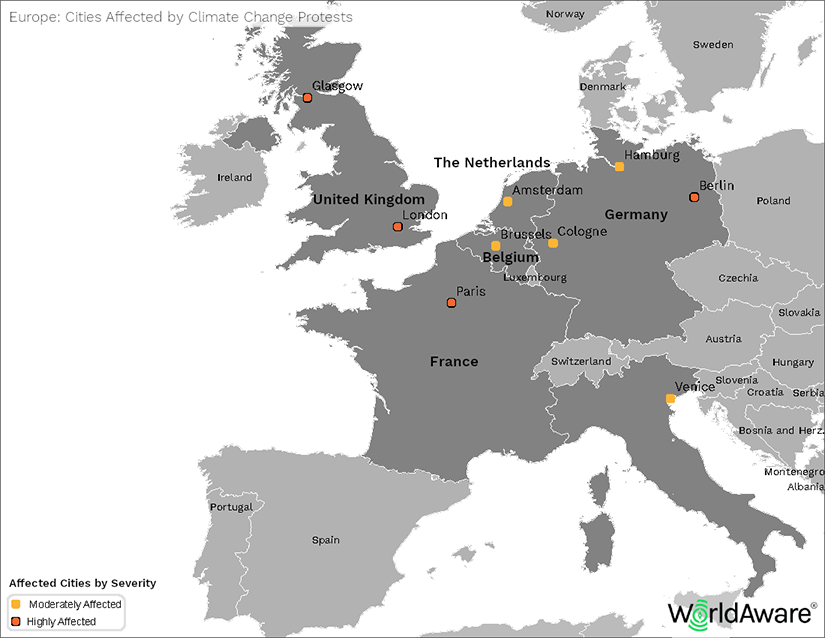
Both Thurnberg and Extinction Rebellion have directly or indirectly contributed to various climate activism actions. Students from across Europe, inspired by Greta, have protested every Friday since August 2018 under the motto “Fridays for Future” and gained traction when they skipped school for a day to take part in large demonstrations calling for action on climate change. Extinction Rebellion has staged disruptive actions in multiple counties, but primarily in the UK. The UK protests include blocking roads during rush hours and a demonstration in front of the Scottish Parliament when some activists chained themselves to street poles. Other, smaller grassroots organizations have undertaken similar actions. Smasscruiseshit, a small group of activists from Germany, used boats to block a large cruise ship in the port of Hamburg, Germany as they demanded curbs on the emissions caused by the cruise industry. Additionally, thousands in Venice protested the environmental damage caused to the Venetian lagoon by cruise ships.
So far, although disruptive, these actions have not caused significant property damage. Most of the actions are advertised on social media, which allows travelers to be warned in time to avoid disruptions. However, with momentum on the side of climate activists, actions are likely to become larger and more disruptive in the long and medium-term. This larger scale of action will likely cause it to be more difficult for travelers and businesses to avoid disruptive actions undertaken by climate activists.
Future of the Movement
Growing participation and frustration with the lack of results that peaceful activism is producing may undermine climate activism’s commitment to non-violence. The central grievance of many climate activist groups, the notion of a climate catastrophe that could result in food shortages, drought, and tens of millions of ecological refugees, has strengthened and encouraged the activists’ perceived need to act attention and more visibility. This resolve could lead eco-activists to undertake more drastic actions such as engage in sabotage, arson, and usage of improvised explosive devices against governments and large corporations, especially corporations that cause significant pollution and or contribute to the perceived climate catastrophe. More radical elements of the climate activism movement would commit to these sorts of attacks to draw more attention and visibility to their cause. Such attacks would become more likely if demands for more climate protection are not met. Travelers should avoid all protests as a routine security precaution and to mitigate associated disruptions. Those in the Europe should follow alerts for demonstrations and activities that might cause disruptions to supply chains. It would also behoove companies to monitor disruptive climate activism events in countries where they have assets.
]]>Severe Thunderstorm Classification
Thunderstorms are classified as “severe” when they produce one or more of the following:
- Wind gusts of 93 kph (58 mph) or greater
- Hailstones with a diameter of at least 2.5 cm (1 inch)
- A tornado
Severe thunderstorms are volatile weather systems that can result in serious damage to business and residential infrastructure. Depending on the strength and weather conditions a thunderstorm produces, prolonged disruptions to transportation and utility networks and business operations are possible. Frequent lightning, strong straight-line winds, flooding downpours, and hail are common during the passage of a severe thunderstorm.
Depending on atmospheric conditions, severe storms could also spawn destructive tornadoes. A tornado typically consists of a funnel-shaped cloud that reaches the ground. Winds associated with a tornado can exceed 322 kph (200 mph). Damage paths can be greater than 1.6 km (one mile) wide and 80 km (50 miles) long.
Business Continuity for Severe Thunderstorms
It is important to know how to effectively prepare for a severe weather event in order to protect life and property and ensure business resiliency following the passage of a storm. This includes conducting a severe thunderstorm hazard assessment ahead of time, categorizing all business assets, developing a severe thunderstorm risk assessment, and practicing site-specific emergency management plans.
Severe Thunderstorm Hazard Assessment
Understand the potential impacts on business operations by conducting a severe thunderstorm hazard assessment ahead of the storm. To do so, list what types of damage may be possible during the passage of a thunderstorm, ensuring all aspects of a storm are considered (hail, flooding, damaging winds, lightning, etc.). Assess the possibility of prolonged disruptions that might continue in the days following a severe thunderstorm (protracted power outages, supply chain disruptions, etc.).
Categorize all business assets that could potentially be exposed to severe thunderstorm activity and assess their degree of vulnerability. Note that thunderstorms (especially those that produce tornadoes) may cause direct losses to physical assets, indirect losses to business function (e.g., loss of production during recovery efforts), and intangible market losses (e.g., missed opportunity to sell to new buyers).
Severe Thunderstorm Risk Assessment
Develop a comprehensive severe thunderstorm risk assessment for your company that speaks to the vulnerability of exposed assets and outlines what are considered tolerable or unacceptable risks.
Use this information to perform a cost-benefit analysis to determine what mitigation measures would be best suited for your company, as well as what options are available to you to ensure business continuity during and after the passage of a storm. The two following tactics can support your risk assessment:
- Create inventories of products, equipment, and vehicles that might need to be moved to a safe location before a severe weather outbreak occurs.
- Ensure that critical datasets are backed up at a secure, offsite facility or through cloud storage.
Emergency Management Planning
Research, create, and practice site-specific emergency management plans to enact during the passage of a severe thunderstorm:
- Reference regional authorities’ local disaster management plans.
- Create a list of emergency contacts (emergency services, essential staff, and suppliers).
- Practice evacuation plans and safe-sheltering protocols to ensure employees are ready to act on short notice.
Always verify the details of your insurance coverage for hazards associated with severe thunderstorms. While your scheme may cover wind damage sustained during a passing thunderstorm, supplementary protection policies may be required for other threats such as flood and hail damage.
For more information on coping with thunderstorms, read our advice sheet on How to Prepare for Thunderstorms.
Click here to see the Enhanced Fujita Scale for tornadoes according to wind speed and damage created.
]]>Vaccines
Last-minute travel can affect which vaccinations a traveler is given prior to departure. Immunity generally takes two weeks to develop after vaccination, so individuals leaving during that window may not be completely protected from disease. Many travelers will have received standard routine vaccinations such as measles-mumps-rubella vaccine, polio vaccine, varicella vaccine, tetanus-diphtheria-pertussis vaccine, and seasonal influenza. However, if travelers are not completely up to date, the first or additional doses of these vaccines can be administered.
Certain vaccines that are given in multi-dose series can be protective after a single dose, which can be administered to last-minute travelers. Travelers can then complete the recommended series for these vaccinations upon return. Furthermore, some vaccines can be administered on an accelerated schedule and some series can be started before travel and completed after travel. Extended stay travelers or expatriates should receive guidance on clinics at the destination where their vaccination series can be completed. Bear in mind, however, that some vaccines do not have an accepted accelerated vaccination schedule.
The yellow fever vaccine is required by many countries in certain situations and must be administered at least 10 days before arrival at the destination country. Travelers may have to rearrange travel to accommodate this time frame or risk difficulty entering their destination. Further, travelers to the Hajj must obtain a visa that requires proof of meningococcal vaccine at least 10 days prior and less than three years before arriving in Saudi Arabia.

Food and Water Safety
Under the umbrella of basic health precautions, food and water safety are critically important. To avoid the risk of general foodborne illness, travelers should follow routine food hygiene practices. Ensure that food is properly handled and prepared. Wash raw produce before eating. Despite the cultural allure of many local cuisines, consider avoiding raw meat dishes, undercooked or raw fish and shellfish, and unpasteurized dairy products, which frequently harbor bacterial and parasitic pathogens. These precautions become even more important in areas where tap water is generally unsafe for consumption. Additionally, even in areas where water is potable, consider drinking bottled or purified water whenever possible, because travelers often develop diarrhea when exposed to the unfamiliar microorganisms in water from a new location.
Insect Precautions
The most common protection against vector-borne diseases is the use of insect repellents, most of which include DEET. Repellent should be applied to the neck, wrists, and ankles, while avoiding contact with the eyes, nose, and mouth. When applied to the skin, these repellents can last from 15 minutes to 10 hours, depending on the climate, the formulation of repellent used, and the effect of the specific repellent on specific vector species. Effects can be longer-lasting when applied to or impregnated into clothing.
Individuals should consider wearing long sleeved, light-colored shirts and pants to protect against mosquitoes, sandflies, and ticks. In tick-infested areas, pant legs should further be tucked into socks and heavy boots when walking through rural or forested areas. Additionally, clothing, bags, and other belongings should be examined thoroughly for ticks before entering the home, and individuals should bathe and conduct a full-body tick check within two hours of returning home, if possible.
Finally, individuals should avoid places and times when vectors are most active. For example, people can stay indoors during peak biting hours, such as dusk-to-dawn for malaria-carrying mosquitoes. Individuals can avoid walking in wooded areas with tall grass or underbrush where ticks are found and avoid contact with fresh water where schistosomiasis occurs. If such freshwater contact cannot be avoided, authorities recommend that individuals wear protective boots. Because several vector-borne diseases can be transmitted by contact with blood, secretions, organs, or other bodily fluids, individuals in affected areas should practice personal precautions and consider the safety of local blood supplies. Furthermore, in areas where Chagas disease or tick-borne encephalitis are endemic, individuals should avoid potentially contaminated food items.
Travel Health Kit
A medical first aid kit will help with minor injuries and give you a supply of common medications that may be difficult to acquire during travel. Medical kits should be easily accessible. If taking air travel, keep your first aid kit in your carry-on luggage; however, you may need to store sharp components in checked luggage due to security measures. Customize your kit to fit your travel (for example, trekking will pose different needs than visiting a city). Be sure to include supplies such as medications taken on a regular basis, over-the-counter pain relievers, antacids, bandages, antiseptic, cotton swabs, tweezers, scissors, disposable gloves, extra pair of eyeglasses or contacts, saline, sunglasses, thermometer, first aid quick reference card, and addresses and phone numbers of area hospitals or clinics. Additional supplies may be needed for outdoor/adventure travel, traveling with children, or other special cases.
Conclusions
Travelers – particularly those on urgent business – may not have the recommended four to six weeks prior to departure to consult with a travel medicine provider for the best preventative measures. Even with only a short window before leaving, travelers should seek advice from a travel medicine specialist. Travel medicine providers can brief the traveler about risks in the country and possible medications, vaccinations, and other precautions to take while abroad. Prior to departure, expatriates or those on extended-stay should consult medical providers for advice about equivalent medical care. Additionally, basic health precautions, insect precautions, food and water safety, and carrying a travel kit can help protect any traveler from health risks and are even more important for last-minute travelers.
What Really Matters
The most important factors in an airline’s safety standards go well beyond the airline’s safety record. An airline with strong safety standards should have a management team composed of experienced airline industry professionals. A safe airline needs to have a strong safety culture – the idea that safety comes before everything else, including profits and customer service. Safe airlines avoid risks. Aviation is one of the most risk-averse industries out there, and that’s a big reason why it’s also one of the safest. Finally, a safe airline needs to follow the rules. Aviation is a very by-the-book industry. There are rules for everything, and those rules often in place because of lessons learned in past accidents.
Evaluating an airline based on these factors requires dive deep into an airline’s operations to see how the airline performs on these issues, and most travelers don’t have the time or expertise to perform that deep dive. Fortunately, travelers aren’t the only ones who are interested in an airline’s safety. Governments, industry groups, and other international organizations regularly assess airlines’ safety standards; their findings can offer travelers a quick and easy understanding of whether their airline meets appropriate safety standards.
The Tools
There are six freely-available tools that travelers can quickly use to evaluate an airline’s operational and safety standards. Three of these tools are based on direct audits of the airline, while three are based on evaluations of the government that certifies and oversees the airline.
In order to fully understand these tools, a traveler should understand the importance of a civil aviation authority (CAA), the government body responsible for regulating all the airlines registered in its country. An example of a CAA is the Federal Aviation Administration (FAA) in the US. An effective CAA will set appropriate operational and safety standards for airlines under its jurisdiction, will have the capacity to inspect airlines and ensure they follow those standards, and will have the authority to ensure that airlines that do not meet the standards are not allowed to operate.
Not all CAAs are created equal. Some do a very good job, but others have major shortcomings. Travelers looking at an airline regulated by effective CAAs can have high confidence that the airline has appropriate safety standards, because the CAA won’t allow them to operate if they don’t have those. An airline from a country with an inadequate CAA can still have good safety standards; the airline just has to self-regulate, because the CAA isn’t going to do it. In those countries, travelers cannot assume that an airline has appropriate safety standards, because the CAA may let airlines with inadequate safety standards operate. Travelers therefore need more evidence that the airline’s safety standards are up to par.
Travelers can use three publicly-available tools to evaluate a country’s CAA: The International Aviation Safety Assessment (IASA), the List of Carriers Banned within the European Union, and the Universal Safety Oversight Audit Program (USOAP).
If a traveler still isn’t satisfied after evaluating the CAA that oversees an airline, the traveler can also look at the airline’s international certifications that are based on direct audits of the airline. The three audit-based tools are the IATA Operational Safety Audit (IOSA), the EU Third Country Operator (TCO) program, and an airline’s alliances and codeshares. Travelers should note, however, that these programs are voluntary, so a lack of such certifications is not necessarily a negative indicator for an airline’s operational and safety standards.
International Aviation Safety Assessment (IASA)
The IASA program run by the US Federal Aviation Administration (FAA) assesses whether the CAA in a country meets international standards; Category 1 is a pass, Category 2 is a fail. The IASA is updated continuously based on direct FAA audits of CAAs, and carries regulatory implications. Airlines from Category 1 countries can start new service to the US and new codeshares with US carriers, while airlines from Category 2 countries cannot, although they can continue existing services or to the US or codeshares with US carriers. The biggest problem with IASA is that is only lists countries with flights to the US or codeshares with US carriers, so there are numerous countries not listed in IASA. That doesn’t mean those countries have good or bad CAAs, it just means travelers need to look elsewhere for that information.
List of Carriers Banned within the European Union
The EU ban list is a frequently misunderstood tool. A lot of media sources refer to this as the “EU Airline Blacklist” and suggest that every airline on the list is there because the EU found major safety flaws with the carrier, but this perception is inaccurate. Instead of auditing airlines, the EU audits CAAs, and then bans all airlines from a country whose CAA fails the audit. There are a few airlines that are banned outside of those country-wide bans, but those are rare. An airline that gets caught up in a countrywide ban isn’t necessarily unsafe – it just means they don’t have an effective CAA overseeing and certifying their operations. Airlines from countries with blanket bans can request exemptions from the list, in which case the EU will perform a direct audit of the airline and will exempt it if the airline passes; an exemption is therefore a very positive indicator for an airline’s safety standards.
Universal Safety Oversight Audit Program (USOAP)
The USOAP program is run by the International Civil Aviation Organization (ICAO), the UN’s civil aviation arm. This program audits every CAA in the world and provides a breakdown of how each CAA scored in different categories of the audit. If a country performs particularly poorly in a safety-critical area, that country gets a red flag that designates them as a Significant Safety Concern. Unfortunately, the audits aren’t very frequent, and some of the data on the USOAP website is up to 10 years old.
IATA Operational Safety Audit (IOSA)
The IOSA program is run by the International Air Transport Association (IATA), the main global trade group for airlines. IOSA is a comprehensive audit program that airlines must pass in order to become IATA members. The program is based on direct audits of the airline, covers airlines around the world, and has been proven effective at ensuring strong operational and safety standards. Depending on the year, the accident rate for IOSA-certified carriers is usually about one-third that of non-IOSA carriers. Travelers should note that IATA gives such out two-letter IATA codes regardless of whether an airline is an IATA member; just because an airline has an IATA code does not necessarily mean that they’re an IATA member who has passed an IOSA audit.
EU Third Country Operator (TCO)
The TCO program is run by the EU’s European Aviation Safety Agency (EASA). For non-EU airlines to operate flights to EU destinations, they have to pass an EASA audit and receive this TCO authorization. Like IOSA, TCO authorization is based on a direct audit of an airline’s operations. The thoroughness of the audit depends on EASA’s confidence in the CAA of the airline’s home country. If EASA has confidence in the CAA, they may only do a quick review, but if they don’t have confidence they do a much more thorough audit.
Alliances and Codeshares
Membership in one of the big three airline alliances – oneworld, SkyTeam, or Star Alliance – is a very positive indicator for an airline’s safety standards, as the alliances put prospective members through safety audits. Codeshare agreements with major carriers are also a positive, as they show the major carrier trusts the other carrier’s safety standards enough to let their paying passengers fly on that carrier.
Conclusion
Air safety is the safest form of transportation available. In many operating environments, flying on an airline with inadequate safety standards is still the safest option for intercity transportation. However, travelers who put in the effort to seek out safer air travel options will reduce their chances of becoming victims of an aircraft accident, and the tools discussed above are a good way to start that effort.
If checking those six tools is still too much work, check out WorldAware’s Worldcue Airline Monitor, in which WorldAware’s analysts use 14 criteria to evaluate an airline’s safety and give it a Preferred or Not Preferred rating.
About WorldAware
WorldAware provides intelligence-driven, integrated risk management solutions that enable multinational organizations to operate globally with confidence. WorldAware’s end-to-end tailored solutions integrated world-class threat intelligence, innovative technology, and response services to help organizations mitigate risk and protect their employees, assets, and reputation.
Cabin Pressurization-related Incidents
Cabin pressurization incidents occur on a regular basis around the world, but the majority do not cause injuries. According to reports in The Aviation Herald database, nearly 50 incidents involving some issue with cabin pressure have occurred so far in 2018. Most of the depressurization incidents this year involved a failure to pressurize the cabin as the aircraft climbed or a gradual loss of cabin pressure while the aircraft was at altitude. Only three known incidents caused injuries, most notably, the April 17 incident on Southwest Airlines (WN) Flight 1380 that resulted in the death of a passenger.
Health Effects of Depressurization
Most cabin depressurization incidents do not cause long-term health impacts; however, rare instances can result in severe injury or death. The most serious health threat in cabin depressurization incidents is hypoxia, or a lack of sufficient oxygen. Hypoxia can cause numerous symptoms, including breathlessness, fatigue, and impaired decision-making and physical functioning. Sustained hypoxia can eventually cause loss of consciousness and death.
Cabin depressurization can cause injuries to passengers’ ears due to the sudden change in air pressure. Such injuries can be very painful, but generally, do not cause long-term health impacts. Nausea is another common symptom of cabin depressurization and usually subsides after the aircraft lands.
An explosive decompression that causes a large breach in the airliner’s fuselage can suck an individual out of a plane, either partially or completely. Such instances are very rare on commercial airliners. An individual sucked out of a plane faces a very high probability of dying, though some have survived.
Mitigation Measures to Protect Travelers
Passengers can take several steps to protect themselves in the event of cabin depressurization. The required steps are simple, but passengers must complete them quickly, especially if the aircraft suddenly loses cabin pressure.
Passengers must don oxygen masks quickly after an airliner loses cabin pressure, as the effects of hypoxia may impair their ability to do so after a short time. Studies have shown that hypoxia following a sudden loss of cabin pressure in an airliner at cruise altitude can begin impairing a person’s functioning and decision-making in as little as eight seconds. Within 30 seconds, passengers may become so impaired they are unable to perform simple tasks such as putting on an oxygen mask. Passengers should ensure that the oxygen mask is worn properly so that it covers both the nose and mouth.
One way passengers can ensure familiarity with oxygen masks in an emergency is to pay attention to the preflight safety briefing and review the safety information card provided by the airline.
Passengers should also heed the instruction to put on their own oxygen mask before helping others put on their masks. Passengers who have put on their own oxygen masks will be fully capable of helping others in nearby seats, but passengers who do not may become impaired before they are able to help others or themselves.
In the very rare instance of an explosive decompression, wearing seatbelts increases passengers’ chances of survival. Seatbelts do not provide absolute protection to passengers; media reports indicate that the passenger killed on Southwest Flight 1380 was wearing her seatbelt. However, seatbelts have protected passengers in some explosive decompression incidents. The most notable such incident involved Aloha Airlines (AQ) Flight 243 in 1988, in which all passengers who had their seat belts fastened survived an explosive decompression that blew off a large portion of the aircraft’s forward fuselage.
WorldAware’s Global Intelligence solutions are designed to help you protect your personnel and ensure you can operate globally with confidence. Our Worldcue® Airline Monitor and quarterly Airline Safety Newsletter provide business leaders with two powerful tools to make decisions about airline carrier safety and help reduce travel risk across the organization.
A more in-depth version of this piece was featured in our most-recent Airline Safety Newsletter.
About WorldAware
WorldAware provides intelligence-driven, integrated risk management solutions that enable multinational organizations to operate globally with confidence. WorldAware’s end-to-end tailored solutions integrate world-class threat intelligence, innovative technology, and response services to help organizations mitigate risk and protect their employees, assets, and reputation.
Vaccinations and Herd Immunity
While vaccinations are important to protect individual human capital, they are critical for broader, continued corporate productivity. Vaccinations have a direct effect on individuals by providing them with a defense, or immunity, against disease. Yet, vaccinations also have an indirect protective effect on other individuals in the corporate setting. For example, when a high proportion of employees are vaccinated, they potentially prevent the spread of disease within the workplace by establishing a protective barrier around those who are not vaccinated and/or have not built up sufficient defenses against disease. In the science community, we call this concept herd immunity.
The modern corporate workplace is threatened by local and international infectious diseases. Local disease outbreaks have the potential to expose a high proportion of employees to an infectious disease; therefore, herd immunity is extremely important for maintaining a corporate protective barrier against outbreaks. Corporate health is equally jeopardized by international disease threats when unprotected individual employees travel abroad. Upon return, those employees can threaten productivity by exposing others to the imported infectious agent.

International Travelers & Recommended Vaccinations
International travelers regardless of their destination should ensure that they are up to date on the vaccines listed below. It is important to note that healthcare providers will likely add additional vaccinations to those listed below, such as yellow fever and Japanese encephalitis, if these vaccines are required by the traveler’s host country and/or if the disease is endemic in the destination country. Furthermore, employers should encourage all international travelers to contact a physician who has expertise in travel medicine four to six weeks prior to travel. This will allow enough time for the traveler to complete any vaccine series as well as give their body time to build up immunity.
- Chickenpox (Varicella): Recommended for travelers without a history of chickenpox or evidence of immunity to chickenpox by blood test. This vaccine is administered as a two-dose series.
- Hepatitis A: This vaccine is included in routine children’s immunizations. The Hepatitis A vaccination is most important for travelers who are traveling to countries with an intermediate to high prevalence of Hepatitis A. This vaccine is administered as a two-dose series. A Hepatitis A/Hepatitis B combined vaccine is also available.
- Hepatitis B: Recommended for all unvaccinated persons who might be exposed to blood or body fluids, have sexual contact with the local population, or be exposed through medical treatment, such as for an accident, even in developed countries, and for all adults requesting protection from HBV infection. The Hepatitis B vaccination is most important for travelers who are traveling to countries with an intermediate-to-high prevalence of Hepatitis B. This vaccine is administered as a three-dose series. A Hepatitis A/ Hepatitis B combined vaccine is also available.
- Influenza: Recommended for all travelers over the age 50, very young children, and/or travelers of all ages who have a chronic disease such as diabetes or emphysema. This vaccination is administered annually.
- Measles, mumps, rubella (MMR): Recommended for travelers born after 1957, and those who did not have these diseases as children. People born before 1957 generally acquired immunity to these diseases in childhood. This vaccine is administered as a two-dose series.
- Pertussis (Whooping Cough): This vaccine is included in routine children’s immunizations with tetanus and diphtheria (see below). It is also now available for adults in combination with the tetanus/ diphtheria booster.
- Pneumococcal pneumonia: Recommended for all adults over age 65, and anyone with chronic disease. Physicians in the US also recommend this vaccination for smokers and anyone with asthma.
- Tetanus and diphtheria: A booster is recommended every 10 years after initial immunization series.
Infectious diseases have the potential to greatly impact business productivity by eroding and diminishing human capital on an individual and corporate level. Since infectious diseases are a constant threat to the bottom line of every business, it is imperative that businesses monitor local and international disease threats, and adopt proactive healthcare measures. For that reason, thoughtful proactive disease prevention protocols are key to eliminating threats posed by local and international infectious diseases.
To learn more about how health inelligence can help protect your corporate workplace and global travelers from disease threats, download a copy of our white paper, The Value of Health Intelligence.
]]>To ensure an effective outcome can be consistently achieved, two core questions must be answered Are crisis management and response capabilities resourced, trained, exercised, and continuously available for use? and Are mechanisms in place to effectively monitor and communicate changes within the organizational process risk profile? The level of effort and leadership focus the organization commits to managing and communicating changes within the risk profile will largely define response effectiveness and set the conditions for all that is to follow.
Crisis Capabilities
Crisis is a cascading series of events for which there is no preplanned mitigation. An organization can best prepare for crisis by developing and refining its processes used to communicate and implement ad hoc mitigation strategies. There are two components to crisis management: organizational and operational. Organizationally, resources and support from executive leadership are required to develop the policies, plans, and procedures needed to establish a crisis management capability. Operationally, these capabilities need ongoing training, exercises, after action reviews and improvement plans to achieve and maintain response effectiveness. These skills are refined by focusing on a feedback loop to identify best practices, overcome lessons learned and reinforce the trust and confidence of stakeholders.
The manner and means in which the feedback loop is applied (throughout the planning, implementation, and post-plan continuum) demands timely and precise adjustments. These adjustments require relative risk be assessed and monitored for changes in the risk profile which aids crisis avoidance. However, some choose to limit their actions by mitigating obvious risk, accepting best practices from other organizations, and assuming since no incidents have occurred, relative risk is adequately mitigated. This methodology (defined by iJET as Spurious Risk Management) creates the dangerous illusion that risk has been sufficiently addressed while unknowingly creating an opportunity for significant peril.
Operational environments are evolving into increasingly complex networks of interdependent assets performing at an escalated pace. Thus, the organizations ability to respond to crisis is paramount to the protection of assets; while preparation, monitoring, response, and recovery planning are reconciled as the organization changes direction or expands. Moving crisis management from a capability to demonstrated effectiveness allows the organization to maintain the balance between proactive and reactive response efforts. This provides the operational agility necessary to pursue opportunities based on stakeholder demands and the evolutionary pace of the organizations industry. Effective crisis management enables the organization to respond to disruptions that cannot be predicted and to industry events affecting assets in an environment where formal risk mitigation capability has yet to be developed. Once achieved, this capabilitys level of effectiveness is measured by the feedback derived from drills, exercises, and after action reviews (AARs) of actual events. This process provides the knowledge and experience needed for effective crisis management. The output from these initiatives builds stakeholder trust by collectively demonstrating the attainment of crisis management and response competencies. These competencies translate into confidence when a crisis occurs. As crisis is a dynamic condition where preplanned mitigation or response capabilities are exceeded, it is paramount those involved in crisis response fully understand the organizational span of control, areas of influence, and the environmental canvas – (Figure 1).

These dynamics ultimately dictate the levels of success and failure:
Span of Control The location and resources the organization has the authority to directly control to reduce or inhibit the stressors impact on an organizational asset or operation.
Area of Influence The location and resources the organization can directly influence the actions, or an ability to act, to reduce or inhibit the stressors impact on the organizations asset or operation.
Environmental Canvas Conditions in relation to time, place, and purpose where an organization and its assets operate, or desires to operate. (This dictates the proactive mitigations for foreseeable stressors as well as the reactive resources required to return to normalcy when preplanned mitigations are exceeded.)
These dynamics also directly affect efforts to achieve stakeholder demands. This requires the organization to have the capability to monitor for changes in the risk profile. To leverage this capability, the organization must first set clear parameters so the monitoring asset initiating the notification of change understands the mitigation threshold has beenor is about to be, exceeded.
Monitoring Change
Historically, shifts in an organizations risk profile are attributed to changes in a potential disruptors presence or intensity. While there may be an effective plan to address these changes, monitoring is a critical component. Without this capability, changes in the risk profile could unknowingly surge beyond the capabilities of proactive mitigation strategies. This can lead to cascading effects that impact life safety, organizational assets, and degrade the performance of essential functions. Effective monitoring provides the awareness needed to proactively address deviations in stressor characteristics at the lowest possible level of intensity. This provides time to mitigate residual vulnerabilities that were accepted; and thus, preclude the opportunity for crisis. In conditions where the stressor presents with a sudden onset, effective monitoring improves the ability to inhibit or limit the degree of impact the stressor exerts upon the asset or operation.
However, some organizations profess a consistent level of monitoring for crisis has been achieved without providing the requisite evidence to demonstrate its effectiveness. In the RIMS Executive Report, Exploring Risk Appetite and Risk Tolerance, the authors present the financial crisis of 2008-09 contains examples of those who knowingly or unwittingly accepted significant risk which led to severe consequences. In the post mortem, many organizations were found to have used spurious risk management practices in developing their risk appetite statements. While those risk managers appeared to know the tactics for managing risk, their lack of understanding its precepts created inaccuracies in risk acceptance at the individual, departmental, and enterprise levels. Spurious risk management, at its core, accepts unanalyzed risk factors or incomplete risk forecasts in shaping and sustaining the organization and its operations.
As with all major crises, the 2008-09 financial crisis renewed public and private sector interest in monitoring risk management activities. Performing these actions are well-founded and advised to leverage the organizations capacity to deliver products and services. Unfortunately, many still fail to acknowledge the fact that risk is neverstatic and its management is an evolving organizational process, not a one-time event. When assessing an organization for indications of spurious risk management, the primary characteristics are: addressing only low hanging fruit, adopting a once and done mindset, and the inability to adequately characterize the environmental canvas (e.g. the arrangement of assets and resources in time, place, and purpose).
There is another aspect often underrepresented in receiving the attention warranted; evaluating an organizations remaining capacity to handle unforecasted risk and/or stressors is a key factor in measuring organizational resilience given current efforts and operating tempo. More specifically, without the means to monitor risk capacity, the likelihood of an event whose magnitude and severity will lead to crisis is significant. Monitoring this condition ensures the organization maintains the mitigations necessary to hold or improve its risk position within the goals it desires to pursue. Further, this activity enables the likelihood the organization can sustain its essential functions and mount an effective response should the need arise to return a disrupted asset or operation to a state of normalcy.
Effective Response
An effective response limits the impact imposed by the initial disruptor. The primary objective is to separate the impacted asset or operation from the stressor. To achieve this, effective communications are essential. Initial communications advise how the asset or operation is being affected by the disruptor, who is being impacted, and to what extent. Accurate follow-up communications are key to avoid the unnecessary expenditure of resources, control the flow of information, and reduce fears and tension by answering unknowns in a timely manner. To prioritize resources and sequence the response, continuously assess the situation using the following model – (Figure 2).

Figure 2 Continuous Assessment
When assets or operations are impacted to a degree that exceeds existing protective measures, crisis response must analyze the risk profile, develop a plan to separate the asset or operation from the stressor, and allocate the requisite resources to ensure successful mitigation. As crisis is defined as a series of such activities, response must periodically review the progress of mitigation efforts, determine the level of effectiveness, and then reassess any assets whose risk profile remains at an unacceptable level. Once all assets have been separated from the stressor, the response is concluded.
Conclusion
Crisis, by its nature, brings ad hoc response. Creating a proactive environment, developing interoperability, maintaining resources, and constantly monitoring the risk profile collectively reduces response times and limits cascading effects. Speed must be balanced with deliberate decision-making. Unwarranted acceleration can lead to unnecessary risk, reduce stakeholder confidence, and require additional resources. The development of a crisis management and response capability, establishing it as a budgeted line-item, and routinely evaluating its effectiveness will go far in securing stakeholder trust and solidifying confidence that the organization can respond to crisis effectively.