Research fees and document requirements before traveling.
Corruption remains a problem among customs and security personnel at some airports. Officials may insist that travelers pay fees or fines for fictitious violations. Some countries have strict requirements for certain documents, including vaccination records, and impose hefty (but legal) fines on travelers who do not have the required documents. If you are familiar with the published duties and fees, you can challenge the request for a fine. Bribes are illegal in every country- always use the term “fine” or “fee” when challenging the request for payment. If officials still insist on an additional fare, comply and pay the fine if the situation isn’t mitigated.
Stay vigilant entering the airport.
In places under constant threat, like Baghdad and Kabul, Afghanistan, security checkpoints begin miles from the terminal and include a myriad of scans, checks, and bomb-sniffing dogs. Following the Brussels airport bombing event, the airport added vehicle screening which occurs about a mile before the airport on the access road. US-based airports currently do not have street-side airport security; travelers can drive up to the terminal and use a convenient curbside bag-check. In this respect, it’s important to be aware of suspicious activity or baggage and report to airport security.
Be flexible.
While the aviation industry has made significant progress towards harmonizing aviation security screening standards across the world, some countries still have different procedures and standards. Travelers should not be alarmed if security procedures differ from those in their home country.
Be aware during bag check.
Have your ID at the ready and know the bag weight limit of the airline you’re flying. If prepared, you’re less likely to feel rushed or lose any belongings. Burglars have been known to hang around airports checking addresses to locate empty homes. It’s a good idea to make sure to hide your luggage tag so that passersby cannot view your home address.
Pack essentials in your carry-on.
To ensure the safekeeping of your electronics, medicine, and any other items that you will need access to during your flight, pack them in your carry-on. Keeping an eye on your carry-on is also important in wait lines. Bring a carry-on or purse that has a zipper to avoid a quick reach-and-grab. It may go without saying, but also never leave luggage unattended- even if someone next to you offers to watch it while you use the restroom.
Prepare for security checkpoints.
Once checked-in and in line for security, a standard rule of thumb is to take out electronics, cameras, and mobile devices and be ready to place them in a separate bin. Some checkpoint requirements are country-specific laws. For example, flights from some countries do not allow people to carry laptops in a carry-on. Other airports instruct the removal of shoes, belts, and anything metal. Know the security requirements of the places you are traveling to and from; you will be able to focus more on what is happening around you.
Move from landside to airside as quickly as possible.
Airside (post-security) areas of airports are less exposed to terrorism and crime than the landside, so travelers should try to get through from the landside to the airside as quickly as possible. Max Leitschuh, Sr. Intelligence Transportation Manager, says that passengers can take several steps to reduce their exposure to the possible threat of terrorist attacks in landside areas of airports. These include:
- Only bring carry-on luggage if possible
- Check in online before arriving at the airport
- Print boarding passes at home or send to a mobile device
- Proceed directly to security checkpoints after arriving at the airport instead of loitering in the landside areas
- Sign up for trusted traveler programs that are available (such as TSA Pre Check)
Passengers can sometimes use security checkpoints at terminals or concourses different from the scheduled flight concourse if they connect to the airside portion of the airport and the lines are shorter.
Be cognizant when you reach your destination.
Long flights, time differences, and travel itself can leave travelers tired. Be sure to take necessary steps to re-energize prior to arriving at your destination. This will allow you to stay alert as you transition from the airplane to the airport. Use peripheral vision to stay aware of your surroundings as you migrate through the airport. Make sure you only use official taxis or transportation that has been booked ahead of time. If staying at a hotel, pre-arrange an airport transfer using the hotel transportation service.
It’s important that travelers purchase insurance before embarking on a trip. Travel insurance covers emergency help if needed.
]]>Signs of Airline Financial Trouble
The exact timing of an airline’s cessation of operations is very difficult to predict, but travelers can discern some obvious signs that an airline is in serious financial trouble. While almost all airlines experience financial losses periodically, reports of missed payments to suppliers or lessors, aircraft groundings, and airlines missing payroll are all indicators that an airline is undergoing severe financial distress that exceeds normal financial issues. Other signs that an airline’s future may be in jeopardy include financial problems with an airline’s parent company, the withdrawal of a major investor, or the breakdown of an attempt to sell the airline. It should be noted, however, that such issues do not indicate that an airline’s bankruptcy is inevitable, as some airlines have experienced these issues and recovered from their precarious financial situations.
Missed payments to suppliers, employees, lessors, and authorities are clear signs that an airline may not be able to maintain its operations. Ensuring such payments is a top priority for an airline’s leadership; missing payments can result in suppliers or airports denying service to an airline, which can cause flight cancellations and other operational disruptions. Lessors may also repossess aircraft from airlines that miss payments. If airlines fail to pay maintenance providers or become unable to afford spare parts, they may be forced to ground aircraft for safety reasons, another sign that an airline may be unable to continue operations for much longer.
Financial problems at an airline’s parent company or the withdrawal of a major investor can also jeopardize an airline’s operations. Notable examples of this trend include the shutdown of Belgian flag carrier Sabena (SN) in 2001 after its parent company Swissair (SR) collapsed, and the shutdown of major Australian carrier Ansett Australia (AN) in the same year amid financial challenges at parent company Air New Zealand (NZ). Air New Zealand ultimately survived the crisis, but Ansett did not. More recently, several subsidiaries of Abu Dhabi’s flag carrier Etihad Airways (EY) have experienced major financial difficulties as a result of their parent company’s challenges. While Etihad itself is highly unlikely to cease operations thanks to strong financial backing from Abu Dhabi’s government, its subsidiaries Darwin Airline (F7), Air Berlin (AB), Niki (HG), and Jet Airways (9W) have all ceased operations in the last three years after Etihad withdrew funding for the carriers.
Travelers should take special notice if an airline they are flying on stops selling tickets, or if a bid to secure a last-ditch loan or investment for the airline fails. While some airlines have gone through such situations and survived, most have ceased operations shortly afterward. Thomas Cook’s failure occurred immediately after a deal to secure additional investment in the company collapsed and the British government rejected the company’s bid for a last-second loan. French carrier XL Airways France (SE) announced Sept. 19 that it was suspending ticket sales; the carrier has indicated that it will cease operations in the coming days unless it can secure a rescue deal.
A country’s bankruptcy laws and a government’s ability to assist financially distressed airlines can also impact airline shutdowns. US law allows bankrupt airlines to continue operating without interruption while they reorganize. Many other countries, however, do not have laws allowing bankrupt businesses to continue operating. The lack of such a law in Switzerland played a major role in Swissair’s downfall in 2001. Some struggling airlines can also turn to their countries’ governments for assistance in maintaining operations in the face of financial challenges, especially if they are one of the country’s main airlines or are state-owned. Some governments, however, are unwilling or unable to assist ailing carriers. EU laws prohibiting governments from providing unfair aid to private companies have played a direct role in multiple airline shutdowns in the past two decades.
Operational and Travel Impacts of Airline Failures
The impacts of airline failures on passengers depend on how prepared authorities are for the shutdown. A well-organized civil aviation authority who is prepared for an airline to cease operations can often accommodate all passengers relatively quickly. An unexpected shutdown, however, can force passengers to fend for themselves, both for getting to their destinations and obtaining refunds for canceled flights.
Civil aviation authorities that know in advance an airline is likely to cease operations can provide significant assistance to passengers. The UK government was aware of Thomas Cook’s likely demise several days in advance and developed a plan to immediately assign almost all Thomas Cook passengers stranded abroad to alternative flights, including special charter flights that authorities had arranged in advance. The UK government followed a similar plan when Monarch Airlines (ZB) ceased operations in 2017. The German government took even more extreme steps when Air Berlin failed in 2017; the government provided the carrier with a loan that allowed it to continue operations for another two months before shutting down in a controlled manner. In cases where governments aid passengers after an airline ceases operations, most of a government’s efforts focus on repatriating passengers stranded abroad; such operations generally do not provide flights to passengers who have yet to start their trips.
Disorganized airline shutdowns can leave passengers on their own to arrange travel back home. When Spanish carrier Primera Air (PF) ceased operations in 2018, the carrier simply stopped all flights, withdrew all staff from airports, deactivated its email addresses and phone numbers, and told passengers to not contact the airline. Passengers who do not receive government-arranged flights after an airline shuts down should arrange alternative transportation as quickly as possible. Alternative flights tend to book quickly after an airline ceases operations, especially if the number of alternative flights is limited. In some instances, airlines will add extra flights or use larger aircraft to accommodate the surge in passengers from a competitor’s demise, but travelers should not count on this, especially in the first day or two after their carrier ceases operations.
A traveler’s ability to get compensation or refunds for their canceled flights after an airline ceases operation depends on local laws. Some airlines will offer passengers refunds immediately after they cease operations or offer to compensate a passenger for tickets bought on a different carrier. In some countries, however, passengers will simply become creditors for the bankrupt airline. In such instances, passengers generally are among the last to receive money from the sale of the bankrupt carrier’s assets, as secured creditors such as banks and other lenders receive priority over customers in most jurisdictions.
Looking Ahead
While the airline industry has experienced some of its most prosperous years, several large airlines have failed. As the global economic conditions that allowed airlines to thrive show signs of change, airline failures are likely to be more common, especially in several major markets including India, Indonesia, and Argentina. The more challenging economic environment, including rising oil costs and an increase in the number of low-cost carriers, is likely to put financial pressure on airlines. The impacts of airline failures can vary considerably depending on how authorities in the airline’s home country react.
About WorldAware
WorldAware provides intelligence-driven, integrated risk management solutions that enable multinational organizations to operate globally with confidence. WorldAware’s end-to-end tailored solutions, integrated world-class threat intelligence, innovative technology, and response services help organizations mitigate risk and protect their people, assets, and reputations.
Background of Eco-activism
Mainstream climate activist groups like Greenpeace and more-covert groups like the Earth Liberation Front have been active for several decades. Their actions have included raising awareness, staging protests, disrupting fishing industries, and occasionally acts of arson. Climate activists have been generally committed to nonviolence and bottom-up change, especially because their ideas generally are well-accepted by the population and politicians in Western Europe and North America.
Contemporary Activism in Europe
New actors have emerged on the eco-activism scene over the past year in response to the increased visibility of climate change effects and a growing public perception that government responses are inadequate. These activists have, in a very short time frame, secured a large number of followers and brought substantial attention to the threats posed by climate change. Greta Thurnberg, a 16-year-old climate activist from Sweden, who began protesting outside the Swedish parliament in August 2018 to raise awareness on the need for immediate action to combat climate change, has over 2 million followers on Instagram and has attracted worldwide attention. Extinction Rebellion, a climate movement formed in October 2018, already has 250,000 followers on Instagram and has chapters all over the world. In the world of political activism on Instagram, this number of followers is significant, and has also grown rapidly; they have each amassed hundreds of thousands of followers in less than a year. This demonstrates interest among the population in following these types of accounts.
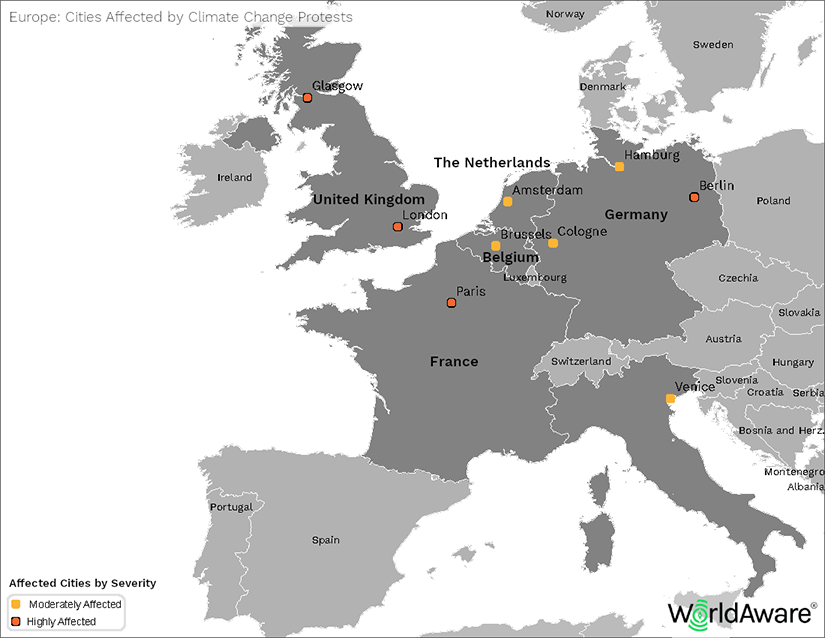
Both Thurnberg and Extinction Rebellion have directly or indirectly contributed to various climate activism actions. Students from across Europe, inspired by Greta, have protested every Friday since August 2018 under the motto “Fridays for Future” and gained traction when they skipped school for a day to take part in large demonstrations calling for action on climate change. Extinction Rebellion has staged disruptive actions in multiple counties, but primarily in the UK. The UK protests include blocking roads during rush hours and a demonstration in front of the Scottish Parliament when some activists chained themselves to street poles. Other, smaller grassroots organizations have undertaken similar actions. Smasscruiseshit, a small group of activists from Germany, used boats to block a large cruise ship in the port of Hamburg, Germany as they demanded curbs on the emissions caused by the cruise industry. Additionally, thousands in Venice protested the environmental damage caused to the Venetian lagoon by cruise ships.
So far, although disruptive, these actions have not caused significant property damage. Most of the actions are advertised on social media, which allows travelers to be warned in time to avoid disruptions. However, with momentum on the side of climate activists, actions are likely to become larger and more disruptive in the long and medium-term. This larger scale of action will likely cause it to be more difficult for travelers and businesses to avoid disruptive actions undertaken by climate activists.
Future of the Movement
Growing participation and frustration with the lack of results that peaceful activism is producing may undermine climate activism’s commitment to non-violence. The central grievance of many climate activist groups, the notion of a climate catastrophe that could result in food shortages, drought, and tens of millions of ecological refugees, has strengthened and encouraged the activists’ perceived need to act attention and more visibility. This resolve could lead eco-activists to undertake more drastic actions such as engage in sabotage, arson, and usage of improvised explosive devices against governments and large corporations, especially corporations that cause significant pollution and or contribute to the perceived climate catastrophe. More radical elements of the climate activism movement would commit to these sorts of attacks to draw more attention and visibility to their cause. Such attacks would become more likely if demands for more climate protection are not met. Travelers should avoid all protests as a routine security precaution and to mitigate associated disruptions. Those in the Europe should follow alerts for demonstrations and activities that might cause disruptions to supply chains. It would also behoove companies to monitor disruptive climate activism events in countries where they have assets.
]]>Start the Conversation
The reality is that many areas of the world still heavily discriminate against the LGBTQ community and criminalize expressions of sexuality. Travel and risk managers do not necessarily need to know the sexual preferences or sexual identities of their travelers to counsel them about the cultural and societal attitudes present at their destinations. Presenting a comprehensive overview in a matter-of-fact manner can side-step the need to pry into a person’s personal life while also setting up an environment conducive to deeper conversations and questions as necessary.
Understand LGBTQ Health Risks
Healthcare options may be especially limited for transgender individuals, who may need specialty medical care at their destination. These individuals may struggle to find needed medications or obtain a refill should they run out. Anti-hormone transition drugs suppress levels of testosterone to allow estrogens to take prominence but may have adverse effects on the heart. LGBTQ individuals may encounter challenges finding medical care and may be dissuaded from providing a complete medical history in areas that present a high threat for LGBTQ patients.
Most countries restrict the amount of medication travelers can enter with according to the length of the stay. In many instances, a maximum of 90 days of prescription medication may cross borders.
For expatriates, having a doctor’s note on letterhead, with the patient’s full name, medication name, dosage, and reason are required for refills and importation of prescription medication to many countries. The reason (diagnosis) may be especially challenging if traveling to a conservative country with a known low tolerance for the LGBTQ community and may present security challenges.
Surgery of any kind increases the risk of blood clots during flight. LGBTQ patients who have recently undergone surgical procedures should ensure adequate time between surgeries and flights. Some hormone therapies (especially estrogens) also place patients at risk for deep venous thromboses (DVT): blood clots that form in the legs and may become life-threatening if the clot or part of the clot travels to the lungs.
In more socially liberal countries, unconscious bias from healthcare workers may lead to substandard care. LGBTQ individuals need to be prepared to encounter these attitudes and be able to advocate for their care and proper treatment. Risk managers and travelers should research cultural tolerances and potential biases to determine if an advanced arrangement with a “preferred” treatment center is necessary.
Key Takeaways
Ensuring the safety of your LGBTQ personnel and students starts with a conversation. Transgender travelers require a duty-of-care policy that helps them prepare for the challenges they may face abroad. Ensuring the safety and health of these unique travelers is a corporate responsibility.
About WorldAware
WorldAware provides intelligence-driven, integrated risk management solutions that enable multinational organizations to operate globally with confidence. WorldAware’s end-to-end tailored solutions, integrated world-class threat intelligence, innovative technology, and response services help organizations mitigate risk and protect their people, assets, and reputations.
SAFETY AND SECURITY
Global Business travelers may enjoy the fact that the hotel provides a complimentary breakfast and reliable Wi-Fi, but what they value most is a better sense of security when they travel on behalf on their organizations, according to a joint survey conducted by American Global Business Travel and the Association for Corporate Travel Executives. Security and safety concerns are growing at a significantly faster rate than worries about other topics including work-life balance issues, traveler-centric technologies and alternative suppliers.
DUTY OF CARE
There is also a growing awareness on the part of organizations in the United States of the legal, moral and ethical obligations they owe their employees under the complex and sometimes vague principles of Duty of Care. Corporate security, travel managers, human resources, and other key stakeholders must understand the notion of Duty of Care in the context of business travel in order to ensure that their companies are making reasonably informed, good faith, rational efforts to protect their employees as they travel.
The elements of a comprehensive traveler safety program that meets Duty of Care best practices will vary among organizations, depending on size, number of traveling employees, destination risk ratings, medical concerns and a variety of other topics. However, there are elements of a successful program that apply to every organization.
BEST PRACTICES
Key stakeholders within the organization must meet on a regularly-scheduled basis to examine existing travel polices to determine if any improvements need to be made. A thorough examination of the plans may reveal vulnerabilities, including resource gaps. In some cases, plans may need to be expanded. Other companies may lack any substantial travel safety procedures, and entirely new plans must be developed. Plans and policies should cover both routine travel and emergency incidents, including accidents, medical emergencies, natural disasters, emergency evacuations, and violent incidents.
The ability to track personnel as they travel is another vital component of the traveler safety program. Many travel management programs rely on multiple third-party Company Managed Travel Providers (CMTP) to book travel and provide situational awareness of employees. A common problem with this system is that it only tells the company where the employee is supposed to be, not where they are. Travelers are often forced to make last-minute changes to their itinerary, and will often book their own travel, without notifying the CMTPs of the changes. Providing the traveler with a GPS-based personnel tracking system may be an option for those companies looking for a more effective way to maintain accountability of their travelers.
A risk assessment should be conducted prior to every trip, regardless of destination. The assessment should not focus solely on the country’s Risk Rating. As attacks in the UK, Belgium, France, Canada and the United States have shown, all countries are susceptible to acts of violence, not just those with a High or Elevated Risk Rating. Additionally, definitively assigning a Risk Rating can be difficult, as risk is largely based on individual perspective and context. Employees should be encouraged to take an active role in the risk assessment and travel planning process so that they fully understand any known or suspected risks associated with their destination. Providing education and training to employees is another critical component of the system.
The purpose of the training program is to develop the employee’s skills and knowledge, so they can perform their duties with minimal or no interruptions because of risk, security or medical-related issues. Providing training to employees empowers them to make informed decisions regarding their personal security and safety, helping keep them safe while adding another layer of liability reduction for the company. Elements of a successful training program include general traveler safety and security information, conflict avoidance and response, emergency planning, and worst-case scenario procedures.
Should all mitigation efforts prove unsuccessful, and a traveler is involved in a critical incident, a comprehensive safety system helps ensure that they are provided with timely support and realistic options that work to minimize harm and distress, provide critical support, and brings the employee home safely. The ability of the organization’s Crisis Management Team to move quickly to provide support such as personnel accountability, crisis notifications, and the activation of emergency response systems such as medical support and evacuation cannot be overstated.
GLOBAL GUARDIAN SERVICES OVERVIEW
MEMBERSHIP OVERVIEW
Global Guardian utilizes a subscription-based pricing model. Clients pay an annual membership fee to have Global Guardian as their designated travel security and duty-of-care provider and to access its 24-hour Operations Center, team of security advisors and intelligence analysts, global tracking and monitoring platform, network of highly-vetted security providers, and comprehensive suite of security, medical, and aviation services. This subscription also includes all of Global Guardian’s non-custom and basic travel intelligence products and emergency incident notifications.
GLOBAL TRACKING AND MONITORING
Global Guardian tracks and precisely locates clients anywhere in the world. The company uses special purpose cellular and satellite tracking beacons and smartphone applications that provide real-time GPS position information for clients, allowing them to call for immediate assistance in the event of an emergency. Linked to an extensive network of highly skilled in-country security teams, Global Guardian’s 24-hour Operations Center monitors clients as they travel and can direct security assets to respond as needed in real-time. Global Guardian also monitors local and regional current events and provides clients with information about their security and safety situation while they travel.
EMERGENCY RESPONSE
Global Guardian maintains emergency security response teams in over 91 countries. These teams are notified to the presence of client travelers in their area and stand by to respond immediately to address client emergencies. All support is coordinated and closely directed by Global Guardian’s 24-hour Operations team to ensure rapid and high-quality response to a wide range of potential situations.
INTELLIGENCE SUPPORT
Global Guardian provides its clients with detailed travel intelligence products, real-time security alerts, and highly customized intelligence and due diligence products in support of any unique information requirement. Non-customized support and security incident alerts are included in the proposed package.
GLOBAL GUARDIAN AIR AMBULANCE – AIR MEDICAL TRANSPORTATION AND REMOTE MEDICAL SUPPORT
Global Guardian Air Ambulance, a division of Global Guardian, provides its clients with best-in-class air medical transportation
membership programs. These programs provide true no-cost air medical transportation to members who are injured or become ill while traveling. Unlike insurance, members have no deductibles or no claims forms, are not subject to complex restrictions for use and choose their US or Canadian destination hospital.
Global Guardian also provides emergency medical support through board certified, US-based emergency physicians that are available around-the-clock to travelers through the Global Guardian Operations Center. These physicians conduct remote diagnosis and ongoing treatment management of travelers’ injuries or illnesses, and direct patients to vetted local medical facilities as needed.
GLOBAL TRANSPORTATION AND SECURITY SERVICES
Global Guardian offers a full range of personnel-based security support to its clients. Such support includes secure transportation, security agents, full-scale executive protection details, and event and facility security management. All services are fully customizable to meet client need and are closely coordinated by Global Guardian’s 24-hour Operations Center at-all-times.
EMERGENCY AND CUSTOM AVIATION
Global Guardian supports its clients with comprehensive customized aviation capabilities. Be it for emergencies or customized specialty aviation needs, Global Guardian’s aviation team can access a wide range of aircraft operating around the globe to ensure the right assets are available when needed.
PHYSICAL, CYBER SECURITY, COUNTER INDUSTRIAL ESPIONAGE ASSESSMENTS, POLICY DEVELOPMENT AND TRAINING
Global Guardian provides detailed physical and cyber security and vulnerability assessments, security and travel safety policy
development, and highly customized training programs for its clients.
Facility assessments are conducted domestically and abroad and are aimed at helping clients identify threats to their employees and operations. Such assessments are often paired with cyber evaluations of client site network security. Following an on-site assessment, Global Guardian prepares comprehensive deliverables detailing its findings and makes recommendations for how best to strengthen the security culture and physical and cyber infrastructure on site. Global Guardian can then assist in implementation of those recommendations.
One of the most common recommendations is the improvement or whole-cloth development of security and travel safety policies in support of a client’s workforce. If requested, Global Guardian’s team will work closely with to determine its objectives in policy work, and craft highly customized products that exactly mirror its requirements and corporate culture.
Lastly, no facility security plan nor safety policy is complete without some measure of training on how that plan and policy are implemented. As with its policy development work, Global Guardian prepares and executes highly customized training programs closely tailored to client objective and culture. Such courses include general travel safety, active shooter preparedness, and policy specific training.
GLOBAL GUARDIAN SENTRY – VIDEO SURVEILLANCE MONITORING
Global Guardian Sentry, a division of Global Guardian provides video monitoring and Virtual Guard services in support of client facilities, operations and residences. Global Guardian’s 24-hour Operations Center is staffed with highly trained surveillance analysts who can assess potential threats and respond in real-time to minimize unauthorized activity at client sites. Specific services include event driven, interactive video monitoring, active threat emergency response monitoring, and virtual guard tours. On request, Global Guardian will conduct no-cost testing of any existing camera systems to ensure compatibility and then provide facility specific service options and pricing.
This article is part of our Conference Materials Library and has a PowerPoint counterpart that can be accessed in the Resource Libary.
HospitalityLawyer.com® provides numerous resources to all sponsors and attendees of The Hospitality Law Conference: Series 2.0 (Houston and Washington D.C.). If you have attended one of our conferences in the last 12 months you can access our Travel Risk Library, Conference Materials Library, ADA Risk Library, Electronic Journal, Rooms Chronicle and more, by creating an account. Our libraries are filled with white papers and presentations by industry leaders, hotel and restaurant experts, and hotel and restaurant lawyers. Click here to create an account or, if you already have an account, click here to login.
]]>According to the US Centers for Disease Control and Prevention (CDC), more than 50 percent of international travelers become ill during their trips to developing countries; some of these illnesses are preventable. Many people are unaware of their vaccine status or new vaccines that have recently been developed. Lacking cognizance of either factor can put individuals at risk when they set out for their international travel.
Travel Risks and Immunizations
A person who is vulnerable to a vaccine-preventable disease runs the risk of transmitting it to another vulnerable person when entering a new area. It’s imperative that travelers research which vaccines are recommended or mandatory prior to traveling. In 2018, it is expected that pockets of diseases such as measles, mumps, pertussis, and diphtheria will emerge in areas where these diseases had seen previous control.
The recommended immunizations for all global travelers are as follows:
- Diptheria, Tetanus, Pertussis
- Influenza
- Measles, Mumps, Rubella
- Pneumococcal Disease
- Hepatitis A and B
- Varicella
Depending on your destination, health authorities may recommend other vaccines, in addition to the above list. Keep in mind that some recommended vaccines require multiple doses administered over time; pre-travel planning is imperative. Scheduling a pre-travel consultation with a medical professional who understands the vaccination rate and current trends in outbreaks can help prevent the inadvertent spread of diseases.
2018 Health Trends to Watch
In the first few months of 2018, health authorities have noted a marked increase in the global number of measles cases. Even areas with traditionally high vaccination rates have seen some communities experience declining immunization in the past several decades due to religious reasons or misinformation about vaccine safety. This trend of declining vaccination rates is alarming, as areas that had seen nearly complete eradication of measles are experiencing outbreaks once again. The cost for direct and indirect illness care, care for sick children, lost productivity, and disease-associated complications can be substantial. Travelers should know their immunization status to prevent becoming victims during an unexpected outbreak of measles or other vaccine-preventable diseases.
Vaccinations are important to protect individual human capital, as well as for broader, continued corporate productivity. Organizations can facilitate getting appropriate immunizations by identifying in advance those who are slated to travel and getting them to the proper healthcare professional to ensure they receive appropriate vaccinations. Finally, check with the CDC and/or state department for information on required vaccines and documentation before traveling abroad.
To stay up to date on health trends and threats around the globe, iJET’s Intel Central Health Intelligence subscription provides up-to-date trends on infectious disease and other concerns, as well as location-based health information and disease fact sheets.
]]>1. Update all passwords for increased safety and security
This one may seem obvious, but many people forget about it. We’re all guilty of mindlessly typing in a random, easy-to-remember password. The simpler your password is, the easier it is to hack. Create a combination for your accounts that ensures increased safety. The more numbers, upper and lowercase letters and symbols you add, the more secure your password becomes. Don’t make the same password for every account. If you’re worried about forgetting, there are apps available such as 1Password and Keeper where you can securely store passwords and confidential information.
2. Monitor your bank and credit card statements
Keep track and check all your statements on a regular basis, especially in the months after traveling. If you’re still getting charges from Boston even though you’re back home in Seattle, obviously something isn’t right. In these situations, contact your bank immediately so they can take proper measures to ensure the cancellation of your card. Also notify your bank of any upcoming travels. This way, your card won’t be frozen if your bank is aware you are traveling and they can keep an eye out for any fishy transactions that may occur during or after your trip.
3. Update the way you pay
It might also be time to think about using an updated way to pay. Services such as Apple Pay, Android Pay and Paypal encrypt credit cards with new tokens each time you pay. Your actual number is never used or given out to any retailers, which means your information is less likely to be exposed in the event of a breach. Not every retailer has this feature enabled yet; however, it’s continuing to grow as more stores, hotels and even online retailers are realizing the benefits that it produces.
For business travelers, check to see if your travel management company offers a secure virtual payment option. For instance, Travel and Transport’s Secure Pay generates a virtual, on-time use credit card for hotel bookings. Secure Pay significantly cuts down on the risk of fraudulent activity that can occur with a ghost card by assigning a new card number for each hotel booking.
4. Ditch the PIN
If you need to use a debit card, ask the cashier to run your card as credit and sign for your purchase instead of typing in a PIN number. Hackers who gain access to PIN numbers can print out a copy of your card and actually take money out of an ATM.
5. Make sure it’s secure
Are you interacting with a business online? Make sure that any personally identifiable information you transmit via a website or form is secure. This includes anything from credit card numbers to even your name, address, phone number and email. A recent airline data breach was related to a customer contact form. Look for the “https://” prefix in your browser’s address bar, and you can even click the little lock symbol to find out more about the type of encryption that is used. This is a tip directly from Travel and Transport’s own data security department and all of our forms meet this standard. Contact us and see for yourself!
6. When in doubt? Pay cash
If these options still aren’t protective enough, put away your credit card and use cash whenever possible. Although this might be considered “old school” and it isn’t always an option for business travelers who use a corporate card and have to file expenses, it can be an effective option for leisure travelers. Your information can’t be hacked if your credit card is safely tucked away in your wallet. This not only provides a safer way to pay, but it also allows you to budget your expenses accordingly if you know you only have a certain amount of cash to use.
Before you travel, take out a designated amount of cash to use when purchasing. If you need more cash, look for ATMs inside reputable businesses and banks and check to make sure that ATM skimmer devices have not been installed. Always cover the PIN keypad with your hand to ensure that nobody watches you enter your code.
Traveling can be stressful, but don’t let credit card fraud get in the way of an otherwise enjoyable trip. Taking a few extra moments to protect your card safety can make a huge difference when it comes to securing your data.
This article was originally published by Travel & Transport. Click here to view the original article.
]]>Visit a Travel Medicine Specialist
Health professionals who specialize in travel medicine are typically able to provide a level of care that often surpasses that offered by a general practitioner or family doctor who is not familiar with current, global health threats. An online directory of private travel clinics around the world can be found on the International Society of Travel Medicine website.
It is important to schedule your appointment at least four to six weeks before travel. This will ensure you have enough time to complete any vaccine series you may need and give your body time to build up immunity. During your appointment, be thorough about all potential destinations you may visit and activities you will participate in. Make sure you are apprised of all health issues relating to your itinerary and counseled on specific risks related to chronic medical conditions. And last but not least be sure to ask your healthcare provider if you are up-to-date on all routine vaccinations. These vaccinations include but are not limited to: Chickenpox (Varicella), Hepatitis A, Hepatitis B, Influenza, Measles, Mumps, and Rubella (MMR), Pertussis (Whopping Cough), Pneumococcal Pneumonia, and Tetanus and Diphtheria.
Contact Your Health Insurance Carrier
Illness and injury pose perhaps the most immediate risk while traveling abroad, especially in developing countries. According to the US CDC, more than 50 percent of international travelers to developing countries become ill during their trip. Since medical assistance abroad can be extremely expensive, it is important to ensure you have adequate health insurance.
Contact your health insurance carrier to determine if your policy will provide coverage in a foreign country. It is important to note that you may need supplemental travel insurance to ensure you are adequately covered for medical emergencies and evacuations. While traveling, carry your health providers name and contact information for emergency referral. If you have a chronic or ongoing health problem that may require treatment while abroad, be sure to also have a copy of pertinent health records.
Properly Pack Prescription and Over-The-Counter Medications
Another set of health risks includes pre-existing medical conditions, particularly chronic diseases. Chronic diseases can present challenges for travelers because of the medications required for their management. Medications that are legal in one country may be highly regulated or even wholly prohibited in another country. Failure to follow these laws can result in confiscation of medications, imprisonment for drug trafficking, and even the death penalty.
- Obtain and pack a copy of your prescription and a letter from the prescribing medical practitioner stating the name of the drug, dosage and quantity prescribed, the reason the drug is being prescribed, and the health condition for which the medication is being prescribed. While some countries will allow you to carry a 90-day supply of medication, other countries limit this to a 30-day supply or less. Therefore, a certificate/letter from your prescribing medical practitioner can be a very useful document if you have to obtain a prescription from a local medical practitioner.
- All prescription medications and any related documentation should be either carried on the person or stored in carry-on luggage, since checked luggage can be lost, misplaced, and/or delayed. Travelers should keep all prescription medications in their original, correctly labeled containers/packages with the active ingredients of the medication clearly labeled on the container for easy identification at checkpoints. Different medications should not be combined into one container. Travelers should make sure the name on the prescription, the container, and their passport match. Medications should be packed in a clear bag.
- Over-the-counter (OTC) medications should be kept in their original container and clearly labeled. They can be packed in checked luggage; however, travelers should consider packing OTC medications in their carry-on luggage, especially if the medication is needed while in flight, near the time of arrival, and/or if it is regulated by the destination country. They should be kept in their original container and clearly labeled. Pack the medication in a clear bag.
For a more in-depth look into traveling internationally with personal medication, watch iJET’s free webinar, Traveling with Medication: How to Navigate International Law
]]>We’ve been here before. We’ve had terrorist attacks or mass shootings involving aircraft, skyscrapers, military bases and houses of worship. Each event spurs honest conversation on enhancing security. But a successful attack on a soft target, like a school or hotel, incurs a level consternation in the public that is characterized by an extreme sense of vulnerability as well as by the accompanying impulse to stay away from certain attractions and locations. Both have tragic consequences, but security protocols at each are very different and are a function of the known or assumed threat that the particular venue faces. What is the formula? How do we know what the threat is? From where do we get reliable intelligence? Once we have the intel, how do we use it in a proactive manner?
There are no easy answers. Truth is, hardening a venue – making it less attractive to a would-be terrorist – is a dynamic process that requires a combination of robust physical security measures as well as a reliable stream of intelligence, together with analysis that puts the intel into proper context. Armed with this information, the security professional can take proactive measures designed to enhance venue safety and security. Intelligence is the crucial first step from which all other measures flow.
Those traditional threats that hotel security personnel have trained for over decades – intruders, assaults, theft of merchandise or money, organized crime infiltration of casinos and money laundering – are relatively easy to address when compared with the monumental responsibility of preventing a terrorist attack or a mass casualty shooting on premises. It is precisely this asymmetric threat of the “active shooter” or terrorist that needs to be addressed. How is it that a mass shooting can take place at a luxury hotel when one bears in mind the enormous security apparatus on site?
Part of the answer lies in the fact that no location can be made 100% secure. The other key part is the realization that intelligence analysis and asymmetric threat detection on site were not as robust or as developed as they should have been, in the case of the Mandalay Bay. This likely goes for most venues as well, since intelligence and its consequent analysis require specialized personnel and a constant reevaluation or updating of intel requirements and gaps. They also require management that “gets” it and is willing to dedicate funds it.
Some things to bear in mind when devising and implementing asymmetric threat protocols in a venue such as a hotel:
-Trash the notion that your threat is likely going to come from common criminals, money launderers and thieves. It might, but you need to quantify the threat from other elements as well;
-Rid yourself of the mindset that “it won’t happen here”. You don’t know that and the events in Las Vegas (and in Mumbai in 2008) have shown that it CAN happen at your location.
-If you say, “we know what our threat is”, how do you know that? Have you been accumulating accurate, reliable intelligence to justify that assumption?
-Remember that trade associations, unions and sector-specific safety organizations accumulate a wealth of information about trends and incidents that take place at public venues. Make sure to avail yourself of membership and do not rely solely on one organization for all your threat info or intelligence.
-Meet frequently with your local, state and federal law enforcement agencies. They can provide you with updated threat information and trends affecting your business segment. They might also be able to suggest some security enhancements for your property.
-Be proactive. Do not wait for the threat to come to you and then react. Take measures to protect the venue from these uncommon or non-traditional threats. Effective measures can deter attack, as the attackers pass you by and go on to a more vulnerable target.
“Active Shooter” preparedness training is essential for public venue security personnel, but it must be accompanied by updated intelligence.
Like this article? Subscribe to the Security Strategies Today newsletter, “Like” them on Facebook and follow them on Twitter @securitystrateg.
]]>This may seem obvious, but when you leave your home country you’re subject to the laws and regulations of the country you’re visiting – from the moment you enter the front door. A security concern that not everyone thinks about can occur at border crossings. Depending on where you are traveling to, electronic devices such as smartphones, laptops, tablets and digital cameras may be subject to official government review as well as, in some cases, duplication of your hard drives and other storage media. Privacy concerns don’t end at the border, however. Depending on what country you’re in you may also expose your devices to viruses, activity tracking and other software simply by being in the country and connecting to its networks.
We talk a lot about data security for travelers on this site and all of that information should apply here as well. Check out a few of them here:
- 6 ways to protect yourself against data breach
- So what the heck’s a chip card anyway?
- Don’t throw away that old boarding pass! Here’s why.
While there’s no specific list (at least that we could find) of countries that can take a look at and potentially snoop, seize or copy data from your devices, there are reports that it can and does happen all over the world.
Whether you’re entering a country by air or traveling between countries by car, boat, train, foot, skis (in the unlikely event that James Bond is reading this), hoverboard (in the less likely event that a 12 year-old is reading this), winged horse, TARDIS, trained dolphin team or Uber, it’s a good idea to take some steps before you arrive to ensure that your personal and corporate data is protected from the minute you arrive to the minute you leave. Here are some tips on how to do that:
Encrypt
Encrypt the information on your laptop to ensure that your data remains hidden to unauthorized access. Both Microsoft and Apple offer tools to accomplish this. Just don’t forget your password! You might already have this activated if you use a company device. If so, be sure to check with your IT or corporate security department to get more information before traveling internationally.
Back up
Did you spend your flight crafting the perfect presentation? Make sure you’re able back it up to the cloud while in the air or as soon as you land – just in case your laptop is seized and searched. How about all those photos on your smartphone? Have you backed those up? There are services like Apple iCloud and Google Photos that make it easy. Run that backup before you leave home and again in every country you visit – but then pay attention to the next section!
Sign out
Clear your browser history and delete cookies from your web browsers that may still be signed into email, social media sites, etc.
Sign out of apps on your smartphone and tablet that might contain personally identifiable or sensitive information. This might include social media apps, email apps, notes apps like Evernote and Notes, storage sites like Google Drive and Dropbox, calendars and more. You might just delete the apps altogether. You can get them back when you return.
Do you have a fingerprint reader on your device? Temporarily disable that or reboot your phone prior to arriving at the border so that a password/PIN is required. Here’s how to disable Touch ID on the iPhone or iPad.
Consider alternate devices
If you can manage, don’t take your brand new expensive Macbook or Surface Pro tablet along with you on the trip. Bring along a cheaper device instead such as a low cost Windows laptop or a Chromebook that won’t make you shed tears if it disappears. Make sure it’s new or has been wiped (erased and reloaded like new) before you go. That will limit exposure to to only the time period with which you’re traveling.
The same thing goes for your phone. Do you have an old phone you can take along rather than your primary device? Maybe go old school and consider a “dumb phone” for your trip – just pretend that it’s 2006 again! Yeah, I know that’s no fun and could be terribly inconvenient. It’s just something to consider depending on where you’re traveling.
If you’re carrying corporate devices, keep the number of your travel department, corporate security, or IT department handy (and not on your phone) so that devices can be remotely locked or even wiped should they be taken and accessed by government officials – or anyone else for that matter.
Whatever devices you bring, be sure they have the latest updates and security patches installed. When you return home, have your devices wiped and reset to ensure that no viruses or otherwise nefarious software has been installed.
This article was originally published by Travel & Transport. The original article can be read here.
]]>