The tied house and commercial bribery provisions are those most frequently cited by regulators reviewing an advertisement or marketing campaign.
It shall be unlawful for any person engaged in business as a distiller, brewer, rectifier, blender, or other producer, or as an importer or wholesaler, of distilled spirits, wine, or malt beverages, or as a bottler, or warehouseman and bottler, of distilled spirits, directly or indirectly or through an affiliate…
(b) “Tied house”
To induce through any of the following means, any retailer, engaged in the sale of distilled spirits, wine, or malt beverages, to purchase any such products from such person to the exclusion in whole or in part of distilled spirits, wine, or malt beverages sold or offered for sale by other persons in interstate or foreign commerce, if such inducement is made in the course of interstate or foreign commerce, or if such person engages in the practice of using such means, or any of them, to such an extent as substantially to restrain or prevent transactions in interstate or foreign commerce in any such products, or if the direct effect of such inducement is to prevent, deter, hinder, or restrict other persons from selling or offering for sale any such products to such retailer in interstate or foreign commerce: (1) By acquiring or holding (after the expiration of any existing license) any interest in any license with respect to the premises of the retailer; or (2) by acquiring any interest in real or personal property owned, occupied, or used by the retailer in the conduct of his business; or (3) by furnishing, giving, renting, lending, or selling to the retailer, any equipment, fixtures, signs, supplies, money, services, or other thing of value, subject to such exceptions as the Secretary of the Treasury shall by regulation prescribe, having due regard for public health, the quantity and value of articles involved, established trade customs not contrary to the public interest and the purposes of this subsection; or (4) by paying or crediting the retailer for any advertising, display, or distribution service; or (5) by guaranteeing any loan or the repayment of any financial obligation of the retailer; or (6) by extending to the retailer credit for a period in excess of the credit period usual and customary to the industry for the particular class of transactions, as ascertained by the Secretary of the Treasury and prescribed by regulations by him; or (7) by requiring the retailer to take and dispose of a certain quota of any of such products; or
(c) Commercial bribery
To induce through any of the following means, any trade buyer engaged in the sale of distilled spirits, wine, or malt beverages, to purchase any such products from such person to the exclusion in whole or in part of distilled spirits, wine, or malt beverages sold or offered for sale by other persons in interstate or foreign commerce, if such inducement is made in the course of interstate or foreign commerce, or if such person engages in the practice of using such means, or any of them, to such an extent as substantially to restrain or prevent transactions in interstate or foreign commerce in any such products, or if the direct effect of such inducement is to prevent, deter, hinder, or restrict other persons from selling or offering for sale any products to such trade buyer in interstate or foreign commerce: (1) By commercial bribery; or (2) by offering or giving any bonus, premium, or compensation to any officer, or employee, or representative of the trade buyer; …
TTB, with the cooperation in some states of state alcohol agencies, is conducting a widespread investigation of supplier and retailer activities involving one or more of the following activities: “pay to play” tied house violations, exclusive outlet, commercial bribery consignment sales, slotting fees, illegal sponsorship arrangements, and improper use of third parties, to name a few. TTB is conducting widespread industry interviews and is serving both formal and informal document requests directed at identifying these activities. TTB may prosecute a violation of the Act if the agency can prove an illegal inducement or requirement which resulted in exclusion; put another way, in order to meet its burden of proof, TTB needs to show that the inducement or requirement of the retailer resulted in the retailer purchasing the offending supplier’s products to the exclusion of other brands.
This article is part of our Conference Materials Library and has a PowerPoint counterpart that can be accessed in the Resource Libary.
HospitalityLawyer.com® provides numerous resources to all sponsors and attendees of The Hospitality Law Conference: Series 2.0 (Houston and Washington D.C.). If you have attended one of our conferences in the last 12 months you can access our Travel Risk Library, Conference Materials Library, ADA Risk Library, Electronic Journal, Rooms Chronicle and more, by creating an account. Our libraries are filled with white papers and presentations by industry leaders, hotel and restaurant experts, and hotel and restaurant lawyers. Click here to create an account or, if you already have an account, click here to login.
]]>A former server filed an action under the California Labor Code Private Attorneys General Act of 2004 (PAGA), seeking civil penalties on behalf of herself and other “aggrieved employees” for California Labor Code violations, including the failure to reimburse the cost of slip-resistant shoes. Plaintiff alleged a violation of Labor Code section 2802, which requires an employer to reimburse employees for all necessary expenditures incurred by the employee in direct consequence of the discharge of their duties.
Plaintiff argued that, because the restaurant required employees to wear slip-resistant, black, closed-toes shoes for safety reasons, such shoes should be provided free of cost or employees should be reimbursed for their cost.
The Court of Appeal, persuaded by the reasoning in an unpublished Ninth Circuit Court of Appeals decision, Lemus v. Denny’s, Inc., and guidance from the California’s Division of Labor Standards Enforcement (DLSE), held that section 2802 did not require the restaurant employer to reimburse its employees for the cost of slip-resistant shoes. Specifically, the Court held that the cost of shoes does not qualify as a “necessary expenditure” under section 2802.
In reaching its decision, the Court followed the reasoning in Lemus, citing a DLSE opinion letter, “The definition and [DLSE] enforcement policy is sufficiently flexible to allow the employer to specify basic wardrobe items which are usual and generally usable in the occupation, such as white shirts, dark pants and black shoes and belts, all of unspecified design, without requiring the employer to furnish such items. If a required black or white uniform or accessory does not meet the test of being generally usable in the occupation the [employee] may not be required to pay for it.”
Here, the plaintiff did not argue that the slip-resistant shoes were part of a “uniform” or were not usual and generally usable in the restaurant occupation. The restaurant did not require employees to purchase a specific brand, style, or design of shoes and did not prohibit employees from wearing their shoes outside of work.
Under California law, a restaurant employer must pay for its employees’ work clothing if the clothing is a “uniform” or if the clothing qualifies as certain protective apparel regulated by OSHA or California’s Division of Occupational Safety and Health (Cal/OSHA). Labor Code and Industrial Welfare Commission Wage Order No. 5-2001, governs the public housekeeping industry, including restaurants. Under Wage Order No. 5, uniforms must be provided and maintained by the employer when the uniforms are required by the employer to be worn by the employee as a condition of employment. “Uniform” includes “wearing apparel and accessories of distinctive design or color.” This section of the wage order specifically does not apply to protective equipment and safety devices regulated by the Occupational Safety and Health Standards Board.
On appeal, the plaintiff abandoned her alternative theory of liability that reimbursement was owed under provisions of Cal/OSHA, Labor Code sections 6401 and 6403, which require employers to furnish and provide safety equipment to employees.
The trial court had held that OSHA and Cal/OSHA provide than an employer is not required to reimburse employees for the cost of non-specialty shoes that offer slip-resistant characteristics, but are otherwise ordinary clothing in nature. However, the Court of Appeal ultimately did not decide the applicability of OSHA or Cal/OSHA. Likewise, the Ninth Circuit in Lemus v. Denny’s, Inc. did not address whether Cal/OSHA requires reimbursement of slip-resistant footwear.
After the decision in Townley, there remains a question of whether reimbursement for the cost of slip-resistant shoes could be required under Cal/OSHA for safety reasons. Under Federal OSHA regulations, employers must generally provide personal protective equipment at no cost to the employee. The regulation specifically includes an exemption for non-specialty safety-toe protective footwear, which the employer permits to be worn off the job-site. Employers are also not required to pay for everyday clothing, including street shoes and normal work boots. Under California law, if protective equipment is required by Cal/OSHA, the employer is responsible for paying for the safety equipment. There is no Cal/OSHA regulation equivalent to the Federal exemption for generic non-specialty shoes. While California employers have argued (and the trial court in Townley concluded) that the Federal exemption should control in California, the California Court of Appeal and Ninth Circuit have so far left that question unanswered.
Takeaways
Although we now have clarity that California Labor Code section 2802 does not require reimbursement of the cost of slip-resistant footwear, there remains the question of whether such footwear could constitute reimbursable protective equipment under Cal/OSHA safety standards. Although Townley and the Federal OSHA exemption provide some guidance for California employers, they are reminded that neither are necessarily binding or precedential. As such, it will be important for employers to track California caselaw in this area, as well as look out for Cal/OSHA guidance. In the meantime, employers are encouraged to periodically review their policies and practices for reimbursing employee business expenses to ensure compliance with California law, including Cal/OSHA regulations.
]]>Third-party delivery, streaming video, meal-prep kits, and other market disruptors are changing the face of the food and beverage industry as we’ve known it.
This paper will examine current market forces that are cutting into F&B profits, whether at restaurants, bars, or hotels, and provide important insights to keep guests coming back (and spending money).
Aggressive market forces are nothing new.
In July 2007, Technomic forecast “tough economic times ahead for same-store sales.”1 As reported by Nation’s Restaurant News on July 9, 2007, “Inflating commodity prices, a slowing gross domestic product, skyrocketing fuel costs and a weak dollar” were predicted to take a toll on food and beverage sales nationwide.
Experts identified opportunities for growth, however, noting, “The growing number of consumers under 35 in particular presents opportunities for targeted marketing,” suggesting further that “they are not cooking, so they will be very heavy restaurant users.”
Convenience (e.g. curbside pickup), variety, healthy options, corporate social responsibility, and value were all identified as being important to guests.
But neither Technomic nor NRN really knew what was coming. The article referenced above was published:
- a mere ten (10) days following the first release by Apple of its iPhone, which would change forever the nature of human interaction;
- six (6) months after Netflix began streaming content(for free back then), forever changing the way humans consume entertainment;
- one (1) year before Apple launched its AppStore, providing a marketplace for innumerable interactive apps; and
- eighteen (18) months before Lehman Bros. collapsed at the peak of the 2007-2008 financial crisis, triggering a recession that lasted until mid-2009. These market disruptors could simply never have been predicted, and the list could go on and on…
The advent of smartphones allowed guests to view restaurant webpages and menus online while away from their desktop computers, requiring restaurants to augment their web-based presences (and keep them updated). Netflix (and other streaming services), combined with the affordability of extremely large TVs, provided an alternative entertainment source beyond traditional network television and cable, effectively keeping guests at home, opting to Netflix & Chill (or even watch TV).The popularity of smartphone apps led to the availability of platforms for instantaneous verbal vomitus via Yelp, TripAdvisor, and other online rating services. The Great Recession affected consumer spending in ways never predicted by the economic indicators.
Current market threats.
Almost a dozen years after the above-referenced NRN article, the restaurant and bar industry faces new and insidious challenges to profits. Like 2007, however, the industry will rise above them, finding new ways to innovate and elevate the guest experience.
Smartphone apps continue to pose a threat,and have led to a meteoric rise in the popularity of food delivery services, resulting in significant encroachments into restaurant profits. The food delivery segment, with revenue of approximately $19B predicted for 2019, is predicted to grow to $24B by 2023, according to analytics firm Statista, though Morgan Stanley predicts that a whopping 40% of all restaurant sales will be via delivery, in the amount of approximately $220B. With costs to delivery services ranging from 15-30%, restaurants will face a significant hit in the event things continue along the current path.2
Food inflation continues to be a factor, as more families look to cook at home.The rise of delivered meal-prep kits (a la Blue Apron,etc.), where customers receive all the ingredients of a meal, plus a recipe, has people “cooking” away. Moreover, stores like Whole Foods and Central Market, which offer not only prepared meals for takeaway (at a significantly lower internal cost than what it costs a restaurant), but also wine bars, beer stations, happy hours, and customer events in an effort to increase guest spending beyond commodity groceries.
The most drastic market force facing restaurants and bars continues to be an incredibly tight labor market, driven by record low unemployment rates. This, coupled with organized labor’s pursuit of a national $15 minimum wage, presents a significant risk to the bottom line.
Finally, non-traditional market disruption is encroaching from market entrants such as Tesla Motors, which has announced its intention to include food and beverage venues in its charging stations. As in 2007, operators must always be on the lookout for potential threats to their ability to put guests in seats.
Overcoming the Challenge.
Getting guests in seats (and making sure they return) has always been the challenge. These days, however, since guests have so many other choices (most of which were nonexistent a decade ago), the restaurant has become a place they look for experiences they cannot get elsewhere. That might include specialized techniques like smoking, the use of specialty ingredients/flavors that are unfamiliar but appeal to evolving palates (Alabama white sauce,West African spices, etc.), featuring plant-based proteins,and/or providing flights, tastingmenus, etc. (home cooks do not routinely cook the same item multiple ways at the same sitting).
The restaurant and bar industry will continue to evolve, meet market challenges, and maintain its status as the second-largest private-sector economic force in the U.S.economy. But the tactics of just a few years ago are no longer good enough, and operators must adapt, react,and continue to innovate as the vortex of challenges continually swirls about them.
- “Tough Economic Times Ahead for Same-Store Sales” available at: https://www.nrn.com/corporate/technomic-sees-tough-economic-times-ahead-same-store-sales (last visited February 21, 2019).
- “Why the Delivery Market Will Look Different in 5 Years,”Available at:https://www.restaurantdive.com/news/why-the-delivery-market-will-look-different-in-5-years/546936 (last visited February 21, 2019).
This article is part of our Conference Materials Library and has a PowerPoint counterpart that can be accessed in the Resource Libary.
HospitalityLawyer.com® provides numerous resources to all sponsors and attendees of The Hospitality Law Conference: Series 2.0 (Houston and Washington D.C.). If you have attended one of our conferences in the last 12 months you can access our Travel Risk Library, Conference Materials Library, ADA Risk Library, Electronic Journal, Rooms Chronicle and more, by creating an account. Our libraries are filled with white papers and presentations by industry leaders, hotel and restaurant experts, and hotel and restaurant lawyers. Click here to create an account or, if you already have an account, click here to login.
]]>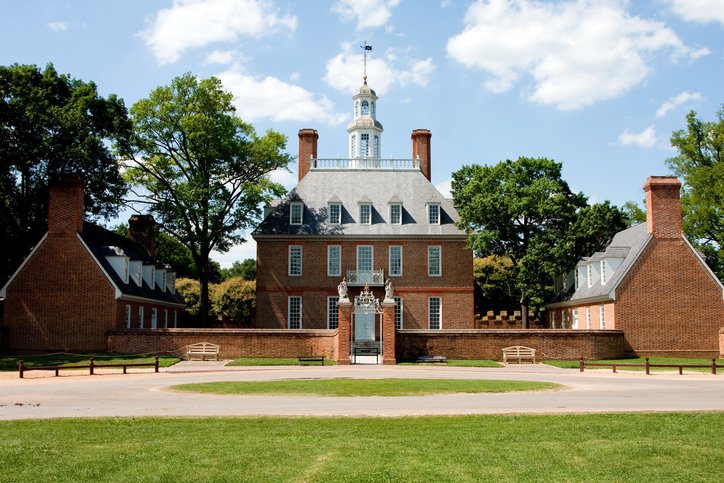
The Americans with Disabilities Act (ADA) was enacted in 1990 to prevent discrimination against individuals with disabilities in all aspects of life. The Act has been applied to a variety of segments of our society, including building entrance designs, website displays, and workplace accommodations. Recently, a new twist to the Act arose when a 12-year-old boy visited a Colonial Williamsburg restaurant with his classmates on a school field trip.
The case, J.D. v. Colonial Williamsburg Foundation, was originally filed in the U.S. District Court for the Eastern District of Virginia and later appealed to the 4th Cir Ct. App. No 18-1725. In J.D., a 12-year-old boy with severe Celiac disease visited a restaurant with his classmates on a school field trip to Colonial Williamsburg. J.D.’s condition was so severe that even the slightest ingestion of gluten-based foods caused severe illness. On prior occasions, other restaurants had offered J.D. gluten-free meals that accidentally or unknowingly contained trace amounts of gluten, which caused J.D.’s symptoms to flare up. Because of this, J.D.’s parents decided that when J.D. had to eat out, they would prepare J.D.’s food for him, so that he could safely and comfortably eat without incident or fear of incident. Knowing that the field trip would require J.D. to eat at a restaurant, J.D.’s father (who also attended the field trip) brought a home-prepared meal for J.D. to eat while the rest of the class ordered its meals from the restaurant menu.
When the time came for lunch, the restaurant staff notified J.D. and his father that he was not allowed to consume outside prepared foods in the restaurant due to Virginia’s Health Code. In fact, Virginia’s Health Code prohibits food prepared in a private home from being used or offered for human consumption in a food establishment unless the home kitchen is inspected and regulated by the Virginia Department of Agriculture and Consumer Services. 12 Va. Admin Code § 5-421-270(B). However, as an accommodation, the restaurant advised J.D. that its chef would prepare J.D. a gluten-free meal of baked chicken and potatoes to meet his specific needs. The father declined the offer, stating that they did not want to risk kitchen mistakes, and he preferred J.D. eat his home-prepared meal. Left with the options of eating the chef-prepared meal, not eating, or eating outside the restaurant, J.D. and his father left the restaurant and ate the home-prepared meal separate from his classmates.
J.D. filed suit under §504 of Title III of the ADA, claiming that Colonial Williamsburg discriminated against him by excluding him from the restaurant and failing to modify its policy against the consumption of outside food. Defendants moved for summary judgment, and while the magistrate found a genuine dispute of material fact as to whether J.D. was disabled under the ADA, he recommended dismissal because J.D. failed to establish that he was discriminated against because of his disability. The District Court Judge adopted the magistrate’s recommendations and dismissed the case. Plaintiff appealed to dismissal to the 4th Cir.
An ADA claim requires a plaintiff to prove three elements: 1) that plaintiff is disabled under the meaning of the Act; 2) that the defendant operates a place of public accommodation; and 3) the defendant discriminated against him because of that disability. See Ariz. ex rel. Goddard v. Harkins Amusement Enters., Inc., 603 F.3d 666, 670 (9th Cir. 2010); Camarillo v. Carrols Corp., 518 F.3d 153, 156 (2d Cir. 2008). In this case, there was no dispute on the second element, so the Court looked only at elements 1 and 3.
Under §12102(1)(A) of the ADA, a disability is defined as any “physical or mental impairment that substantially limits one or more major life activities.” This is different from an impairment, which the Act defines as any physiological disorder or condition that affects one or more body systems, including digestive. 28 CFR §36.105(b)(1). The 4th Cir. noted that “‘[N]ot every impairment will constitute a disability within the meaning of this section,’ but it will meet the definition if ‘it substantially limits the ability of an individual to perform a major life activity as compared to most people in the general population.” Id. § 36.105(d)(1)(v). Eating is a major life activity. Id. § 36.105(c)(1)(i).” J.D. at 10. The court then explained that when deciding if the Celiac disease created a disability, it had to interpret the ADA language “broadly in favor of expansive coverage.” Id. Even though J.D. had no symptoms when he avoided gluten, this was immaterial in determining if a disability existed, because the Court was required to look at his condition when he consumed gluten. Id. With the evidence showing that J.D. had serious consequences to his health when he ingested gluten and that he had an unusually small margin for error in his diet, the Court felt that there was a material question of fact as to whether J.D. had a disability within the meaning of the ADA. Thus, consistent with the District Court ruling, the court did not decide that J.D. had proven a disability, but rather, felt it was up to the jury to decide.
The Court then looked at the third element; i.e., whether or not Colonial Williamsburg discriminated against J.D. According to 42 U.S.C. § 12182(b)(2)(A)(ii), discrimination is defined, “in part, as: a failure to make reasonable modifications in policies, practices, or procedures, when such modifications are necessary to afford such goods, services, facilities, privileges, advantages, or accommodations to individuals with disabilities, unless the entity can demonstrate that making such modifications would fundamentally alter the nature of such goods, services, [etc.].” Id. (emphasis in original)
The courts use a three-part test to determine if discrimination occurs. The three parts are: “(1) whether the requested modification is “necessary” for the disabled individual; (2) whether it is “reasonable”; and (3) whether it would “fundamentally alter the nature” of the public accommodation. Id., citing PGA Tour, Inc. v. Martin, 532 U.S. 661, 674 (2001), at 683 n.38.
The Court first looked at whether the modification [allowing him to eat his home-prepared meal] was necessary to provide J.D. with a “like experience” to non-disabled guests. This necessarily requires the court to make an individualized inquiry into the plaintiff’s specific circumstances and determine if the proposed accommodation addresses the disability, or if the accommodation creates a condition that extends beyond the person’s capacity. In this case, J.D.’s evidence showed that he repeatedly became ill when exposed to gluten from meals prepared at restaurants, even when they were purported to be gluten-fee. While the court did not make an ultimate decision on whether the modification of its rules was necessary, it did find that there was sufficient evidence presented to create a genuine dispute of fact on whether eating out is beyond J.D.’s capacity.
Second, where an accommodation is already in place, a plaintiff may still be entitled to something more if he can show that the accommodation does not account sufficiently for his disability.” J.D. at 16. In this case, the restaurant’s proposed accommodation was to prepare a gluten-free meal. Given J.D.’s history of illness from prior attempts at gluten-free restaurant meals, it became a question of fact as to whether or not the restaurant’s proposed accommodation was sufficient. “Indeed, a jury might well reject J.D.’s evidence about the severity of his gluten intolerance, and thus find that the protocols at [the restaurant] were sufficient to account for his disability. But in our view, J.D. has put forth enough evidence at this stage to raise a genuine dispute of material fact as to whether the proposed accommodation sufficiently accounts for his disability.” Id. at 17.
For the next step of its analysis, the 4th Cir. considered whether or not the restaurant’s proposed accommodation was reasonable or not. Indeed, “[f]acilities are not required to make any and all possible accommodations that would provide full and equal access to disabled patrons,” but “need only make accommodations that are reasonable.” Id. at 18. Citations omitted. Here, the court pointed out that the restaurant allowed guests to serve their own food if it is for babies or if they wanted to bring a cake in for large celebrations, provided the restaurant was given advance notice. The fact that J.D. may not have provided advance notice to the restaurant was dismissed as irrelevant to the court, because the lack of notice did not require additional staffing or create an unreasonable hardship in the restaurant’s operations. And when looking at the Health Code regulations the restaurant cited for its policy, the 4th Cir. noted that the prohibition on home-prepared foods was designed to prevent restaurants from serving food prepared in private homes. It did not prohibit customers from bringing in outside food. There was no evidence introduced that J.D.’s request would truly impose a safety concern or risk contamination of other foods. The court reasoned that if that were the case, the restaurant would not allow outside foods in other circumstances.
The Court ultimately ruled that decisions of reasonableness of accommodations are highly individualized, fact-specific for each case. As a result, they are decisions best left to a jury, who can judge the credibility of witnesses and weigh the importance of evidence.
Finally, the Court looked to the restaurant’s affirmative defense that allowing homemade meals fundamentally changes the restaurant experience. Under this defense, the defendant must prove that the Plaintiff’s request would fundamentally alter the nature of the program or services provided by the restaurant. Like the other issues, the court considered, this too was found to be a jury question. A jury “could reasonably find that accommodating the occasional request of someone with severe food sensitivities would not fundamentally alter the Tavern’s business model, especially if other family members purchase food or (as happened here) if the meals are already paid for as part of a group rate.” Id. at 23.
Impact of Ruling
Given the above, the 4th Cir. reversed the trial court’s dismissal and remanded it back to the District Court. The takeaways from the decision are striking.
First, it seems clear that the court is framing ADA cases such as this to be treated similarly to ordinary negligence cases. Those cases are almost always fact-specific and to be determined by a jury. If there is any credible evidence to support a claimant’s case, the court is likely to defer ruling to the jury.
Second, it is important to note that the Health Code Regulation relied upon by the restaurant does not expressly state that it is designed to prohibit the serving of food, rather than customers bringing in food. This ruling places restaurants in a difficult position of having to choose between enforcing written regulations and agreeing to proposed individual modifications as necessitated by the ADA. Restaurant staffers are not trained in legal analysis, and it seems untenable that a waiter or manager would have to interpret the intent of a health regulation. Forcing a restaurant to make such interpretation exposes a restaurant to more litigation because the parties cannot know if it is proper to violate the regulations based on its language. Indeed, the Dissent correctly notes that the de facto result of this ruling is that “Restaurants must either allow patrons to consume food prepared outside their premises or must justify their refusal at a costly trial.” J.D. at 32. Both the disabled parties and the restaurant industry would be better served if the Health Regulation was written clearly to prohibit serving versus bringing in outside foods, and the restaurant could rely upon the code as written.
Finally, it seems clear that the Courts are taking an expansive view of the ADA’s coverage. Rather than draw bright line tests that disabled persons and businesses can plan for, individualized assessments on a case-by-case basis must be made. This is likely to result in inconsistent applications where some modifications are allowed but possibly similar modifications are not allowed. As the dissent in J.D. notes, “[t]he majority’s rule means that a patron’s demand that he be allowed to eat outside food will sometimes be reasonable and other times not. This puts managers in the middle of a difficult line-drawing exercise: What criteria are they supposed to use in navigating the tension between the ADA’s requirements and public health law? Which privately prepared meals must they allow and which may they refuse? The majority wouldn’t even require advance notice from customers in J.D.’s position, meaning that managers will have to evaluate the disruption and the safety hazard of a customer’s outside meal on the fly, with the specter of litigation hanging overhead.” J.D. at 31.
If you have any questions about this ruling, its impact on restaurant operations, or how it may impact your business, the attorneys at KPM LAW are ready for your call.
]]>The increased costs of operating a restaurant can be attributed to minimum wage increases, healthcare, paid sick leave, restrictive scheduling, cost of food and supplies and increase pay equity between traditionally tipped employees and heart of the house employees. As such, these surcharges need to be analyzed for taxation purposes and legality as to how they are implemented.
A. Tax and Wage Implications
First let us think about how surcharges affect a company from a tax and reporting perspective. Starting in 1994, many restaurants have benefited from being allowed to apply a general business credit toward a portion of the employer’s Social Security and Medicare taxes paid with respect to their employees’ cash tip earnings (IRC 45 B). However, the policy set forth in Rev. Rule 2012-18 means that the credit would not apply with respect to surcharges, because these mandatory charges do not qualify as tips.
Surcharges like a service charge are a taxable event. The sales tax is imposed upon the retailer for the privilege of selling tangible personal property. “Gross receipts” provides that the taxable gross receipts include all amounts received with respect to the sale, with no deduction for the cost of the property sold, materials used, labor or service cost, or any other expense of the retailer passed on to the customer. Any expense of a restaurant passed on to customers in the form of a surcharge must be included in taxable gross receipts. Since there are no specific sales and use tax exemptions for a surcharge imposed, retailers may not claim the cost of the surcharge as a deduction on their Sales and Use Tax return. Therefore, a separate surcharge on customer bills must include the surcharge amount in the calculation of tax.
To the extent, a company elects to distribute a surcharge to its employees, the surcharge will be treated and must be reported as Salaries and Wages on the business tax return. Another issue to consider is that an employer who pays out a portion of the surcharges to employees may have to recalculate its employees’ overtime rates (if the employees work more than 40 hours in a week or 8 hours a day for businesses in California). As any distributed surcharges are wages, that money would count toward an employee’s regular rate of pay and therefore must be factored into the overtime rate calculation.
B. Claims Asserted
Starting in 2017 comments by several City Attorneys, as well as some letters, have raised issues concerning surcharges. Specifically, some City Attorneys have raised the manner under which surcharges are communicated to customers. Also in 2017, there were 16 cases filed in San Diego, California asserting the illegality of the surcharges and the manner of disclosure generally. These lawsuits claimed these restaurants were in violation of consumer protection laws including false advertising, unfair competition and misrepresenting the prices on their menus. It was further claimed that a failure to clearly and conspicuously communicate a surcharge might render the stated price of a food item untrue and misleading under California law. The San Diego City Attorney has made some statements that such charges are being investigated and may result in prosecution under the guise of consumer protection for false advertising. These lawsuits sought restitution, injunctive relief, civil penalties, punitive damages and attorneys’ fees.
In a ruling on November 16, 2018, a San Diego Superior Court Judge ruled in granting judgment for the restaurant at issue that the “undisputed evidence establishes that the surcharge is not unlawful as a matter of law.” Further, the Court concluded the restaurant “made adequate and non-misleading disclosures about the surcharge.” Subsequent judgments were entered in favor of other restaurants by the same judge in December 2018 and January 2019 based on the November 2018 ruling; whereby the ruling of the Court was adopted as to the legality of the use of surcharges by restaurants. In February 2019, a federal judge also granted summary judgment concerning identical allegations concerning the use of a surcharge.
C. Prevention Tips
As a result, even though surcharges are a legal and allowable option to help defray the recent increases in costs, there are some approaches that should be considered to avoid potential litigation. There are no regulations or laws that state how a restaurant should specifically and clearly disclose the existence of a surcharge. However, to try and prevent the filing of an adverse claim, it would be prudent that a company discloses up front that the items for example a meal (food and drink item(s)) is subject to a surcharge and state the percentage of the surcharge on the menu, in a prominent sign or posting, on web pages, as well as on advertising materials either electronic or paper. Also even though not specifically required, it would be prudent that the disclosure stand alone and not be contained in a statement about other aspects of the business. Some companies have elected to highlight the disclosure in a different or larger font or color as a means to try and alleviate concerns raised by governmental entities. That said, there is no mandatory way that a surcharge should be disclosed to a customer. In summary, there is no legislative or statutory guidance as to how a surcharge should be disclosed.
There is no requirement that a sign be used to disclose a surcharge but having a surcharge disclosure sign is another means of avoiding a consumer claim. If a restaurant elects to use signage, there is also no requirement about the size of font on any sign posted in a restaurant about a surcharge. Hospitality companies who elect to use a sign should consider a sign about a surcharge and percentage where patrons are likely to see it as they enter the restaurant. A sign no smaller than 10 inches wide by 10 inches high or a horizontal strip marker no smaller than 10 ½ inches wide by 1 ¼ inches high bearing the surcharge information in at least a 36-point font would arguably comply with the “conspicuous” requirements. Also, if a fair amount of the business is take-out or occurs at a register, the placing of a disclosure sign at the register would likewise be another preventive step for notice purposes.
As to menus, any statement as to surcharges should be separate from other information. Some restaurants have elected to use bold font, a different color or italics. However, none of this is required. It is merely one option. In addition, the font as to the disclosure should not be smaller than other items printed on menus or electronic media and certainly at least the size of the menu items and the prices. These steps should help defray any claims that the restaurant did not clearly and conspicuously disclose the existence of a surcharge.
Many San Francisco restaurants implemented a surcharge (i.e., an extra fee or cost) on the goods or services they sell to customers to cover, in whole or in part, the expense of complying with the Health Care Security Ordinance passed in 2008. This surcharge was specifically designated to defray the costs of the local healthcare ordinance. Some restaurants faced litigation and penalties when these surcharges were not utilized to pay for the cost of health care. There is now a requirement in San Francisco that the business on an annual basis disclose: 1) the amount collected from the surcharge for covered employee health care and 2) the amount spent on covered employee health care. Therefore, based on these lessons learned, if a company elects to impose a surcharge, it should consider disclosing it in a broad manner rather than designating it for a particular cost item. A more specific designation could subject the retailer to show that the surcharge collected must be only used for that item e.g., the cost of health care to employees. As a result, a broad designation of the surcharge would be a good preventive measure. The broader the language, the more flexibility the company has in how to utilize the money collected from the surcharge.
D. Summary Recommendations
Overall, surcharges are legal as supported by the recent court ruling. However, hospitality should implement surcharges with an eye toward prevention of any claims for consumer fraud, false advertising, unfair business practices or improper utilization of the surcharge. A company has wide discretion as to how it discloses and communicates the use of a surcharge but the disclosure should be sufficiently conspicuous to a reasonable consumer.
If a company elects to implement a surcharge, at a minimum the fact that there is a surcharge must be disclosed on the receipt as “SURCHARGE” and sales tax must be charged on all service charges and any separate surcharge line item, regardless of any amount that might be paid to the employees.
Herein is a summary of steps that a company should consider implementing, even though not currently required or mandated, as a means to prevent a legal claim:
- If a sign is utilized, take steps to place the sign at an entrance and/or at a check out area, disclosing the surcharge
- The use of the words “mandate” or “mandatory” when describing the surcharge, while not illegal, has been misinterpreted and has been criticized by some customers and political officials.
- Disclose the surcharge on menus, on websites and in advertisements, both paper and electronic, when the prices are disclosed
- Make sure the disclosure on the menu is at least the same font and size as the menu items and prices
- Keep any rationale as to the reason for the surcharge as broad as possible, e.g., to defray the increased cost of operations
Also, it is important to consult with your tax advisor or tax attorney to determine the proper method of taxing surcharges and paying your employees if a portion of the surcharge is distributed to the employees. It is also highly recommended to consult with qualified legal counsel concerning any questions about surcharges and how to disclose them to customers.
This article is part of our Conference Materials Library and has a PowerPoint counterpart that can be accessed in the Resource Libary.
HospitalityLawyer.com® provides numerous resources to all sponsors and attendees of The Hospitality Law Conference: Series 2.0 (Houston and Washington D.C.). If you have attended one of our conferences in the last 12 months you can access our Travel Risk Library, Conference Materials Library, ADA Risk Library, Electronic Journal, Rooms Chronicle and more, by creating an account. Our libraries are filled with white papers and presentations by industry leaders, hotel and restaurant experts, and hotel and restaurant lawyers. Click here to create an account or, if you already have an account, click here to login.
]]>But not every article of clothing constitutes a “uniform” under the FLSA. The U.S. Department of Labor (USDOL) has long maintained that certain clothing, although required by the employer, is of such a character that it may be reasonably worn outside the context of work and therefore is not a uniform. Shoes are an interesting case-study.
Does The Shoe Fit?
Many hospitality employers often require employees, such as culinary department workers, to wear a certain type of shoe during work hours. Perhaps the most popular variety is the dark-colored, non-slip shoe—widely used both for their appearance and for safety reasons.
Some employers may be surprised to learn that the USDOL takes the position that these shoes do not constitute a uniform under the FLSA. As a result, employers can impose the cost of such shoes even if the cost results in the employee receiving less than the minimum wage after such deduction.
Before The Other Shoe Drops…
A word of caution before hospitality employers rush out to take advantage of this cost transfer. Experience in USDOL investigations teaches us that the agency does not give employers complete freedom regarding shoe deductions, even when it comes to dark-colored, non-slip shoes. For example, if you require employees to order a specific brand of shoe from a certain vendor when a comparable, less-expensive alternative is available, the USDOL may conclude that the shoe is no longer “basic street clothing.” The agency may reach the same conclusion if the employee already owns a pair of shoes but is told that they must order a new pair. Finally, the USDOL will be on the lookout for any ordering mechanism whereby the employer receives a fee or profit anytime an employee orders shoes through a designated vendor.
Many hospitality employers are familiar with Shoes for Crews, a manufacturer of non-slip shoes and other accessories. Shoes for Crews offers a corporate program to businesses which includes a “warranty” in the form of a $5,000 payment if an employee wearing Shoes for Crews slips at work. The USDOL finds this warranty problematic. The agency has been known to take the position in investigations that this warranty constitutes a benefit to the employer that changes the legal characteristic of the shoe such that it becomes a uniform. Thus, according to USDOL, an employer participating in this Shoes for Crews corporate program may not impose the cost of the shoe on an employee if doing so cuts into the minimum wage or overtime wages. The agency has taken this position even when an employer has never asserted a claim for the Shoes for Crews warranty payment.
Conclusion: Putting Yourself In Your Employees’ Shoes
The cost of purchasing (or cleaning) a uniform can be problematic for employers, when the cost (or part of the cost) is borne by the employee. Setting aside whether there is a legal basis for the USDOL’s position on the shoe warranty program, hospitality employers should carefully review their policies as they relate to the cost of required clothing worn by employees.
For non-slip shoes, if you have decided to pass on the cost of these shoes to employees, consider giving the employee the option of purchasing shoes at a retailer of their choice or wearing already-owned shoes which are compliant with safety requirements. This is particularly true for employers that participate in the Shoes for Crews corporate program.
For more information, contact the authors:
Andria Ryan – Partner, Atlanta office
ALureryan@fisherphillips.com
(404.240.4219)
Ted Boehm – Partner, Atlanta office
TBoehm@fisherphillips.com
(404.240.4286)
(Sesame) Seeds Of Dissension: Fast-Food Employees Want To Wear Their Buttons
After the Burgerville employees refused to remove the buttons, they were sent packing for the day. In a statement responding to the incident, the company cited to its verbal, unwritten policy against “personal buttons,” and subsequently instated a written dress code, banning the politically charged buttons and reiterating its need to protect its public image.
In response to the button incident, the “Burgerville Workers Union” (BVWU)—the first federally recognized fast food union in the United States, and an active one at that—geared up for battle, indicating that it would pursue legal options. Despite the company rescinding the policy the very next day and paying backpay to those employees who were sent home, the union solicited customers to boycott the chain and encouraged its workers to go on strike, picketing three of Burgerville’s locations—which incidentally occurred on National Cheeseburger Day, September 18.
Pinning Down What “Special Circumstances” Justify A Button Ban
Burgerville’s button issue is not the first time that burger-chain employers have faced politically motivated buttons at work. In April 2015, In-N-Out employees in Austin, Texas sported “Fight for Fifteen” buttons on their uniforms, in solidarity with the push for a $15 minimum wage. There, like Burgerville, the employer asked employees to remove the buttons, as they violated In-N-Out’s policy against non-company related pins, buttons, and stickers.
In-N-Out’s button-as-political-protest issue had so much traction that, in May 2017, the National Labor Relations Board (NLRB) weighed in on the issue.
When the agency analyzed In-N-Out’s policy, it rejected the “special circumstances” which authorizes companies to ban union apparel and insignia in order to maintain restaurant consistent image. The NLRB was unconvinced, ruling that any uniform policy forbidding employees from wearing buttons, pins, or stickers on one’s uniform violated Section 8(a)(1) of the National Labor Relations Act (NLRA), which makes it an “unlawful labor practice” to interfere with employees’ exercise of their Section 7 rights (to unionize or collectively bargain) under the NLRA.
The issue of whether an employer can regulate politically charged apparel and insignia has been festering for years, in and out of the fast-food arena, and a sampling of several recent cases reveals that the issue remains a challenge for employers to resolve:
- Pacific Bell employees were allowed to wear union insignia and buttons that read “WTF Where’s The Fairness,” “Cut the Crap! Not My Healthcare,” because the employer had not demonstrated any justifiable prohibition on the insignia, in spite of their vulgar content.
- However, employees at the W Hotel in San Diego were not allowed to wear buttons that read “Justice NOW! JUSTICIA AHORA! H.E.R.E. LOCAL 30,” as the hotel demonstrated special circumstances that the buttons would not jibe with its “trendy, chic, and alternative” hotel experience.
- Daily Grill employees could not be prohibited from wearing union buttons, as Daily Grill presented no evidence that the small buttons and pins would impede its restaurant’s “ambience” of traditional and classic style.
- Starbucks was able to limit its employees to one union button after successfully arguing that multiple buttons would be disruptive to its image.
What Can Employers Do?
In determining how you should respond should this issue arise in your workplace, the first thing to know is that, regardless of whether an employer is unionized or not, the NLRA applies to almost all private employers. And given the current divisive political climate, displays of political speech in the workplace are not uncommon and could make an appearance at your worksites. So it’s more important than ever for you to understand the rules governing these kinds of situations.
The NLRB has articulated three limited circumstances under which employers may place limits and prohibitions on the clothing choices of their employees while at work. These circumstances are:
- when its display may jeopardize employee safety or damage machinery or products;
- when its display might exacerbate employee dissension; or
- where it unreasonably interferes with a public image which the employer has established as part of its business plan, through nondiscriminatory appearance rules for its employees.
The burden is on the employer to show the special circumstances exist, and that the prohibitions are narrowly tailored to the circumstances at issue. As the aforementioned cases make clear, this is a highly fact-intensive inquiry, and employers must set forth evidence in support of its “special circumstances.”
While you can still regulate what goes on in your workplace, the policies you enforce cannot run afoul of Section 7 of the NLRA. Therefore, best practices would include having a uniformly enforced, well-documented dress code or other policy that articulates your image or particular safety concerns, if relevant. Given the presumption of at-will employment in most states, you can terminate your at-will employees for any lawful reason.
You should be mindful that, while political affiliation is not a federally protected class, states like California provide protections for employees against discrimination based on political activity and affiliation. If an employee is wearing a button, it is also critical that you avoid a harsh rebuke, whether suspending employees, sending them home, or terminating them, as such an overreaction could be evidence of illegal bias. If buttons are unavoidable, it may also be helpful to cap insignia at one pin/button a person, a la Starbucks.
Wrapping Up
While it remains to be seen what will become of the Burgerville button incident, you would be best served to approach any type of insignia with a cautious, pragmatic attitude, and to consult with your labor attorney before proceeding with a new policy or response to a button in the workplace.
For more information, contact the authors:
Setareh Ebrahimian | SEbrahimian@fisherphillips.com (703.682.7096)
Setareh Ebrahimian is an associate in the firm’s Washington D.C. office. She represents employers in a wide range of employment matters in state and federal courts. Setareh defends employers facing claims of race, gender, national origin, age, religion, pregnancy and disability discrimination, harassment and retaliation, purported violations of leave, wage and hour laws, enforcement of non-competes, as well as claims arising under local and state law. She also represents companies facing investigations by the Equal Employment Opportunity Commission and related local and state agencies.
In addition to litigating, Setareh advises and counsels employers on matters involving personnel policies, hiring, training, employee handbooks, discipline, termination, reasonable accommodations, protected leave, reductions in force, employee complaints and internal investigations, as well as regulatory compliance.
Danielle Krauthamer | DKrauthamer@fisherphillips.com (213.330.4472)
Danielle Krauthamer is an associate in the Los Angeles office. In her practice, Danielle advises companies of all sizes in an array of labor and employment matters, including claims of wage and hour violations, retaliation, wrongful termination, and discrimination.
Prior to joining Fisher Phillips, Danielle gained valuable experience as a judicial law clerk for the Honorable Ronald S.W. Lew at the United States District Court for the Central District of California, managing the judge’s docket in one of the busiest districts in the nation. While there, she had significant exposure to civil litigation cases across a wide range of subject matter.
]]>Property Crimes Still Dominate the Hospitality Sector
The majority of hotel crimes are property related. Burglary and theft are the two most common crimes in hotels and most hospitality-based businesses. Hospitality businesses are expected to provide a safe environment to their clients. Many clients have begun seeking legal action not only against the thieves, but the service providers as well. Evidence suggests that this number is tied to poor security practices and that many property crimes could be avoided.
Security for Your Staff
Harassment and discrimination crimes continue to soar in the hospitality sector. One poll of 300 workers in the hospitality sector showed that 89% had been sexually harassed by guests or fellow employees at some point. Of those, around 56% said that the harassment came from a member of the public or a client. Staff safety and avoidance of bullying for physical and mental health reasons however, is a priority.
Furthermore, legal issues regarding tip pools and Fair Labor Management are expected to become an important topic soon. In countries like America and the UK, prices in the hospitality sector are expected to fluctuate due to recent changes in policy. This means businesses trying to maintain their same wages and practices may soon fail to meet minimum wage laws, overtime laws, and more.
Negligence Maintaining Buildings and Permits Persists
For management, the most common legal issues still involve business maintenance. Laws regarding expiring building permits and health codes are expected to become stricter soon. The rate of legal cases involving tax obligations and trademark issues has remained steady for the time being.
The hospitality sector currently faces several legal issues. Discrimination and harassment are unfortunately considered common in the hospitality sector. Property theft and burglary are the most common legal issues facing guests and clients in the hospitality sector. The most common legal issues for management in the hospitality sector continue to be issues regarding health codes, expiring building permits, and tax or trademark issues that businesses have chosen to ignore.
]]>In Rodriguez v. Taco Bell Corp., the United States Court of Appeals for the Ninth Circuit considered whether a restaurant violated California law by requiring employees purchasing meals from the restaurant at a discount to eat their meals on the premises.
In Rodriguez, a restaurant employee filed a class action lawsuit against Taco Bell claiming she was entitled to be paid a premium rate for the time she spent on the employer’s premises eating the discounted meal during her meal breaks. She argued that because the employer required the discounted meal to be eaten in the restaurant, that the employee was under sufficient employer control to render the time compensable.
At the time, the restaurant offered thirty-minute meal breaks that were fully compliant with California requirements, but with an offer that employees could purchase a meal from the restaurant at a discount. The catch? Employees were not required to purchase the discounted meal, but if they chose to they could only get the discount if they ate the meal in the restaurant. The policy was intended to prevent theft.
The court, applying the meal period standard set out by the California Supreme Court in Brinker Restaurant Corp. v. Superior Court, reasoned there was no violation of California law because the employer relieved employees of all duties during meal breaks and exercised no control over their activities. Employees were free to use the thirty minutes as they wanted, and the employer did not interfere with the employees’ use of the break time. Employees were not required to purchase any restaurant products.
The court in Rodriguez distinguished cases where employers exercised control over employees even though they were not performing work by, for example, requiring employees travel to work on employer provided transportation. Where employees were compelled to participate, compensation was required. On the other hand, where employers offered a benefit or service that employees could choose, compensation was not required. The court further distinguished cases where employers exercised control over employees during their breaks by, for example, subjecting them to “on-call” restrictions. In such cases employees were subject to performing duties for their employer during breaks and thus entitled to compensation for such time.
The court also rejected an additional claim by plaintiff that the discounted value of the meal should be added to her regular rate of pay for overtime purposes. Since the court held plaintiff was not entitled to be paid for her time eating the discounted meals, it likewise held she was not entitled to overtime pay for it either.
Background on Meal Periods
In general, non-exempt employees who work more than five hours in a day are entitled to an unpaid meal period of not less than 30 minutes. The meal period must begin no later than the fifth hour of work. Yet, if the total work period per day of the employee is no more than six hours, the meal period may be waived by mutual consent of both the employer and employee.
A second meal period of not less than 30 minutes is required if non-exempt employees work more than ten hours in a day. The meal period must begin no later than the end of the tenth hour of work. If the total hours worked is no more than 12 hours, the second meal period may be waived by mutual consent of the employer and employee only if the first meal period was not waived.
Wage Order 5, which governs meal periods, rest periods and overtime in the restaurant industry, requires employees be relieved of “all duty” during the meal period. The failure to provide a required meal period can be a costly mistake for employers. Employees are entitled to premium wages of one additional hour of pay at the employee’s regular rate of pay for each workday that the meal period is not provided.
Prior to the decision in Brinker, there was uncertainty over what it meant for an employer to provide a meal period. Brinker clarified that an employer is obligated to relieve the employee of all duty for the designated period. Although employers are not required to police employees to ensure no work is performed, employers must relinquish control over employee’s activities, must permit them a reasonable opportunity to take an uninterrupted 30-minute break, and must not impede or discourage them from doing so. In discussing the history of meal periods, the Brinker Court agreed with the Division of Labor Standards Enforcement’s historic interpretation of the wage order that generally employees must be free to leave the premises during their meal period.
Takeaways for Businesses
Rodriguez sanctions a common practice in the restaurant and food service industries to offer employees free or discounted meals eaten on the premises. It remains true that employees not falling within this exception must be permitted to leave the work place for a proper off-duty meal period. The key will be, as it was in Rodriguez, that the employee voluntarily chooses to purchase a discounted meal and the employer does not interfere with the employee’s activities while on break.
This case is a good reminder for businesses to ensure their meal period policy is up to date and that managers are adequately trained to ensure compliance. Care should be taken so that employees are not discouraged from taking their uninterrupted, duty-free meal periods.
]]>EXAMPLE #1: EMPLOYEE HANDBOOKS. Though payroll companies and the Internet have made it easy to create an employee handbook, all restaurants and bars would benefit from crafting an employee handbook specific to their needs. Working with a professional who knows your company ensures a familiarity with the employee handbook that becomes invaluable when, inevitably, matters involving discipline, investigations, employee benefits, drug testing, alcohol policy, and termination arise.
EXAMPLE #2: TIP CREDIT NOTIFICATION FORMS. While the restaurant knows it is taking a tip credit in calculating a tipped employee’s wages, and the tipped employee (almost 100% of the time) knows the restaurant is taking a tip credit in calculating his or her wages, that is not enough for the U.S. Department of Labor (“DOL”). The regulations require that an employer specifically tell each employee about the rules regarding the tip credit – and any tip pool – in detail. While the regulations allow notification to be made orally, there is no way to prove oral communication in court. Because DOL enforcement guidelines state that the generic FLSA poster does not meet this obligation, employers should have a written tip credit and tip pooling notification policy before hiring their first tipped employee. Liability for this failure can be astronomical – up to $5.12 per hour for each hour worked by a tipped employee during the previous two years. Multiplied by two!
EXAMPLE #3: RESPONSIBLE ALCOHOL SERVICE POLICIES. Most retailers are well-aware of the fact that they should only hire employees who have received certification from state alcoholic beverage commission-approved courses (or require their employees to obtain certification promptly after hire). However, in Texas, retailers can only invoke the Safe Harbor (preventing the TABC from suspending or revoking their license) in the event of a server’s TABC violation if the retailer has written policies regarding “responsible alcohol service and consumption, and ensures that each employee has read and understands these policies.” Thus, failing to include a straightforward Responsible Alcohol Service Policy for new hires to review and sign could result in significant liability down the road.
EXAMPLE #4: WAGE DEDUCTION AUTHORIZATION FORMS. The FLSA does not permit any employer to deduct an employee’s wages below the minimum wage. Many states, Texas included, only allow wage deductions (for reasons other than taxes and court-ordered garnishments) if an employee has authorized the deduction in writing. Thus, even in Texas an employer cannot legally deduct an employee’s pay for stealing company funds absent a written authorization. This makes a Wage Deduction Authorization another very simple, but very important, document to include with new hire paperwork. Notably, because an employer cannot deduct any wages below the minimum wage, that necessarily means an employer cannot make any deductions for employees that are paid $7.25 per hour or less (such as servers and bartenders). This includes branded/non-generic uniforms, cash register shortages, breakage, walkouts, etc.
EXAMPLE #5: DOCUMENT TRANSLATION. Finally, it is important to mention that even the best employee documents do nothing for an employer if the documents are not translated into a language the employee can read. If an employee cannot read the employer’s documents, the employer is treated as having no employment-related documents at all, and it cannot take advantage of numerous defenses afforded to it in all manner of employment-related disputes.
]]>