This summer we completed our first annual survey of typical overnight parking rates nationwide. Not surprisingly, the highest rates for parking are generally found in New York City, including the $95 parking rate currently charged by The Plaza. Nightly rates at luxury and upper-upscale properties in New York City, San Francisco, and Chicago tend to trend near the $70 to $75 mark. By comparison, most other city centers offer overnight parking at a bargain or do not charge for overnight parking. Also note the following findings:
- The following data reflect valet parking charges; if self-parking is an option, we have found these hotels discount the valet parking rate by $10 to $15 dollars on average.
- Hotels that reported free parking (when the range in the table begins with $0) are generally located on the fringe of central business districts, and not directly in the center of downtown.
- Luxury and upper-upscale hotels fall at the upper end of the range, whereas midscale hotels fall at the lower end of the range.
- Bold green reflects the cities with the highest overnight parking charges, whereas light green still reflects high parking rates, but not at the nation’s peak level.
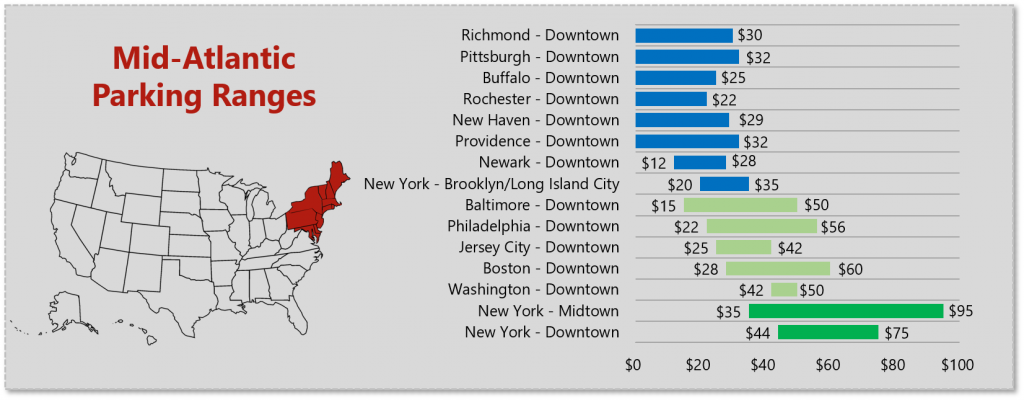
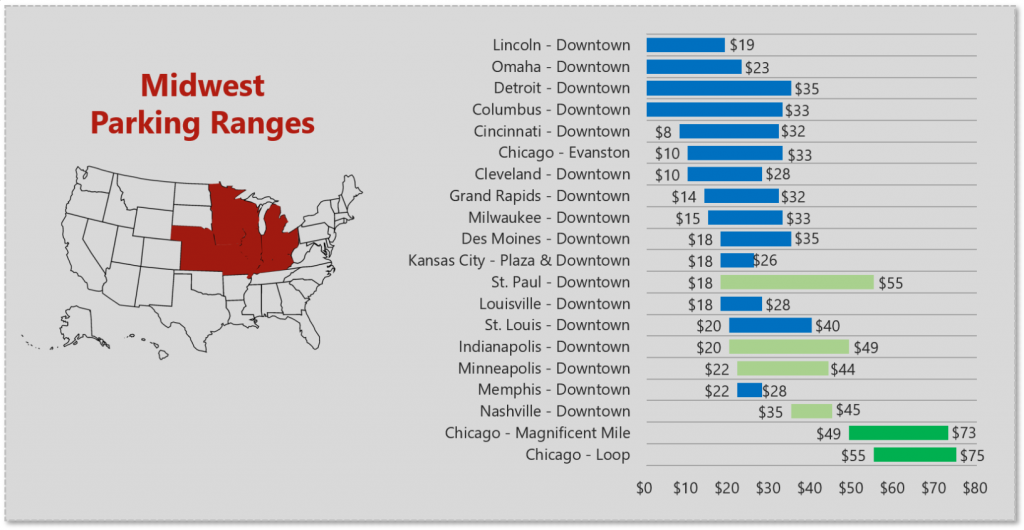
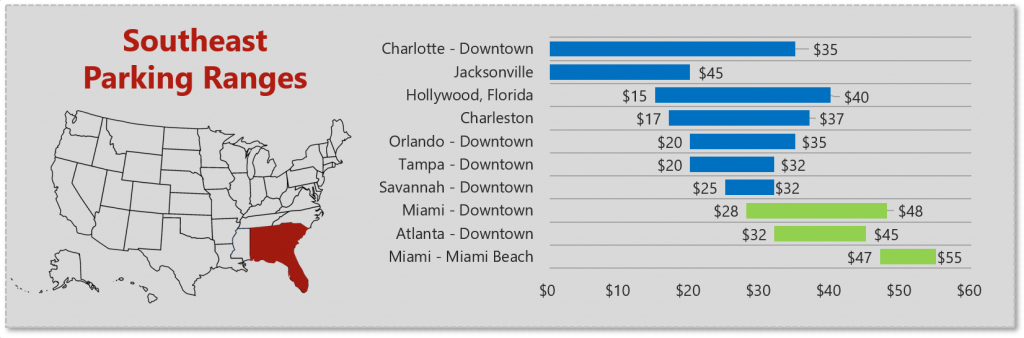
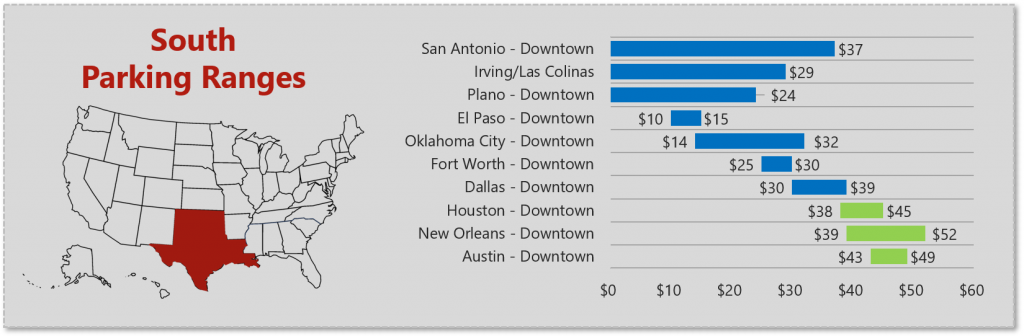
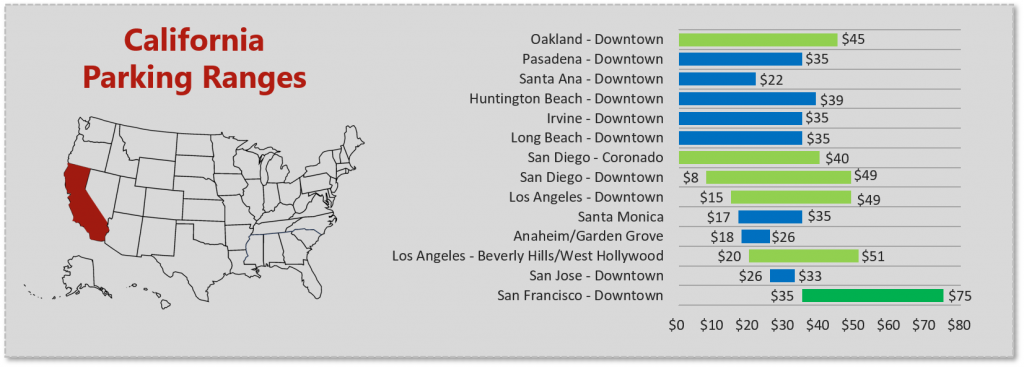
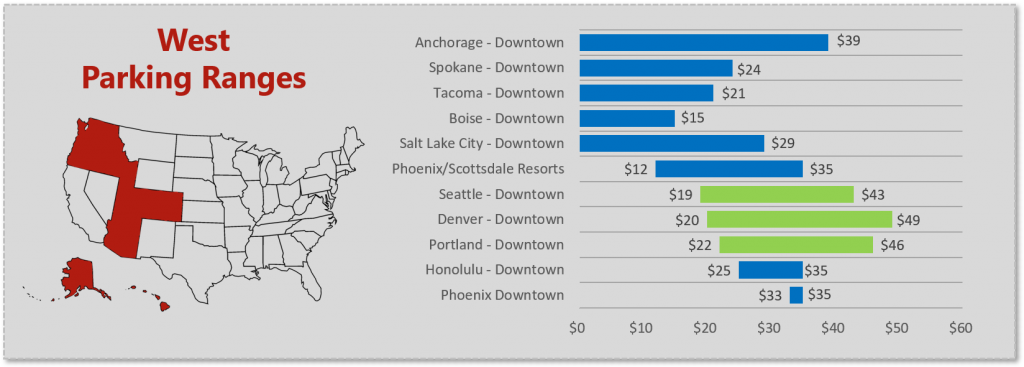
From a valuation perspective, be careful when comparing properties in city centers. A few may have major parking components (abnormal for a market) that skew a value high on a per- key basis, compared to another similarly-sized property on solely a room-count basis. It is important to inquire about garage utilization by daily and monthly users, daily parking rates, monthly contract rates, and the trends in all of the above over the last several years.
Data collection assistance provided by HVS team members Yi Ann Pan, Ziggy Hallgarten, and Bryanna Andersen.
]]>While New Jersey is the first state to enact such a law, which will go into effect in January 2020, it follows a growing trend in cities throughout the country – particularly in Chicago, Miami, Sacramento, and Seattle – that have seen the passage of ordinances requiring panic devices for certain hotel employees, among other protections. Other cities, such as Las Vegas and New York City, have seen the introduction of panic devices in the wake of union negotiations. The introduction of panic devices will likely go beyond major metropolitan areas, however, as executives at some of the largest hotels have reportedly revealed their plans to provide panic buttons to their employees across the country by 2020.
If you have operations in New Jersey, you need to immediately familiarize yourself with this new law and take compliance steps. And if you don’t have operations in the state or one of the other areas with such a law, you should still be aware of this trend, as it not only presents some concepts for best practices in a hotel setting, but may soon arrive in your own area.
Coverage And Scope
The New Jersey Panic Device Law defines hotel to include not just hotels, but also inns, boarding houses, motels, and other similar establishments that offer and accept payment in exchange for rooms, sleeping accommodations, or board and lodging and that retain rights of access and control over their premises. Regardless of the type of “hotel,” the establishment must also have at least 100 guest rooms in order to be subject to the Panic Device Law. If your business has fewer than 100 guest rooms, compliance with the Panic Device Law is unnecessary.
The Panic Device Law defines an employee as one who performs housekeeping and room service functions on a full or part-time basis at a hotel for, or under the direction of, a hotel employer or any subcontractor of the hotel employer. The law therefore covers and protects hotel employees, contractors, and subcontractors, sweeping them together under an expansive definition of an employee.
The definition of an employer is as broad or broader and includes any person, including corporate officers and executives, who directly, through an agent, or another person (e.g., a staffing agency) employs or exercises control over a hotel employee’s wages, hours, or working conditions. Awareness of and compliance with the Panic Device Law is thus essential by directors, managers, supervisors, and anyone else who may exercise sufficient control over hotel employees.
Provision And Use Of Panic Devices
Employers of covered hotels must provide employees that work in a guest room by themselves with a panic device. Employers are prohibited from charging employees for the panic device and must purchase and furnish them at their expense. The Panic Device Law defines a panic device as a two-way radio or other electronic device that can be used by the employee to call for immediate assistance from a security officer, manager, supervisor, or other appropriate person.
Employees are permitted to use their panic device whenever they believe there is ongoing crime, an immediate threat of assault or harassment, or some other emergency in their presence warranting the use of their panic device. Once used, employees may stop their work and leave the area for safety and assistance.
Employers’ Duties When A Panic Device Is Used
Employers are forbidden from taking adverse action against an employee for using a panic device. After a panic device is used, aside from promptly responding to the call, employers must also:
Note an accusation against a guest to for “violence” – which is broadly defined to include sexual assault, sexual harassment, and other inappropriate conduct – toward an employee and put the guest’s name on a list and retain it for five years from the date of the reported incident, along with details of the accusation.
Report any alleged crime by a guest or other person to law enforcement and cooperate in any investigation by law enforcement.
Reassign the employee who activated the panic device to a different work area away from the accused guest’s room for the duration of the accused guest’s stay.
Notify employees assigned to a guest room where a reported incident has occurred of the presence and location of the accused guest named on the hotel’s list and provide them with the option of servicing the accused guest’s room with a partner or declining to serve the accused guest’s room for the duration of the accused guest’s stay.
If an employer later learns that the accused guest is convicted of a crime as a result of the activation of a panic button, the employer may prohibit the guest from staying at the hotel.
Programs For Employees
Employers must develop and maintain programs to educate employees about the use of panic devices and their rights in the event they use their panic devices. The programs should also encourage employees to use their panic devices. Written information may supplement, but not substitute, training programs for employees.
Information For Guests
Covered hotels must also inform their guests about panic devices in one of two ways. They may either require guests to acknowledge a panic device policy as part of the terms and conditions of checking into a hotel, or they may prominently place a sign on the interior side of guest room doors, in large font, detailing their panic device policy and the rights of their employees.
Collective Bargaining Agreements
The Panic Device Law provides a carveout for collective bargaining agreements. If a collective bargaining agreement addresses the issuance of panic devices to hotel employees or addresses employee safety in guest rooms and the procedures for reporting questionable conduct, the collective bargaining agreement controls and hotel employers are not required to provide panic devices to employees.
Penalties For Noncompliance
Hotel employers who fail to provide panic devices or respond as required when a panic device is activated are subject to fines of $5,000 for the first violation and $10,000 for each subsequent violation. The fines are recoverable by the Commissioner of the New Jersey Department of Labor and Workforce Development.
Next Steps For Employers
Covered hotel employers in New Jersey that are not governed by a collective bargaining agreement should begin taking steps to comply with the Panic Device Law and watch for regulations promulgated by the Commissioner, particularly since the Panic Device Law grants the Commissioner with the authority to develop regulations to facilitate its implementation.
Covered hotel employers should budget for panic devices and obtain a sufficient number of them, develop employee training programs, and update your terms and conditions or create signs for guest rooms regarding their panic device policies. Covered hotel employers should likewise review their handbooks and other policies to ensure cohesion with the Panic Device Law.
Hotel employers outside of New Jersey and cities with similar ordinances should be on the lookout for the adoption of similar panic device measures in their localities—or for their inclusion in collective bargaining agreements, if they are not there already. The more widespread introduction of panic devices seems all the more probable in the #MeToo era.
]]>- Seeing your Name in Lights: Before you sign a location agreement, you need to understand the nature of the filming and think carefully about the use of your hotel. Do you want the goodwill of your name being shared in the movie or show? If so, do you have the rights to your hotel name? If your hotel is branded, you may need the approval of the brand under the franchise agreement.
- In it for the Money: Depending on your property and the filming schedule, some production companies will pay lucratively for the use of your property. Don’t be afraid to ask for a location fee. This is a business negotiating point to keep in mind, particularly when balancing risks and benefits to your property.
- Don’t Judge a Book by its Cover: Before making any final decisions about participation in the shoot, you should fully understand what is being filmed at your hotel, particularly if your name is being used or your property is easily identifiable. What actions are being taken at your property, or what is going to be said about your hotel? Some production companies will allow for a script read in advance to provide an opportunity for sign-off on the dialogue, in case there are issues involved with the portrayal of your property. You may also want to request language regarding the portrayal of your property in the final movie or show. Remember that the production company will own the footage in perpetuity – with the hotel having little to no contractual remedy to prevent the use of the footage after it is shot – so you must address any remaining concerns before the filming commences.
- Lights, Camera, Action: Is the production an action movie full of stunts conducted on the roof of your property, or does the hotel lobby set the scene for a romantic first kiss? The nature of the filming makes a difference for your risk allocation. You need an appropriate indemnity from the production company, evidence that it is appropriately insured (including you being named as additional insured on its applicable insurance policies), and to consider your preference for any dispute resolution. You should also address how to handle any damage to your hotel property that may result from the filming, and if the production company asks for a release, it should be negotiated prior to signing the location agreement.
- Your Show Must Go On: In the location agreement, it is essential to document and detail where and when the production company will be filming. Your hotel is your business, and unless the production company is renting out your entire hotel (which is rare), you need language in the agreement regarding the treatment of your guests. You also need to collaborate in advance with the hotel management and staff to ensure the shoot does not materially inconvenience the guests, and that the hotel can comply with the requirements of the location agreement.
- Who Was Voted Off: For many film shoots, particularly the ever-growing genre of reality television, confidentiality is of paramount importance to the production companies. Review these provisions carefully and consider whether the requested confidentiality restrictions are enforceable by your hotel management. The next step is to appropriately convey the message and instructions to your hotel staff regarding what they can and cannot do before, during, and after the filming.
- Behind the Curtain: Keep in mind that there are intellectual property and licensing considerations which may need to be addressed depending on the nature of the filming. Language stating that the hotel grants the rights to the production company for all art and objects in and around the property is often in the location agreement, but is it accurate? Does your hotel own the licensing rights to the piece of art that will be featured in the guest room scene? If not, it must be addressed.
- Sign on the Dotted Line: Who signs for the hotel is not always straight-forward. Under the hotel management agreement, the appropriate signatory for a location agreement may be the hotel owner, the hotel management company, or another construct such as the management company as an agent for the hotel owner. Either way, make sure that the agreement accurately reflects the appropriate signatory in the recitals and the signature block, and that the text of the location agreement accurately addresses the references to the signatory.
The group saw the need for common financial language and to be able to compare statistics. It would also evolve that it would help in valuing hotels which at that time was done primarily by CPA firms. The common statistical formulas such as Revenues and Costs per Available Room and per Occupied Room, what denominator a re used for calculating various percentages evolved to be critical benchmarks for owners and managers even today.
In 1961 the American Hotel & Lodging Association (AH&LA) published a separate edition for small hotels. That format, which was very similar to the larger hotel edition, was updated twice until 1996 when the two systems were combined. Until last year the copyright for the USALI was still owned by the HANYC but it recently sold the copyright to the Hotel Financial and Technology Professionals Association (HFTP) which is the successor to the original Accountant’s Committee.
Periodic revisions of the USALI, which are prepared every four to seven years, are written by the Financial Management Committee of the AH&LA. It is comprised primarily of representatives of hotel ownership and management but also includes representation from accounting, franchising, CBRE/PKF Research and Smith Travel Research.
The USALI is referenced in numerous types of agreements relating to the hotel industry such as mortgages, management agreements, franchise agreements, leases, and other documents. Important provisions in these agreements are tied to the USALI and impact base fees, termination, incentive fees, and other triggers or thresholds for both parties. Usually it is prefaced with the words, “the latest edition” in order to require the parties to keep current with latest standards. The latest edition is the 11 the Edition published in 2014. As in the past, it is consistent with US GAAP. Future editions are expected to become consistent with the International Financial Reporting Standards (IFRS).
Why are there successive editions? Because the hotel industry, its investors, the market and technology keep evolving. Think of things like market segmentation, distribution channels, telephone technology, guest room technology, etc. Also think of changes to payroll for instance, hotels don’t have Seamstresses anymore but we do have Social Media Managers.
This article is part of our Conference Materials Library and has a PowerPoint counterpart that can be accessed in the Resource Libary.
HospitalityLawyer.com® provides numerous resources to all sponsors and attendees of The Hospitality Law Conference: Series 2.0 (Houston and Washington D.C.). If you have attended one of our conferences in the last 12 months you can access our Travel Risk Library, Conference Materials Library, ADA Risk Library, Electronic Journal, Rooms Chronicle and more, by creating an account. Our libraries are filled with white papers and presentations by industry leaders, hotel and restaurant experts, and hotel and restaurant lawyers. Click here to create an account or, if you already have an account, click here to login.
]]>- Marriott acquired Starwood in September of 2016, but Marriott continued to operate Starwood’s guest database separately from Marriott’s until a few weeks after the breach incident was announced.
- The unauthorized intrusion into Starwood’s database occurred in 2014, but was not discovered by Starwood nor by Marriott later during the course of its acquisition of Starwood.
- The guest information compromised in the incident included name, address, phone number, email address, passport number, preferred guest account information, date of birth, gender, arrival and departure information, reservation date, and communication preference, and in some instances, payment card numbers and expiration dates. It was ultimately reported by Marriott’s forensic assessment provider the 383 million records were affected.
These facts underscore several crucial considerations for hotel companies regarding how guest data is collected, secured and retained. Some of these considerations aren’t ones that our industry normally associates with data security concerns. Here are some of the key takeaways:
- Data Security/Privacy is a Critical Due Diligence Consideration. In any merger or acquisition there are due diligence checklist items for the surviving entity. In the case of the Marriott/Starwood transaction the security breach of Starwood’s database was not discovered prior to closing, but had it been, the implications for the deal could have been extremely significant. At the very least, action could have been taken to remediate the compromise at that time. In this day and age, cyber due diligence should be part of any merger or acquisition.
- Retention of Large Amounts of Personal Information Carries Risk. Personal data is valuable for many reasons, but that value has to be balanced against the risk that accumulated caches of personal data become rich targets for data thieves. For example, there were over 5 million unique unencrypted passport numbers and more than 20 million encrypted passport numbers that were compromised over the course of the Starwood data incident. The value to Starwood and Marriott of retaining that passport information is unclear, but the liability of replacing more than 25 million passports is enormous.
- With GDPR and CCPA, the Definition of Protected Data Has Expanded. Before the effective date of the General Data Protection Regulation (GDPR) in May of 2018, most of the data involved in the Starwood incident would not have enjoyed any special protection. Under U.S. state law in most jurisdictions, even today, a person’s name, address, phone number, and email address are not considered Personally Identifiable Information or “PII.” However, GDPR and the new California Consumer Privacy Act (CCPA) (effective January 1, 2020) have greatly expanded the scope of protected personal data to include virtually any item of information that can be used to identify an individual. A name, address, phone number or e-mail address are indisputably “personal data” under the GDPR.
- Guest Reservation Systems Are Vulnerable On Both Ends. In branded hotels, franchise agreements always require that the hotels utilize the brand’s reservation and management system, including brand-mandated hardware, software, portals and connections. This arrangement gives data thieves multiple targets from which to select when seeking to steal guest information. The Wyndham data incident of 2008/2010 was the first notable attack on a brand’s central guest information database. While most hotel guest information data incidents in the past decade have occurred at individual hotels or discrete groups of properties, the Starwood incident proves that a brand’s guest information database is still vulnerable.
2018 also saw a rash of low-tech social engineering attacks against individual hotels, and this type of attack has continued into 2019. Criminals commence these attacks by posing as brand systems support personnel and making phone calls to hotel employees. The employees are asked to provide their login credentials for the reservation management system.
Cybercriminal: Hello, I’m calling from [brand] system support. We’re having difficulty with the reservation process on your end, and we need to check it. Can you please log in for me?
Employee: Sure. [Logs in]
Cybercriminal: We’re still having an issue. Can you please give me your username and password so I can try it on our end.
Employee: No problem. My username is … and my password is …
Using the stolen credentials, the criminal remotely accesses the reservation management system and retrieved information about recent guest bookings, including guest names, addresses, phone numbers, reservation dates, and partial payment card information. Although the systems typically show only partial credit card number, in some cases the criminals are able to unmask the obscured numbers.
The criminal then calls guests with future reservations:
Cybercriminal: Hello, I’m calling from [hotel name] regarding your reservation from to [check-out date]. We’re having a problem processing your credit card. The last four numbers are [XXXX]. Could you please provide me with your full credit card information, including security code, so we can get that taken care of.
Because the criminal has accurate information about the reservation, the guest is more likely to fall for the scam. Once the guest has supplied the card information, the criminal quickly racks up fraudulent charges. Fortunately, most guests don’t trust these calls, but they are bad for the reputation of the hotel and brand. Depending on what information is exposed, the unauthorized access to the reservation management system may legally be considered a data breach that requires notification to affected individuals and regulators.
To help protect your organization from these types of social engineering attacks:
- Change employee passwords at frequent intervals.
- Alert employees to this type of attack and train them in how to respond.
- If possible, implement multi-factor authentication for any access to the reservation management system.
- Audit which employees have access to the reservation management system and disable access for employees who have no business need for it, including employees who have been terminated or who have changed roles.
- Protect partial payment card information so obscured numbers can’t be unmasked.
This article is part of our Conference Materials Library and has a PowerPoint counterpart that can be accessed in the Resource Libary.
HospitalityLawyer.com® provides numerous resources to all sponsors and attendees of The Hospitality Law Conference: Series 2.0 (Houston and Washington D.C.). If you have attended one of our conferences in the last 12 months you can access our Travel Risk Library, Conference Materials Library, ADA Risk Library, Electronic Journal, Rooms Chronicle and more, by creating an account. Our libraries are filled with white papers and presentations by industry leaders, hotel and restaurant experts, and hotel and restaurant lawyers. Click here to create an account or, if you already have an account, click here to login.
]]>The capitalization rate, which is a factor that represents both the risk and the desired return associated with a given asset, is in actuality difficult to influence. Firstly, returns are market driven, which means that the capitalization rate is determined by market forces, not the will of owners. Secondly, it is the buyer’s perception of risk that influences the capitalization rate, meaning that external factors are again the determining factor. As such, the only meaningful way of putting any kind of downward pressure on the capitalization rate is to keep the property well maintained and regularly updated with properly kept maintenance records, thereby providing a buyer with a greater degree of certainty about what they are buying. This decreases some of the risk that is baked into the implied capitalization rate; however, the most benefit this can yield is that the resulting capitalization rate is as low as market forces will allow. In other words, proper maintenance is more a means of keeping the capitalization rate from increasing than a way of actually lowering the capitalization rate.
Given the intractability of capitalization rates, net income is the only viable lever that a hotel owner or manager can use to drive a significant increase in value. There are two mechanisms that an operator can employ to increase a hotel’s net income: increase revenues and decrease costs.
Revenue
At a root level, a hotel’s revenues depend on accommodated demand and rates charged (occupancy and ADR). Today, however, computerization and data analysis are creating efficiencies that were undreamed of even a decade ago. With yield-management programs, a skilled revenue manager is now able to assess a hotel’s optimal pricing structure on virtually an hourly basis. To drive value, an operator does not need to know all the intricacies of how these programs work; once installed, the tools for maximizing a hotel’s revenue are in place. Regular discussion and review of the strategy with management should serve to keep everyone’s eye on the ball.
The same yield-management discipline can be used in the food and beverage department and in other operating departments. Is the menu meeting the needs of guests? Can the market pantry or the gift shop provide items that will not only enhance the guest experience but also drive additional revenue? Are there spaces in the building that might be leased out that could generate revenue and provide additional services to guests? When it comes to maximizing yield, small changes can produce powerful results, and creativity can be rewarded.
Departmental Expenses
Labour accounts for a large component of departmental costs, so a savvy hotelier is always on the lookout for ways to efficiently manage the labour cost of the operation. Efficiencies can often be found in the staffing of the front desk and housekeeping departments—staffing levels should be tied to hotel occupancy. Efficiency gains can also be realized by cross-training staff between departments. For example, training the same staff in front desk and food and beverage or laundry operations can create a more flexible, streamlined workforce, allowing the management to shift some front desk staff to other functions during slow periods, instead of having an over-staffed front desk and bringing additional staff in to complete other hotel functions.
The supplies in the hotel should also be given careful consideration. Do the guestroom amenities add to the guest experience, or are they just an incremental cost to the daily operation? Anything that costs money but which does not add meaningful value to the guest experience should be excised.
The laundry department also represents an opportunity for reducing costs. An operational review will ensure that the proper equipment is in place to efficiently handle the volume of laundry. Alternatively, the laundry contract should be reviewed to ensure that the most cost-effective rates are still being achieved since the time of tender.
On the food and beverage side of the business, it is important that food costs are closely monitored and effectively controlled. Tweaking the hours of the establishment to better mirror guest demand is one way of limiting the cost of labour associated with operating this department.
These are just a few areas to consider when looking at reducing departmental costs. A closer look at any of them could reveal other opportunities to drive value.
Undistributed Operating Expenses
Administrative and general expense has a large component of the management and accounting staff, so looking at the payroll in this category is important. Are the functions and procedures that take place in the accounting department necessary for smooth operations, or are there redundancies or inefficiencies that can be eliminated to reduce labour costs? It is also a good idea to examine management incentives/bonuses—they should be effectively tied to the hotel’s income performance so that the GM’s compensation is aligned with the goal of driving asset value.
Marketing is also a major expense where there are opportunities to institute controls. Marketing initiatives should be carefully monitored to ensure that marketing dollars are generating a good return on investment. In this era of digital marketing, fairly modest spending on marketing can often translate into big returns. PR strategies can also be implemented to broaden the reach for the hotel with very little incremental cost.
Property operations and maintenance is a key area of the hotel that a sophisticated buyer will pay particular attention to during their due diligence process, so the maintenance team needs to be involved as a key part of any strategy to increase the value of a hotel. For many buyers, deferred maintenance is a red flag signalling a risky purchase, which reduces the number of offers that might be made. To get the highest possible offer for an asset, it is essential to keep good maintenance records and a tidy maintenance shop, in addition to well-cared-for public spaces and guestrooms.
The final undistributed operating expense to consider for improvement is utilities. Technological innovation is constantly creating new ways to substantially reduce the energy costs associated with hotel operations. An energy audit can identify areas where key savings can be made—this is essential for hotels with energy-consumption costs that are above industry norms.
Fixed Expenses
By their nature, fixed expenses offer little opportunity for adjustment, but the few channels that are available for intervention can yield considerable gains. A tax professional can determine if there is an opportunity to appeal an asset’s property assessment, which can be highly lucrative. The insurance coverage also deserves a proper review to not only assess any potential savings but also confirm that appropriate insurance is in place to mitigate risk to the operation.
Conclusion
Although it may seem that a hotel’s value is fixed and determined solely by external forces, in actuality there are hundreds of opportunities to make adjustments that increase the profit margin, resulting in an exponential improvement in value.
But not every article of clothing constitutes a “uniform” under the FLSA. The U.S. Department of Labor (USDOL) has long maintained that certain clothing, although required by the employer, is of such a character that it may be reasonably worn outside the context of work and therefore is not a uniform. Shoes are an interesting case-study.
Does The Shoe Fit?
Many hospitality employers often require employees, such as culinary department workers, to wear a certain type of shoe during work hours. Perhaps the most popular variety is the dark-colored, non-slip shoe—widely used both for their appearance and for safety reasons.
Some employers may be surprised to learn that the USDOL takes the position that these shoes do not constitute a uniform under the FLSA. As a result, employers can impose the cost of such shoes even if the cost results in the employee receiving less than the minimum wage after such deduction.
Before The Other Shoe Drops…
A word of caution before hospitality employers rush out to take advantage of this cost transfer. Experience in USDOL investigations teaches us that the agency does not give employers complete freedom regarding shoe deductions, even when it comes to dark-colored, non-slip shoes. For example, if you require employees to order a specific brand of shoe from a certain vendor when a comparable, less-expensive alternative is available, the USDOL may conclude that the shoe is no longer “basic street clothing.” The agency may reach the same conclusion if the employee already owns a pair of shoes but is told that they must order a new pair. Finally, the USDOL will be on the lookout for any ordering mechanism whereby the employer receives a fee or profit anytime an employee orders shoes through a designated vendor.
Many hospitality employers are familiar with Shoes for Crews, a manufacturer of non-slip shoes and other accessories. Shoes for Crews offers a corporate program to businesses which includes a “warranty” in the form of a $5,000 payment if an employee wearing Shoes for Crews slips at work. The USDOL finds this warranty problematic. The agency has been known to take the position in investigations that this warranty constitutes a benefit to the employer that changes the legal characteristic of the shoe such that it becomes a uniform. Thus, according to USDOL, an employer participating in this Shoes for Crews corporate program may not impose the cost of the shoe on an employee if doing so cuts into the minimum wage or overtime wages. The agency has taken this position even when an employer has never asserted a claim for the Shoes for Crews warranty payment.
Conclusion: Putting Yourself In Your Employees’ Shoes
The cost of purchasing (or cleaning) a uniform can be problematic for employers, when the cost (or part of the cost) is borne by the employee. Setting aside whether there is a legal basis for the USDOL’s position on the shoe warranty program, hospitality employers should carefully review their policies as they relate to the cost of required clothing worn by employees.
For non-slip shoes, if you have decided to pass on the cost of these shoes to employees, consider giving the employee the option of purchasing shoes at a retailer of their choice or wearing already-owned shoes which are compliant with safety requirements. This is particularly true for employers that participate in the Shoes for Crews corporate program.
For more information, contact the authors:
Andria Ryan – Partner, Atlanta office
ALureryan@fisherphillips.com
(404.240.4219)
Ted Boehm – Partner, Atlanta office
TBoehm@fisherphillips.com
(404.240.4286)
Large and even medium scale acquisitions in the hospitality industry trigger these important legal questions and more. Sometimes, however, the dealmakers overlook or delay one critical area: alcohol service! How will we make sure the hotel or restaurant will be able to serve alcohol on Day One?

Careful planning and precise timing are critical. If your transaction involves properties in multiple jurisdictions, you will need to understand the existing licensing structure of each property, and the requirements and procedures for transferring the license to a new owner, noting that the procedures for doing this will not be the same in every jurisdiction. The timelines in each location, dictated by the governing licensing authorities will be different; therefore, it is essential that you work backwards from your proposed closing date to guarantee yourself enough time for licensing. Here are some initial questions to consider:
- Does the jurisdiction require licensing on more than one level (state/local)?
- Does the jurisdiction allow the transfer of a license from the seller, or will new licenses be required?
- Does the jurisdiction’s licensing process include prerequisites with additional internal deadlines which must be adhered to (e.g., publication requirements)?
- Does the jurisdiction allow a procedure for temporary licensing if permanent licensing cannot be completed by the closing date?
- Does the jurisdiction allow a “master file” when there are multiple properties licensed to one entity inside the same jurisdiction?
The answers to these questions will provide you with a rough timeline to work with. The next thing you need to be prepared for, however, is the inevitable. Something will go wrong and you will need to adjust your timeline. That means that is even more important for you to build in extra time. For example:
- The kitchen failed the health inspection.
- The license cannot transfer because the seller has sales tax due and unpaid.
- The officers of your licensed entity have all gone overseas for vacation and cannot be fingerprinted.
Wait a minute….the officers need to be fingerprinted? What officers?
Liquor license applications in all states require some level of fingerprinting of the officers disclosed on the liquor license application, as well as disclosure of personal information like physical description (height, weight, eye color), bank account references, and social security numbers. Similar information may be required for spouses of the disclosed individuals. There are several reasons that government agencies request this information, but the most important one is that the state has an interest in knowing that the individuals running a regulated business are who they say they are. The number of individuals to be disclosed will depend on the corporate structure of the applicant, and, depending on the nature of the transaction and the enforcement policies of the licensing jurisdiction, the officers of parent companies or holding companies related to the applicant may also need to be disclosed. It will be important for you to understand at the beginning of the licensing process how many individuals need to be fingerprinted and submit personal questionnaires.
Timing is paramount when acquiring any business with a liquor license. These introductory tips apply in any jurisdiction; however, note that each licensing authority has different rules and communication with those government agencies about your transaction so that you understand the expectations will be key to a successful and timely transaction.
About GrayRobinson
GrayRobinson is a full-service corporate law firm with 300 attorneys and consultants throughout 14 offices across Florida. Our attorneys provide legal services for Fortune 500 companies, emerging businesses, lending institutions, local and state governments, developers, entrepreneurs and individuals across Florida, the nation and the world.
At GrayRobinson we offer not only breadth across a great many legal areas, but also depth and proficiency in each one. We have invented a better brand of law firm, counting creativity as a hallmark characteristic and insisting on ingenuity and innovation. At GrayRobinson, there is no such thing as “business as usual.” We are one of Florida’s fastest-growing law firms and are proud to be at the forefront of emerging legal issues.
]]>Some hoteliers embrace reasonable foreseeability as a mitigation backstop – in other words, “If we don’t perceive or acknowledge a specific threat, we’re not responsible for the fallout.” But times are changing. Threats against hotels have grown and proliferated, and totality of circumstances (aka, “totality of events”) is a real phenomenon – in other words, “there are copious examples of hotel violence, and, therefore, we are on notice.” Hotel attack statistics, which demonstrate totality of circumstances, are critical to mitigate hotel violence via intelligence-driven physical security, well informed liabilities policies, clearly-defined insurance coverage, and safety/security-minded hotel development.
Hotel Violence
The “sky is not falling.” Hotels around the world are not being razed to the ground on a weekly basis. Having said this, hotel violence happens every month, globally. The World Economic Forum’s ͞”Travel and Tourism Competitiveness Report, 2017″ recently asserted, regarding tourism and hotels, that, “geopolitical insecurity is the new normal.” At the same time, STR Global reports that the hotel sector has expanded 17% over the past decade. (“STR: Global hotel inventory has grown 18% in 10 years,” Hotel News Now, 27 March 2018). Combined, these two issues signify increased hotel risk in an uncertain world. More pointedly, hotel attack statistics demonstrate that from 2010-end 2016, there were anywhere between two and 15 hotel attacks every month, globally. These included high, medium, low, and no casualty events.
Who are the belligerents? Statistics tell us that they are terrorists, criminals, political action groups, and people with mental problems. In the US, for example, data says criminals accounted for over half of hotel violence during the 2010-end 2016 timeframe. In contrast, in Asia, terrorists were responsible for most hotel violence, and most of that was Islamist jihadist driven.
Aside from the Mandalay Bay shooting, there have been scores of high-profile hotel attacks in the past few years, including:
- Sousse, Tunisia: 2 hotels, the 5-star Hôtel Imperial Marhaba, and the 3-star Soviva Resort Hôtel, 38 killed, 39 wounded
- Bamako, Mali: the 4-star Radisson Blu hotel, 20 killed, 7 wounded, 170 hostages
- Ouagadougou, Burkina Faso: the 4-star Splendid Hotel, 30 killed, 56 wounded
- Grand-Bassam beach, Ivory Coast: impacted 6 hotels, namely the 3-star L’ Etoile du Sud Hotel, 19 killed, 33 wounded
- Manila, Philippines: active shooter-arsonist-robber, the 5-star Maxims Hotel and the Resorts World Manila casino, 37 killed, 70 injured
- Kabul, Afghanistan: the 3-4 star (est) Inter-Continental Hotelin Kabul, 40 killed, 22 injured
At US hotels in the 2010-end 2016-time frame, there have been several terrorist bombings, multiple protest-riots, numerous shootings (including active shooters), and a throng of instances of explosives brought into hotel rooms – shades of Mandalay Bay. A few examples are:
- Charlotte, NC: Black Lives Matter protest turned riot impacted 7 4-5-star hotels, 1 killed, 32 wounded at/near/around hotels
- New York City: Al Qaeda bombing, New York City, 2 hotels impacted, primarily the 3-star Townhouse Inn of Chelsea, 31 wounded at/near/around the hotel
- Los Angeles, CA: shooting at the 4-star The Standard-Downtown LA, 1 killed, 3 wounded
- Orlando, FL: active shooter, 2 hotels impacted, the 3-star Comfort Inn and Suites Convention Center, and the 4-star Westgate Lakes Resort and Spa, 2 killed, 1 wounded
- Chicago, IL: shooting, 4-star Palmer House Hilton Hotel, 1 wounded
Lawsuits Aside from the human and material costs, hotel violence sometimes results in lawsuits. Below are several examples:
- £ 3 million-pound plaintiff victory (settlement, rough cost estimate, exact amount undisclosed), Will Pike, Taj Mahal Hotel negligence alleged RE: the 2008 Mumbai, India attacks
- Ongoing civil lawsuit against TUI over the Hôtel Imperial Marhaba attack (previous suit RE: negligence over EU “duty of care” did not apply to tourists who voluntarily went on holiday in a dangerous area; interestingly, it can be argued that this was opposite of the impetus behind the Pike lawsuit)
- $200,000 suit for a hotel shooting in Chicago, current status UNK
- $6 million plaintiff victory over a sexual assault at a hotel in Boston
- $8 million plaintiff victory over inadequate crisis management regarding a deadly hotel stabbing in Texas
- $ damages to be determined, plaintiff victory over a physical assault, Humphries Vs. NY-NY Hotel-Casino, Las Vegas
In each lawsuit, the hotels argued that they could not have predicted the specific, violent episode in question was going to happen – reasonable foreseeability – and, therefore, they were not liable. In all but one case, the Taj Mahal, there was no intelligence warning that an attack was forthcoming. Government intelligence had indeed warned of the Mumbai attack, and reportedly, the hotel did little, if anything, to prepare for it, which is one reason the defendants settled the case.
In most other cases, the plaintiffs successfully argued that, in one form or another, the defendants had experienced some type of similar hotel violence in the past – totality of circumstances – and they should have been prepared for it.
The stabbing case in Texas ruled against the hotel for, among other things, its lack of effective crisis response. While not specifically referred to as totality of circumstances, the ruling spoke directly to the hotel’s ill preparedness, which infers it was oblivious to real world hotel violence and how to deal with the consequences.
The Humphries Vs. NY/NY case has caused some lawyers to assert that the hotel industry is facing a shift away from reasonable foreseeability to totality of circumstances.
Craig Drummond, a lawyer in the Humphries case, recently said, “In order to show that a business had knowledge that a future incident would occur, you do not have to show that the exact same incident, like a shooting or a fight, previously occurred. The standard is now that you only need to show a general likeness of prior events that would put the business owner on notice. (“Court ruling could help Las Vegas shooting victims suing MGM,” Las Vegas Review-Journal, 30 April 2018.)
Robert Eglet, a key lawyer in one of the MGM Mandalay Bay lawsuits, echoed this, asserting, “It will be much more difficult for MGM and Mandalay Bay to resolve these cases without going to trial or settling. We can show through the totality of the events at MGM properties around the world that this is something that could happen and was reasonably foreseeable, and they had a duty to provide adequate security and didn’t.͟ (“Court ruling could help Las Vegas shooting victims suing MGM,” Las Vegas Review-Journal, 30 April 2018.)
Hotel attack statistics
Data and case studies on hotel attacks can help hoteliers understand the hotel threat environment – the totality of circumstances – which, in turn, can aid them in developing security, liabilities, insurance, and property development mitigation strategies. For example, if data and case studies reveal that, in the US, the vast majority of hotel violence results from crime, then hotel lawyers and insurers can reduce what might be lopsided reliance on government programs such as the Department of Homeland Security’s SAFETY Act (Support Anti-Terrorism by Fostering Effective Technologies) and TRIPA (the Terrorism Risk Insurance Program Reauthorization Act), and instead develop appropriate physical security tactics, andbuy insurance policies that name criminal violence as specific perils. Similarly, if data trends indicate that terrorism is the impetus behind hotel attacks in Asia, then hoteliers can investigate various countries’ government insurance programs (broadly referred to as Pool Reinsurance, or “Pool RE”) and include them in their mitigation strategies. In another example, bombing trends in Asia – or the rest of the world, for that matter – can help hoteliers undertake appropriate counter terrorism physical security measures where appropriate such as car bomb inspections bays, K-9 inspections, setback, and the like. Overall, data on hotel attacks can help hoteliers become proactive, widen their mitigation options, and energize inhouse decision-making.
Conclusion
Wrapping it all up, while court decisions are never 100% anchored to precedent trends, there is, nonetheless, a pattern demonstrating that hotels cannot consistently depend on reasonable foreseeability as a mitigation strategy for hotel violence. Totality of circumstances has gained traction. And why not? Totality of circumstances helped motivate the US hotel industry in the countrywide offensive against bedbugs that began in earnest in 2016 and is continuing in 2018. Similarly, on 6 September 2018, the American Hotel and Lodging Association held a major conference featuring some of the biggest hotel brands declaring a widespread campaign to protect hotel employees from sexual harassment. Doing the same to mitigate hospitality violence, enabled by hotel attack statistics and case studies, is the next logical – and critical –step.
Property Crimes Still Dominate the Hospitality Sector
The majority of hotel crimes are property related. Burglary and theft are the two most common crimes in hotels and most hospitality-based businesses. Hospitality businesses are expected to provide a safe environment to their clients. Many clients have begun seeking legal action not only against the thieves, but the service providers as well. Evidence suggests that this number is tied to poor security practices and that many property crimes could be avoided.
Security for Your Staff
Harassment and discrimination crimes continue to soar in the hospitality sector. One poll of 300 workers in the hospitality sector showed that 89% had been sexually harassed by guests or fellow employees at some point. Of those, around 56% said that the harassment came from a member of the public or a client. Staff safety and avoidance of bullying for physical and mental health reasons however, is a priority.
Furthermore, legal issues regarding tip pools and Fair Labor Management are expected to become an important topic soon. In countries like America and the UK, prices in the hospitality sector are expected to fluctuate due to recent changes in policy. This means businesses trying to maintain their same wages and practices may soon fail to meet minimum wage laws, overtime laws, and more.
Negligence Maintaining Buildings and Permits Persists
For management, the most common legal issues still involve business maintenance. Laws regarding expiring building permits and health codes are expected to become stricter soon. The rate of legal cases involving tax obligations and trademark issues has remained steady for the time being.
The hospitality sector currently faces several legal issues. Discrimination and harassment are unfortunately considered common in the hospitality sector. Property theft and burglary are the most common legal issues facing guests and clients in the hospitality sector. The most common legal issues for management in the hospitality sector continue to be issues regarding health codes, expiring building permits, and tax or trademark issues that businesses have chosen to ignore.
]]>