Before you travel to a destination with unhealthy air pollution:
- Familiarize yourself with your company’s virtual meeting capabilities. Maybe you can avoid a trip to a city with poor air quality.
- Get to know your company’s travel policy on health and emergency plans.
- Monitor the Air Quality Index, weather websites and local media to understand if the risk is particularly high during your stay.
- Travelers with a medical history of lung or heart issues should be extra vigilant.
- Discuss your planned trip with your doctor.
- Carry appropriate medications, such as inhalers for asthma, as well as documentation. You may need a doctor’s letter to get the medicines through customs.
- Research whether the air quality in your destination improves certain times of the year, and consider postponing your trip until pollution decreases.
During your business trip to a city with poor air quality
- Exercise outdoors early in the morning to lower potential exposure to pollution.
- Avoid high-traffic areas where pollution will be worst.
- Use mass transportation and ride in enclosed cars.
- Consider wearing a personal air quality monitor to assess risks in real time.
- Opt for glasses, rather than contact lenses, to minimize eye irritation. Or pack plenty of saline solution.
- Consider wearing a pollutant-filtering mask, such as an N95 respirator.
- Watch out for repeated coughing, pain when taking a deep breath, tightness in your chest or wheezing. All can be signs that you’re overexposed to polluted air. If you have these symptoms, go indoors immediately.
Get your Travel Risk Survival Kit
Close the gaps between the safety support your business travelers want and what your corporate program provides. Our Travel Risk Survival Kit describes the hazards ahead and offers solutions for overcoming them.
Breathing easier on business trips
BCD Travel’s Inform report, Air Quality and Business Travel, educates corporate travel managers and travelers about bad air hot spots and offers practical tips for protection.
]]>Research fees and document requirements before traveling.
Corruption remains a problem among customs and security personnel at some airports. Officials may insist that travelers pay fees or fines for fictitious violations. Some countries have strict requirements for certain documents, including vaccination records, and impose hefty (but legal) fines on travelers who do not have the required documents. If you are familiar with the published duties and fees, you can challenge the request for a fine. Bribes are illegal in every country- always use the term “fine” or “fee” when challenging the request for payment. If officials still insist on an additional fare, comply and pay the fine if the situation isn’t mitigated.
Stay vigilant entering the airport.
In places under constant threat, like Baghdad and Kabul, Afghanistan, security checkpoints begin miles from the terminal and include a myriad of scans, checks, and bomb-sniffing dogs. Following the Brussels airport bombing event, the airport added vehicle screening which occurs about a mile before the airport on the access road. US-based airports currently do not have street-side airport security; travelers can drive up to the terminal and use a convenient curbside bag-check. In this respect, it’s important to be aware of suspicious activity or baggage and report to airport security.
Be flexible.
While the aviation industry has made significant progress towards harmonizing aviation security screening standards across the world, some countries still have different procedures and standards. Travelers should not be alarmed if security procedures differ from those in their home country.
Be aware during bag check.
Have your ID at the ready and know the bag weight limit of the airline you’re flying. If prepared, you’re less likely to feel rushed or lose any belongings. Burglars have been known to hang around airports checking addresses to locate empty homes. It’s a good idea to make sure to hide your luggage tag so that passersby cannot view your home address.
Pack essentials in your carry-on.
To ensure the safekeeping of your electronics, medicine, and any other items that you will need access to during your flight, pack them in your carry-on. Keeping an eye on your carry-on is also important in wait lines. Bring a carry-on or purse that has a zipper to avoid a quick reach-and-grab. It may go without saying, but also never leave luggage unattended- even if someone next to you offers to watch it while you use the restroom.
Prepare for security checkpoints.
Once checked-in and in line for security, a standard rule of thumb is to take out electronics, cameras, and mobile devices and be ready to place them in a separate bin. Some checkpoint requirements are country-specific laws. For example, flights from some countries do not allow people to carry laptops in a carry-on. Other airports instruct the removal of shoes, belts, and anything metal. Know the security requirements of the places you are traveling to and from; you will be able to focus more on what is happening around you.
Move from landside to airside as quickly as possible.
Airside (post-security) areas of airports are less exposed to terrorism and crime than the landside, so travelers should try to get through from the landside to the airside as quickly as possible. Max Leitschuh, Sr. Intelligence Transportation Manager, says that passengers can take several steps to reduce their exposure to the possible threat of terrorist attacks in landside areas of airports. These include:
- Only bring carry-on luggage if possible
- Check in online before arriving at the airport
- Print boarding passes at home or send to a mobile device
- Proceed directly to security checkpoints after arriving at the airport instead of loitering in the landside areas
- Sign up for trusted traveler programs that are available (such as TSA Pre Check)
Passengers can sometimes use security checkpoints at terminals or concourses different from the scheduled flight concourse if they connect to the airside portion of the airport and the lines are shorter.
Be cognizant when you reach your destination.
Long flights, time differences, and travel itself can leave travelers tired. Be sure to take necessary steps to re-energize prior to arriving at your destination. This will allow you to stay alert as you transition from the airplane to the airport. Use peripheral vision to stay aware of your surroundings as you migrate through the airport. Make sure you only use official taxis or transportation that has been booked ahead of time. If staying at a hotel, pre-arrange an airport transfer using the hotel transportation service.
It’s important that travelers purchase insurance before embarking on a trip. Travel insurance covers emergency help if needed.
]]>Signs of Airline Financial Trouble
The exact timing of an airline’s cessation of operations is very difficult to predict, but travelers can discern some obvious signs that an airline is in serious financial trouble. While almost all airlines experience financial losses periodically, reports of missed payments to suppliers or lessors, aircraft groundings, and airlines missing payroll are all indicators that an airline is undergoing severe financial distress that exceeds normal financial issues. Other signs that an airline’s future may be in jeopardy include financial problems with an airline’s parent company, the withdrawal of a major investor, or the breakdown of an attempt to sell the airline. It should be noted, however, that such issues do not indicate that an airline’s bankruptcy is inevitable, as some airlines have experienced these issues and recovered from their precarious financial situations.
Missed payments to suppliers, employees, lessors, and authorities are clear signs that an airline may not be able to maintain its operations. Ensuring such payments is a top priority for an airline’s leadership; missing payments can result in suppliers or airports denying service to an airline, which can cause flight cancellations and other operational disruptions. Lessors may also repossess aircraft from airlines that miss payments. If airlines fail to pay maintenance providers or become unable to afford spare parts, they may be forced to ground aircraft for safety reasons, another sign that an airline may be unable to continue operations for much longer.
Financial problems at an airline’s parent company or the withdrawal of a major investor can also jeopardize an airline’s operations. Notable examples of this trend include the shutdown of Belgian flag carrier Sabena (SN) in 2001 after its parent company Swissair (SR) collapsed, and the shutdown of major Australian carrier Ansett Australia (AN) in the same year amid financial challenges at parent company Air New Zealand (NZ). Air New Zealand ultimately survived the crisis, but Ansett did not. More recently, several subsidiaries of Abu Dhabi’s flag carrier Etihad Airways (EY) have experienced major financial difficulties as a result of their parent company’s challenges. While Etihad itself is highly unlikely to cease operations thanks to strong financial backing from Abu Dhabi’s government, its subsidiaries Darwin Airline (F7), Air Berlin (AB), Niki (HG), and Jet Airways (9W) have all ceased operations in the last three years after Etihad withdrew funding for the carriers.
Travelers should take special notice if an airline they are flying on stops selling tickets, or if a bid to secure a last-ditch loan or investment for the airline fails. While some airlines have gone through such situations and survived, most have ceased operations shortly afterward. Thomas Cook’s failure occurred immediately after a deal to secure additional investment in the company collapsed and the British government rejected the company’s bid for a last-second loan. French carrier XL Airways France (SE) announced Sept. 19 that it was suspending ticket sales; the carrier has indicated that it will cease operations in the coming days unless it can secure a rescue deal.
A country’s bankruptcy laws and a government’s ability to assist financially distressed airlines can also impact airline shutdowns. US law allows bankrupt airlines to continue operating without interruption while they reorganize. Many other countries, however, do not have laws allowing bankrupt businesses to continue operating. The lack of such a law in Switzerland played a major role in Swissair’s downfall in 2001. Some struggling airlines can also turn to their countries’ governments for assistance in maintaining operations in the face of financial challenges, especially if they are one of the country’s main airlines or are state-owned. Some governments, however, are unwilling or unable to assist ailing carriers. EU laws prohibiting governments from providing unfair aid to private companies have played a direct role in multiple airline shutdowns in the past two decades.
Operational and Travel Impacts of Airline Failures
The impacts of airline failures on passengers depend on how prepared authorities are for the shutdown. A well-organized civil aviation authority who is prepared for an airline to cease operations can often accommodate all passengers relatively quickly. An unexpected shutdown, however, can force passengers to fend for themselves, both for getting to their destinations and obtaining refunds for canceled flights.
Civil aviation authorities that know in advance an airline is likely to cease operations can provide significant assistance to passengers. The UK government was aware of Thomas Cook’s likely demise several days in advance and developed a plan to immediately assign almost all Thomas Cook passengers stranded abroad to alternative flights, including special charter flights that authorities had arranged in advance. The UK government followed a similar plan when Monarch Airlines (ZB) ceased operations in 2017. The German government took even more extreme steps when Air Berlin failed in 2017; the government provided the carrier with a loan that allowed it to continue operations for another two months before shutting down in a controlled manner. In cases where governments aid passengers after an airline ceases operations, most of a government’s efforts focus on repatriating passengers stranded abroad; such operations generally do not provide flights to passengers who have yet to start their trips.
Disorganized airline shutdowns can leave passengers on their own to arrange travel back home. When Spanish carrier Primera Air (PF) ceased operations in 2018, the carrier simply stopped all flights, withdrew all staff from airports, deactivated its email addresses and phone numbers, and told passengers to not contact the airline. Passengers who do not receive government-arranged flights after an airline shuts down should arrange alternative transportation as quickly as possible. Alternative flights tend to book quickly after an airline ceases operations, especially if the number of alternative flights is limited. In some instances, airlines will add extra flights or use larger aircraft to accommodate the surge in passengers from a competitor’s demise, but travelers should not count on this, especially in the first day or two after their carrier ceases operations.
A traveler’s ability to get compensation or refunds for their canceled flights after an airline ceases operation depends on local laws. Some airlines will offer passengers refunds immediately after they cease operations or offer to compensate a passenger for tickets bought on a different carrier. In some countries, however, passengers will simply become creditors for the bankrupt airline. In such instances, passengers generally are among the last to receive money from the sale of the bankrupt carrier’s assets, as secured creditors such as banks and other lenders receive priority over customers in most jurisdictions.
Looking Ahead
While the airline industry has experienced some of its most prosperous years, several large airlines have failed. As the global economic conditions that allowed airlines to thrive show signs of change, airline failures are likely to be more common, especially in several major markets including India, Indonesia, and Argentina. The more challenging economic environment, including rising oil costs and an increase in the number of low-cost carriers, is likely to put financial pressure on airlines. The impacts of airline failures can vary considerably depending on how authorities in the airline’s home country react.
About WorldAware
WorldAware provides intelligence-driven, integrated risk management solutions that enable multinational organizations to operate globally with confidence. WorldAware’s end-to-end tailored solutions, integrated world-class threat intelligence, innovative technology, and response services help organizations mitigate risk and protect their people, assets, and reputations.
Background of Eco-activism
Mainstream climate activist groups like Greenpeace and more-covert groups like the Earth Liberation Front have been active for several decades. Their actions have included raising awareness, staging protests, disrupting fishing industries, and occasionally acts of arson. Climate activists have been generally committed to nonviolence and bottom-up change, especially because their ideas generally are well-accepted by the population and politicians in Western Europe and North America.
Contemporary Activism in Europe
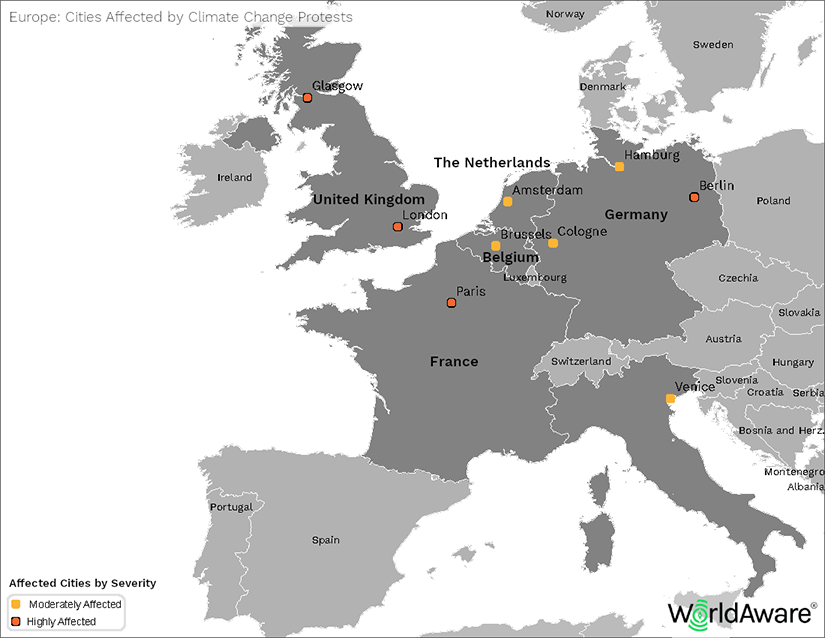
New actors have emerged on the eco-activism scene over the past year in response to the increased visibility of climate change effects and a growing public perception that government responses are inadequate. These activists have, in a very short time frame, secured a large number of followers and brought substantial attention to the threats posed by climate change. Greta Thurnberg, a 16-year-old climate activist from Sweden, who began protesting outside the Swedish parliament in August 2018 to raise awareness on the need for immediate action to combat climate change, has over 2 million followers on Instagram and has attracted worldwide attention. Extinction Rebellion, a climate movement formed in October 2018, already has 250,000 followers on Instagram and has chapters all over the world. In the world of political activism on Instagram, this number of followers is significant, and has also grown rapidly; they have each amassed hundreds of thousands of followers in less than a year. This demonstrates interest among the population in following these types of accounts.
Both Thurnberg and Extinction Rebellion have directly or indirectly contributed to various climate activism actions. Students from across Europe, inspired by Greta, have protested every Friday since August 2018 under the motto “Fridays for Future” and gained traction when they skipped school for a day to take part in large demonstrations calling for action on climate change. Extinction Rebellion has staged disruptive actions in multiple counties, but primarily in the UK. The UK protests include blocking roads during rush hours and a demonstration in front of the Scottish Parliament when some activists chained themselves to street poles. Other, smaller grassroots organizations have undertaken similar actions. Smasscruiseshit, a small group of activists from Germany, used boats to block a large cruise ship in the port of Hamburg, Germany as they demanded curbs on the emissions caused by the cruise industry. Additionally, thousands in Venice protested the environmental damage caused to the Venetian lagoon by cruise ships.
So far, although disruptive, these actions have not caused significant property damage. Most of the actions are advertised on social media, which allows travelers to be warned in time to avoid disruptions. However, with momentum on the side of climate activists, actions are likely to become larger and more disruptive in the long and medium-term. This larger scale of action will likely cause it to be more difficult for travelers and businesses to avoid disruptive actions undertaken by climate activists.
Future of the Movement
Growing participation and frustration with the lack of results that peaceful activism is producing may undermine climate activism’s commitment to non-violence. The central grievance of many climate activist groups, the notion of a climate catastrophe that could result in food shortages, drought, and tens of millions of ecological refugees, has strengthened and encouraged the activists’ perceived need to act attention and more visibility. This resolve could lead eco-activists to undertake more drastic actions such as engage in sabotage, arson, and usage of improvised explosive devices against governments and large corporations, especially corporations that cause significant pollution and or contribute to the perceived climate catastrophe. More radical elements of the climate activism movement would commit to these sorts of attacks to draw more attention and visibility to their cause. Such attacks would become more likely if demands for more climate protection are not met. Travelers should avoid all protests as a routine security precaution and to mitigate associated disruptions. Those in the Europe should follow alerts for demonstrations and activities that might cause disruptions to supply chains. It would also behoove companies to monitor disruptive climate activism events in countries where they have assets.
]]>Start the Conversation
The reality is that many areas of the world still heavily discriminate against the LGBTQ community and criminalize expressions of sexuality. Travel and risk managers do not necessarily need to know the sexual preferences or sexual identities of their travelers to counsel them about the cultural and societal attitudes present at their destinations. Presenting a comprehensive overview in a matter-of-fact manner can side-step the need to pry into a person’s personal life while also setting up an environment conducive to deeper conversations and questions as necessary.
Understand LGBTQ Health Risks
Healthcare options may be especially limited for transgender individuals, who may need specialty medical care at their destination. These individuals may struggle to find needed medications or obtain a refill should they run out. Anti-hormone transition drugs suppress levels of testosterone to allow estrogens to take prominence but may have adverse effects on the heart. LGBTQ individuals may encounter challenges finding medical care and may be dissuaded from providing a complete medical history in areas that present a high threat for LGBTQ patients.
Most countries restrict the amount of medication travelers can enter with according to the length of the stay. In many instances, a maximum of 90 days of prescription medication may cross borders.
For expatriates, having a doctor’s note on letterhead, with the patient’s full name, medication name, dosage, and reason are required for refills and importation of prescription medication to many countries. The reason (diagnosis) may be especially challenging if traveling to a conservative country with a known low tolerance for the LGBTQ community and may present security challenges.
Surgery of any kind increases the risk of blood clots during flight. LGBTQ patients who have recently undergone surgical procedures should ensure adequate time between surgeries and flights. Some hormone therapies (especially estrogens) also place patients at risk for deep venous thromboses (DVT): blood clots that form in the legs and may become life-threatening if the clot or part of the clot travels to the lungs.
In more socially liberal countries, unconscious bias from healthcare workers may lead to substandard care. LGBTQ individuals need to be prepared to encounter these attitudes and be able to advocate for their care and proper treatment. Risk managers and travelers should research cultural tolerances and potential biases to determine if an advanced arrangement with a “preferred” treatment center is necessary.
Key Takeaways
Ensuring the safety of your LGBTQ personnel and students starts with a conversation. Transgender travelers require a duty-of-care policy that helps them prepare for the challenges they may face abroad. Ensuring the safety and health of these unique travelers is a corporate responsibility.
About WorldAware
WorldAware provides intelligence-driven, integrated risk management solutions that enable multinational organizations to operate globally with confidence. WorldAware’s end-to-end tailored solutions, integrated world-class threat intelligence, innovative technology, and response services help organizations mitigate risk and protect their people, assets, and reputations.
Here are a few stats around business travel:
- 20% loss of overall productivity due to travel
- 92% higher risk of obesity for those traveling more than 21 nights per month
- 6.9 hours of productivity lost per trip due to stress
- Strong correlation between frequent business travel and physical and behavioral health risks
Travel Stress Index: The Hidden Costs of Business Travel, CWT
Let’s talk about a few key things that you can do as a business traveler to help reduce stress:
Hydration…Yes, Again
From a personal health perspective, you already know how important staying hydrated is, but are you doing it? The typical water target of half your body weight in ounces is a great place to start, but the key is in actually implementing this so that you are drinking water throughout your day. Make sure that you are drinking purified water, as you want to help your body to detoxify. You either use a filter or you body will become the filter.
Proper Breathing
Proper breathing means that you are breathing deeply, down below your belly button (you might put your hand there as you practice), while keeping your chest relatively still. Try inhaling for 4 seconds, hold for 4 seconds and exhale for 4 seconds. This will help to activate the calming side of your nervous system (called the parasympathetic nervous system) and reduce stress in a big way. In fact, all of the best stress reduction systems (e.g. Tai Chi, Yoga, Qi Gong…) have deep breathing at their core.
Best Fuel Possible
Most people that own an expensive car would never think of putting the cheapest fuel in it. Your body is WAY more valuable than any car, so make sure that you are giving it the best fuel possible. I understand that there are times when it makes sense to cheat and eat the not-so-good-for-you foods, and that’s OK…as long as it’s in moderation. Shoot for the 80/20 rule (80% of the time eating as healthy as you can).
What does that look like given our culture’s fascination with the diet trend of the month? In general, eat things that grow. My recommendation is the Mediterranean diet as it’s stood the test of time. The trick is to eat:
- Good quality fruits and vegetables (organic where possible)
- Whole grains (very small amounts, if any) and
- Healthy fats (natural ones – coconut oil, avocado, olive oil, walnuts, macadamia nuts…). Also make sure to get your Omega 3 essential fatty acids from fish, flax or other sources. Whenever you see the word essential with regard to nutrition it means that your body can’t make it on its own…you have to eat it. These particular fats are crucial to building healthy cells in your body.
- We really don’t need as much protein as you might think (depending on your lifestyle), so add some in the form of beans, nuts, lentils (if vegetarian) and/or good quality meats (organic, grass-fed) or eggs..
Stress Management
The reality is that we cannot control what happens to us, but we do have a big say in how we respond. Your first go-to response to any major stressors should be to breathe deeply. This will go a long way in helping your body process whatever is going on. Each of us has a favorite activity (or non-activity) that helps us to release stress. Examples include yoga, cooking, running, reading, etc. The key is to make sure you have this activity scheduled on your calendar and keep the commitment, as this is a priority, especially these days!
While I list cooking and reading as possible stress reduction activities, please know that movement is a requirement for true stress reduction. While it’s great to rest your brain with these types of activities, your body really wants to move. This doesn’t mean that you have to schedule an hour at the gym (though there are definitely benefits to weight lifting, aerobic exercise…), as simply walking can be all that you need to help with stress reduction. Many events already give us this option as we are walking quite a bit!
The other factor to consider about stress is technology. Yes, there are the typical social media challenges around looking at other people’s highlight reels that can move you toward frustration with your life, but I’m talking about something else. The EMFs (Electro Magnetic Frequencies) that are invisible yet have a HUGE impact on your body.
Our bodies are way more electrical/energetic than we know and are sensitive to the constant barrage of these waves (think Wi-Fi, cell signals, cordless phones…). Your best approach is to keep your phone away from you as much as possible, and if you must keep it in your pocket, put it in airplane mode. This especially applies at night, where you’ll want to put your phone in airplane mode and keep it at least six feet away from your head. This one thing alone can improve your sleep.
Another great way to balance EMFs and help you body to recharge is to get outside into the sun, with bare feet on the earth. I know this might sound a little strange at first, but there is significant science that shows that we need the frequencies from the planet to function at our best. Give it a try and let me know…just 15 minutes a day can go a long way in helping you balance challenges such as anxiety or inflammation. You might consider doing this at a break when you are at the event.
Clean Your Filters
Your body is designed to filter out the toxins that you encounter in your everyday world. However, your body was NEVER designed to deal with the unbelievable amount of toxicity on our planet today. The main sources of toxicity are from:
- The food we eat – pesticides, herbicides, GMOs (Genetically Modified Organisms), heavy metals, additives, preservatives, etc.
- The air we breathe – pollution, huge increase in pollen, mold, artificial scents (think plug-ins, candles…), etc.
- The water we drink – prescription drug residues, heavy metals, chlorine, fluoride, etc.
- Prescription drugs – these are often stored in your body for longer than you know
Your body is always trying to cleanse itself, but when it gets overloaded, it can result in issues with your organs of detox (liver, kidneys, colon…).
Consider working with a natural health practitioner to begin a detox program to get things started on the road to better wellness.
Travel
Travel adds a new level of stress to what we’ve already covered and requires a few more healthy choices. You must plan ahead to reduce as many travel stressors as possible. Some examples include:
- Bring food/water with you if you can – especially when driving. This helps with the inevitable roadside stops that can result in unhealthy snacks.
- Be sure to pack some “just in case” supplements that you might need to help with issues around sleep, illness and digestive challenges.
- If you are driving, consider getting a bottle of good quality peppermint essential oil. This can be very helpful to smell if you start to feel drowsy when driving.
Your body is always trying to heal itself…all the time! Our mission is to make life choices that will support this and give it what it needs (nutrition, air, water, movement…) and take away things that are hurting it (low quality foods, shallow breathing, sitting all day, dehydration).
When you care for yourself, you are not only looking out for your own health, but you’re also putting yourself in a position to perform best for your team, customers and the overall event success.
]]>SAFETY AND SECURITY
Global Business travelers may enjoy the fact that the hotel provides a complimentary breakfast and reliable Wi-Fi, but what they value most is a better sense of security when they travel on behalf on their organizations, according to a joint survey conducted by American Global Business Travel and the Association for Corporate Travel Executives. Security and safety concerns are growing at a significantly faster rate than worries about other topics including work-life balance issues, traveler-centric technologies and alternative suppliers.
DUTY OF CARE
There is also a growing awareness on the part of organizations in the United States of the legal, moral and ethical obligations they owe their employees under the complex and sometimes vague principles of Duty of Care. Corporate security, travel managers, human resources, and other key stakeholders must understand the notion of Duty of Care in the context of business travel in order to ensure that their companies are making reasonably informed, good faith, rational efforts to protect their employees as they travel.
The elements of a comprehensive traveler safety program that meets Duty of Care best practices will vary among organizations, depending on size, number of traveling employees, destination risk ratings, medical concerns and a variety of other topics. However, there are elements of a successful program that apply to every organization.
BEST PRACTICES
Key stakeholders within the organization must meet on a regularly-scheduled basis to examine existing travel polices to determine if any improvements need to be made. A thorough examination of the plans may reveal vulnerabilities, including resource gaps. In some cases, plans may need to be expanded. Other companies may lack any substantial travel safety procedures, and entirely new plans must be developed. Plans and policies should cover both routine travel and emergency incidents, including accidents, medical emergencies, natural disasters, emergency evacuations, and violent incidents.
The ability to track personnel as they travel is another vital component of the traveler safety program. Many travel management programs rely on multiple third-party Company Managed Travel Providers (CMTP) to book travel and provide situational awareness of employees. A common problem with this system is that it only tells the company where the employee is supposed to be, not where they are. Travelers are often forced to make last-minute changes to their itinerary, and will often book their own travel, without notifying the CMTPs of the changes. Providing the traveler with a GPS-based personnel tracking system may be an option for those companies looking for a more effective way to maintain accountability of their travelers.
A risk assessment should be conducted prior to every trip, regardless of destination. The assessment should not focus solely on the country’s Risk Rating. As attacks in the UK, Belgium, France, Canada and the United States have shown, all countries are susceptible to acts of violence, not just those with a High or Elevated Risk Rating. Additionally, definitively assigning a Risk Rating can be difficult, as risk is largely based on individual perspective and context. Employees should be encouraged to take an active role in the risk assessment and travel planning process so that they fully understand any known or suspected risks associated with their destination. Providing education and training to employees is another critical component of the system.
The purpose of the training program is to develop the employee’s skills and knowledge, so they can perform their duties with minimal or no interruptions because of risk, security or medical-related issues. Providing training to employees empowers them to make informed decisions regarding their personal security and safety, helping keep them safe while adding another layer of liability reduction for the company. Elements of a successful training program include general traveler safety and security information, conflict avoidance and response, emergency planning, and worst-case scenario procedures.
Should all mitigation efforts prove unsuccessful, and a traveler is involved in a critical incident, a comprehensive safety system helps ensure that they are provided with timely support and realistic options that work to minimize harm and distress, provide critical support, and brings the employee home safely. The ability of the organization’s Crisis Management Team to move quickly to provide support such as personnel accountability, crisis notifications, and the activation of emergency response systems such as medical support and evacuation cannot be overstated.
GLOBAL GUARDIAN SERVICES OVERVIEW
MEMBERSHIP OVERVIEW
Global Guardian utilizes a subscription-based pricing model. Clients pay an annual membership fee to have Global Guardian as their designated travel security and duty-of-care provider and to access its 24-hour Operations Center, team of security advisors and intelligence analysts, global tracking and monitoring platform, network of highly-vetted security providers, and comprehensive suite of security, medical, and aviation services. This subscription also includes all of Global Guardian’s non-custom and basic travel intelligence products and emergency incident notifications.
GLOBAL TRACKING AND MONITORING
Global Guardian tracks and precisely locates clients anywhere in the world. The company uses special purpose cellular and satellite tracking beacons and smartphone applications that provide real-time GPS position information for clients, allowing them to call for immediate assistance in the event of an emergency. Linked to an extensive network of highly skilled in-country security teams, Global Guardian’s 24-hour Operations Center monitors clients as they travel and can direct security assets to respond as needed in real-time. Global Guardian also monitors local and regional current events and provides clients with information about their security and safety situation while they travel.
EMERGENCY RESPONSE
Global Guardian maintains emergency security response teams in over 91 countries. These teams are notified to the presence of client travelers in their area and stand by to respond immediately to address client emergencies. All support is coordinated and closely directed by Global Guardian’s 24-hour Operations team to ensure rapid and high-quality response to a wide range of potential situations.
INTELLIGENCE SUPPORT
Global Guardian provides its clients with detailed travel intelligence products, real-time security alerts, and highly customized intelligence and due diligence products in support of any unique information requirement. Non-customized support and security incident alerts are included in the proposed package.
GLOBAL GUARDIAN AIR AMBULANCE – AIR MEDICAL TRANSPORTATION AND REMOTE MEDICAL SUPPORT
Global Guardian Air Ambulance, a division of Global Guardian, provides its clients with best-in-class air medical transportation
membership programs. These programs provide true no-cost air medical transportation to members who are injured or become ill while traveling. Unlike insurance, members have no deductibles or no claims forms, are not subject to complex restrictions for use and choose their US or Canadian destination hospital.
Global Guardian also provides emergency medical support through board certified, US-based emergency physicians that are available around-the-clock to travelers through the Global Guardian Operations Center. These physicians conduct remote diagnosis and ongoing treatment management of travelers’ injuries or illnesses, and direct patients to vetted local medical facilities as needed.
GLOBAL TRANSPORTATION AND SECURITY SERVICES
Global Guardian offers a full range of personnel-based security support to its clients. Such support includes secure transportation, security agents, full-scale executive protection details, and event and facility security management. All services are fully customizable to meet client need and are closely coordinated by Global Guardian’s 24-hour Operations Center at-all-times.
EMERGENCY AND CUSTOM AVIATION
Global Guardian supports its clients with comprehensive customized aviation capabilities. Be it for emergencies or customized specialty aviation needs, Global Guardian’s aviation team can access a wide range of aircraft operating around the globe to ensure the right assets are available when needed.
PHYSICAL, CYBER SECURITY, COUNTER INDUSTRIAL ESPIONAGE ASSESSMENTS, POLICY DEVELOPMENT AND TRAINING
Global Guardian provides detailed physical and cyber security and vulnerability assessments, security and travel safety policy
development, and highly customized training programs for its clients.
Facility assessments are conducted domestically and abroad and are aimed at helping clients identify threats to their employees and operations. Such assessments are often paired with cyber evaluations of client site network security. Following an on-site assessment, Global Guardian prepares comprehensive deliverables detailing its findings and makes recommendations for how best to strengthen the security culture and physical and cyber infrastructure on site. Global Guardian can then assist in implementation of those recommendations.
One of the most common recommendations is the improvement or whole-cloth development of security and travel safety policies in support of a client’s workforce. If requested, Global Guardian’s team will work closely with to determine its objectives in policy work, and craft highly customized products that exactly mirror its requirements and corporate culture.
Lastly, no facility security plan nor safety policy is complete without some measure of training on how that plan and policy are implemented. As with its policy development work, Global Guardian prepares and executes highly customized training programs closely tailored to client objective and culture. Such courses include general travel safety, active shooter preparedness, and policy specific training.
GLOBAL GUARDIAN SENTRY – VIDEO SURVEILLANCE MONITORING
Global Guardian Sentry, a division of Global Guardian provides video monitoring and Virtual Guard services in support of client facilities, operations and residences. Global Guardian’s 24-hour Operations Center is staffed with highly trained surveillance analysts who can assess potential threats and respond in real-time to minimize unauthorized activity at client sites. Specific services include event driven, interactive video monitoring, active threat emergency response monitoring, and virtual guard tours. On request, Global Guardian will conduct no-cost testing of any existing camera systems to ensure compatibility and then provide facility specific service options and pricing.
This article is part of our Conference Materials Library and has a PowerPoint counterpart that can be accessed in the Resource Libary.
HospitalityLawyer.com® provides numerous resources to all sponsors and attendees of The Hospitality Law Conference: Series 2.0 (Houston and Washington D.C.). If you have attended one of our conferences in the last 12 months you can access our Travel Risk Library, Conference Materials Library, ADA Risk Library, Electronic Journal, Rooms Chronicle and more, by creating an account. Our libraries are filled with white papers and presentations by industry leaders, hotel and restaurant experts, and hotel and restaurant lawyers. Click here to create an account or, if you already have an account, click here to login.
]]>Vaccines
Last-minute travel can affect which vaccinations a traveler is given prior to departure. Immunity generally takes two weeks to develop after vaccination, so individuals leaving during that window may not be completely protected from disease. Many travelers will have received standard routine vaccinations such as measles-mumps-rubella vaccine, polio vaccine, varicella vaccine, tetanus-diphtheria-pertussis vaccine, and seasonal influenza. However, if travelers are not completely up to date, the first or additional doses of these vaccines can be administered.
Certain vaccines that are given in multi-dose series can be protective after a single dose, which can be administered to last-minute travelers. Travelers can then complete the recommended series for these vaccinations upon return. Furthermore, some vaccines can be administered on an accelerated schedule and some series can be started before travel and completed after travel. Extended stay travelers or expatriates should receive guidance on clinics at the destination where their vaccination series can be completed. Bear in mind, however, that some vaccines do not have an accepted accelerated vaccination schedule.
The yellow fever vaccine is required by many countries in certain situations and must be administered at least 10 days before arrival at the destination country. Travelers may have to rearrange travel to accommodate this time frame or risk difficulty entering their destination. Further, travelers to the Hajj must obtain a visa that requires proof of meningococcal vaccine at least 10 days prior and less than three years before arriving in Saudi Arabia.

Food and Water Safety
Under the umbrella of basic health precautions, food and water safety are critically important. To avoid the risk of general foodborne illness, travelers should follow routine food hygiene practices. Ensure that food is properly handled and prepared. Wash raw produce before eating. Despite the cultural allure of many local cuisines, consider avoiding raw meat dishes, undercooked or raw fish and shellfish, and unpasteurized dairy products, which frequently harbor bacterial and parasitic pathogens. These precautions become even more important in areas where tap water is generally unsafe for consumption. Additionally, even in areas where water is potable, consider drinking bottled or purified water whenever possible, because travelers often develop diarrhea when exposed to the unfamiliar microorganisms in water from a new location.
Insect Precautions
The most common protection against vector-borne diseases is the use of insect repellents, most of which include DEET. Repellent should be applied to the neck, wrists, and ankles, while avoiding contact with the eyes, nose, and mouth. When applied to the skin, these repellents can last from 15 minutes to 10 hours, depending on the climate, the formulation of repellent used, and the effect of the specific repellent on specific vector species. Effects can be longer-lasting when applied to or impregnated into clothing.
Individuals should consider wearing long sleeved, light-colored shirts and pants to protect against mosquitoes, sandflies, and ticks. In tick-infested areas, pant legs should further be tucked into socks and heavy boots when walking through rural or forested areas. Additionally, clothing, bags, and other belongings should be examined thoroughly for ticks before entering the home, and individuals should bathe and conduct a full-body tick check within two hours of returning home, if possible.
Finally, individuals should avoid places and times when vectors are most active. For example, people can stay indoors during peak biting hours, such as dusk-to-dawn for malaria-carrying mosquitoes. Individuals can avoid walking in wooded areas with tall grass or underbrush where ticks are found and avoid contact with fresh water where schistosomiasis occurs. If such freshwater contact cannot be avoided, authorities recommend that individuals wear protective boots. Because several vector-borne diseases can be transmitted by contact with blood, secretions, organs, or other bodily fluids, individuals in affected areas should practice personal precautions and consider the safety of local blood supplies. Furthermore, in areas where Chagas disease or tick-borne encephalitis are endemic, individuals should avoid potentially contaminated food items.
Travel Health Kit
A medical first aid kit will help with minor injuries and give you a supply of common medications that may be difficult to acquire during travel. Medical kits should be easily accessible. If taking air travel, keep your first aid kit in your carry-on luggage; however, you may need to store sharp components in checked luggage due to security measures. Customize your kit to fit your travel (for example, trekking will pose different needs than visiting a city). Be sure to include supplies such as medications taken on a regular basis, over-the-counter pain relievers, antacids, bandages, antiseptic, cotton swabs, tweezers, scissors, disposable gloves, extra pair of eyeglasses or contacts, saline, sunglasses, thermometer, first aid quick reference card, and addresses and phone numbers of area hospitals or clinics. Additional supplies may be needed for outdoor/adventure travel, traveling with children, or other special cases.
Conclusions
Travelers – particularly those on urgent business – may not have the recommended four to six weeks prior to departure to consult with a travel medicine provider for the best preventative measures. Even with only a short window before leaving, travelers should seek advice from a travel medicine specialist. Travel medicine providers can brief the traveler about risks in the country and possible medications, vaccinations, and other precautions to take while abroad. Prior to departure, expatriates or those on extended-stay should consult medical providers for advice about equivalent medical care. Additionally, basic health precautions, insect precautions, food and water safety, and carrying a travel kit can help protect any traveler from health risks and are even more important for last-minute travelers.
Is an employer liable to an employee who gets injured or injures someone else while using an electric scooter for business purposes?
Aside From Angry Pedestrians, What Could Go Wrong?
According to a recent article in The Washington Post, emergency room physicians in seven cities reported an increase in severe accidents after the devices launched to broad acclaim across the country earlier this year. Denver physicians also reported to The Denver Post that they are seeing increased visits.
Confusion may be part of the problem. As The Denver Post story suggests, the laws for operating e-scooters are not well known. They also vary from location to location. In Denver, for example, e-scooters are classified as “toy vehicles” and are not allowed in bike lanes or in general traffic. In California, e-scooters may not be ridden on sidewalks and must be ridden on the street or in bike lanes.
Some critics question the safety of the devices themselves, saying some fleets are poorly maintained by “a loose-knit flock of amateur mechanics.” Compounding the problem, e-scooters are left outside in all kinds of weather and are vulnerable to abuse by the public.
Moreover, the newness of the devices means operator error is likely. Education is up to the scooter provider and varies from company to company. Some scooter companies provide basic safety information on labels on the scooters themselves. Others provide information on their apps. Review of the app and agreement to certain safety conditions may be required before operating an e-scooter.
Despite these challenges, e-scooters may be around a while. Companies like Uber and Lyft are investing significant sums in this new form of transit. Many people are excited by this option for sustainable and economical car-free commuting. Companies like Google are providing e-scooters to their employees for business use. It is inevitable that employees in cities with the devices will use them on the job.
Legal Risks
Generally, workers’ compensation insurance doesn’t cover injuries sustained by an employee while commuting to a fixed place of employment, but can cover injuries that occur while traveling on work-related business (travel in the course and scope of employment). When employees travel between offices, to and from meetings, or run errands for their employer, it doesn’t matter if they are in a car, on an e-scooter or on foot.
Employers can also be held vicariously liable for accidents and injuries their employees cause others while traveling in the scope of their job. Injured persons may have limited recourse against the e-scooter companies — user agreements limit users to binding arbitration and/or disclaim liability – which may lead some injured persons to look elsewhere for relief.
Is Scooting While Intoxicated A Thing?
As a result of the risks, some employers have already taken steps to protect employees from injuries related to the use of e-scooters, e-bikes and bike-share systems. One approach is to adopt a policy that prohibits e-scooters and bicycles (propelled or otherwise) for business use and clearly states they are barred during working hours. Those who wish to allow their use may find that their existing vehicle-use policies can be extended to the use of such devices.
Provisions to borrow from vehicle use policies may include statements that:
- Employees must know and abide by all applicable laws and regulations;
- Employees are responsible for all citations received;
- Headphones, earphones, and cell phones may not be used during operation;
- Only devices with the required, functioning safety devices (lights, reflectors) may be used on company business;
- Users must have a valid driver’s license;
- Passengers are not allowed; and
- Users are responsible for being in control of the device at all times so as not to endanger the safety of themselves or others
Employers with large campuses may want to identify where such devices may and may not be used and parked.
In instances where local government codes fail to address safety issues (e.g. helmet use, speed limits), employers may address these issues in their policies. For example, a policy might state that the speed of devices shall be limited to a prudent rate for the conditions. A policy could require that helmets—either the employees’ own or helmets provided by the company—must be worn and must meet appropriate safety standards. A general prohibition against participating in any activity that reasonably presents a risk of injury to persons or damage to property while using a device may cover stunts, intoxication and a lot of other ground.
Any policy should be sure to distinguish the proper use of medical devices and devices used by persons with disabilities.
It won’t be long before other new transportation technology is on the scene, including self-driving cars. Employers need to be aware of what technologies their employees are using for business and set reasonable terms for use.
About Fisher Phillips
Employers often must take a stand: in court, with employees and unions, or with competitors. Fisher Phillips has the experience and resolve to back up management. That’s why some of the savviest employers come to the firm to handle their toughest labor and employment cases.Whether it’s a class action involving thousands of potential class members, a jury trial with exposure in the millions, or a union organizing effort or strike that could cripple a company, employers with their choice of employment lawyers choose Fisher Phillips to handle their most difficult and dangerous cases.
Some hoteliers embrace reasonable foreseeability as a mitigation backstop – in other words, “If we don’t perceive or acknowledge a specific threat, we’re not responsible for the fallout.” But times are changing. Threats against hotels have grown and proliferated, and totality of circumstances (aka, “totality of events”) is a real phenomenon – in other words, “there are copious examples of hotel violence, and, therefore, we are on notice.” Hotel attack statistics, which demonstrate totality of circumstances, are critical to mitigate hotel violence via intelligence-driven physical security, well informed liabilities policies, clearly-defined insurance coverage, and safety/security-minded hotel development.
Hotel Violence
The “sky is not falling.” Hotels around the world are not being razed to the ground on a weekly basis. Having said this, hotel violence happens every month, globally. The World Economic Forum’s ͞”Travel and Tourism Competitiveness Report, 2017″ recently asserted, regarding tourism and hotels, that, “geopolitical insecurity is the new normal.” At the same time, STR Global reports that the hotel sector has expanded 17% over the past decade. (“STR: Global hotel inventory has grown 18% in 10 years,” Hotel News Now, 27 March 2018). Combined, these two issues signify increased hotel risk in an uncertain world. More pointedly, hotel attack statistics demonstrate that from 2010-end 2016, there were anywhere between two and 15 hotel attacks every month, globally. These included high, medium, low, and no casualty events.
Who are the belligerents? Statistics tell us that they are terrorists, criminals, political action groups, and people with mental problems. In the US, for example, data says criminals accounted for over half of hotel violence during the 2010-end 2016 timeframe. In contrast, in Asia, terrorists were responsible for most hotel violence, and most of that was Islamist jihadist driven.
Aside from the Mandalay Bay shooting, there have been scores of high-profile hotel attacks in the past few years, including:
- Sousse, Tunisia: 2 hotels, the 5-star Hôtel Imperial Marhaba, and the 3-star Soviva Resort Hôtel, 38 killed, 39 wounded
- Bamako, Mali: the 4-star Radisson Blu hotel, 20 killed, 7 wounded, 170 hostages
- Ouagadougou, Burkina Faso: the 4-star Splendid Hotel, 30 killed, 56 wounded
- Grand-Bassam beach, Ivory Coast: impacted 6 hotels, namely the 3-star L’ Etoile du Sud Hotel, 19 killed, 33 wounded
- Manila, Philippines: active shooter-arsonist-robber, the 5-star Maxims Hotel and the Resorts World Manila casino, 37 killed, 70 injured
- Kabul, Afghanistan: the 3-4 star (est) Inter-Continental Hotelin Kabul, 40 killed, 22 injured
At US hotels in the 2010-end 2016-time frame, there have been several terrorist bombings, multiple protest-riots, numerous shootings (including active shooters), and a throng of instances of explosives brought into hotel rooms – shades of Mandalay Bay. A few examples are:
- Charlotte, NC: Black Lives Matter protest turned riot impacted 7 4-5-star hotels, 1 killed, 32 wounded at/near/around hotels
- New York City: Al Qaeda bombing, New York City, 2 hotels impacted, primarily the 3-star Townhouse Inn of Chelsea, 31 wounded at/near/around the hotel
- Los Angeles, CA: shooting at the 4-star The Standard-Downtown LA, 1 killed, 3 wounded
- Orlando, FL: active shooter, 2 hotels impacted, the 3-star Comfort Inn and Suites Convention Center, and the 4-star Westgate Lakes Resort and Spa, 2 killed, 1 wounded
- Chicago, IL: shooting, 4-star Palmer House Hilton Hotel, 1 wounded
Lawsuits Aside from the human and material costs, hotel violence sometimes results in lawsuits. Below are several examples:
- £ 3 million-pound plaintiff victory (settlement, rough cost estimate, exact amount undisclosed), Will Pike, Taj Mahal Hotel negligence alleged RE: the 2008 Mumbai, India attacks
- Ongoing civil lawsuit against TUI over the Hôtel Imperial Marhaba attack (previous suit RE: negligence over EU “duty of care” did not apply to tourists who voluntarily went on holiday in a dangerous area; interestingly, it can be argued that this was opposite of the impetus behind the Pike lawsuit)
- $200,000 suit for a hotel shooting in Chicago, current status UNK
- $6 million plaintiff victory over a sexual assault at a hotel in Boston
- $8 million plaintiff victory over inadequate crisis management regarding a deadly hotel stabbing in Texas
- $ damages to be determined, plaintiff victory over a physical assault, Humphries Vs. NY-NY Hotel-Casino, Las Vegas
In each lawsuit, the hotels argued that they could not have predicted the specific, violent episode in question was going to happen – reasonable foreseeability – and, therefore, they were not liable. In all but one case, the Taj Mahal, there was no intelligence warning that an attack was forthcoming. Government intelligence had indeed warned of the Mumbai attack, and reportedly, the hotel did little, if anything, to prepare for it, which is one reason the defendants settled the case.
In most other cases, the plaintiffs successfully argued that, in one form or another, the defendants had experienced some type of similar hotel violence in the past – totality of circumstances – and they should have been prepared for it.
The stabbing case in Texas ruled against the hotel for, among other things, its lack of effective crisis response. While not specifically referred to as totality of circumstances, the ruling spoke directly to the hotel’s ill preparedness, which infers it was oblivious to real world hotel violence and how to deal with the consequences.
The Humphries Vs. NY/NY case has caused some lawyers to assert that the hotel industry is facing a shift away from reasonable foreseeability to totality of circumstances.
Craig Drummond, a lawyer in the Humphries case, recently said, “In order to show that a business had knowledge that a future incident would occur, you do not have to show that the exact same incident, like a shooting or a fight, previously occurred. The standard is now that you only need to show a general likeness of prior events that would put the business owner on notice. (“Court ruling could help Las Vegas shooting victims suing MGM,” Las Vegas Review-Journal, 30 April 2018.)
Robert Eglet, a key lawyer in one of the MGM Mandalay Bay lawsuits, echoed this, asserting, “It will be much more difficult for MGM and Mandalay Bay to resolve these cases without going to trial or settling. We can show through the totality of the events at MGM properties around the world that this is something that could happen and was reasonably foreseeable, and they had a duty to provide adequate security and didn’t.͟ (“Court ruling could help Las Vegas shooting victims suing MGM,” Las Vegas Review-Journal, 30 April 2018.)
Hotel attack statistics
Data and case studies on hotel attacks can help hoteliers understand the hotel threat environment – the totality of circumstances – which, in turn, can aid them in developing security, liabilities, insurance, and property development mitigation strategies. For example, if data and case studies reveal that, in the US, the vast majority of hotel violence results from crime, then hotel lawyers and insurers can reduce what might be lopsided reliance on government programs such as the Department of Homeland Security’s SAFETY Act (Support Anti-Terrorism by Fostering Effective Technologies) and TRIPA (the Terrorism Risk Insurance Program Reauthorization Act), and instead develop appropriate physical security tactics, andbuy insurance policies that name criminal violence as specific perils. Similarly, if data trends indicate that terrorism is the impetus behind hotel attacks in Asia, then hoteliers can investigate various countries’ government insurance programs (broadly referred to as Pool Reinsurance, or “Pool RE”) and include them in their mitigation strategies. In another example, bombing trends in Asia – or the rest of the world, for that matter – can help hoteliers undertake appropriate counter terrorism physical security measures where appropriate such as car bomb inspections bays, K-9 inspections, setback, and the like. Overall, data on hotel attacks can help hoteliers become proactive, widen their mitigation options, and energize inhouse decision-making.
Conclusion
Wrapping it all up, while court decisions are never 100% anchored to precedent trends, there is, nonetheless, a pattern demonstrating that hotels cannot consistently depend on reasonable foreseeability as a mitigation strategy for hotel violence. Totality of circumstances has gained traction. And why not? Totality of circumstances helped motivate the US hotel industry in the countrywide offensive against bedbugs that began in earnest in 2016 and is continuing in 2018. Similarly, on 6 September 2018, the American Hotel and Lodging Association held a major conference featuring some of the biggest hotel brands declaring a widespread campaign to protect hotel employees from sexual harassment. Doing the same to mitigate hospitality violence, enabled by hotel attack statistics and case studies, is the next logical – and critical –step.