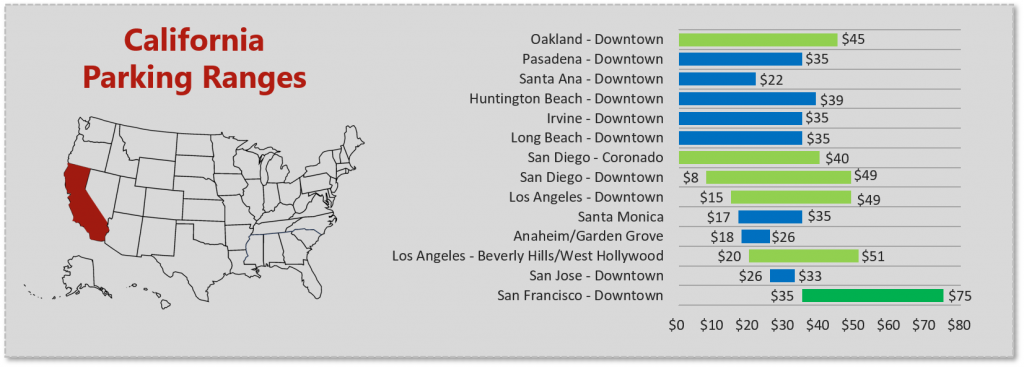
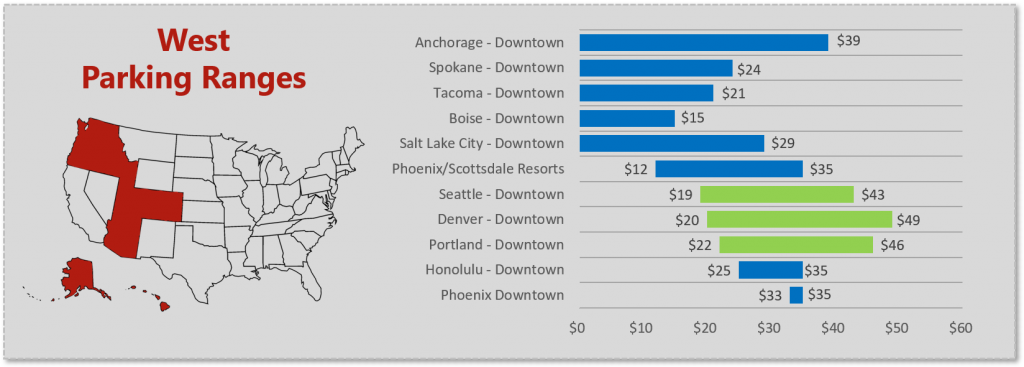
This summer we completed our first annual survey of typical overnight parking rates nationwide. Not surprisingly, the highest rates for parking are generally found in New York City, including the $95 parking rate currently charged by The Plaza. Nightly rates at luxury and upper-upscale properties in New York City, San Francisco, and Chicago tend to trend near the $70 to $75 mark. By comparison, most other city centers offer overnight parking at a bargain or do not charge for overnight parking. Also note the following findings:
- The following data reflect valet parking charges; if self-parking is an option, we have found these hotels discount the valet parking rate by $10 to $15 dollars on average.
- Hotels that reported free parking (when the range in the table begins with $0) are generally located on the fringe of central business districts, and not directly in the center of downtown.
- Luxury and upper-upscale hotels fall at the upper end of the range, whereas midscale hotels fall at the lower end of the range.
- Bold green reflects the cities with the highest overnight parking charges, whereas light green still reflects high parking rates, but not at the nation’s peak level.
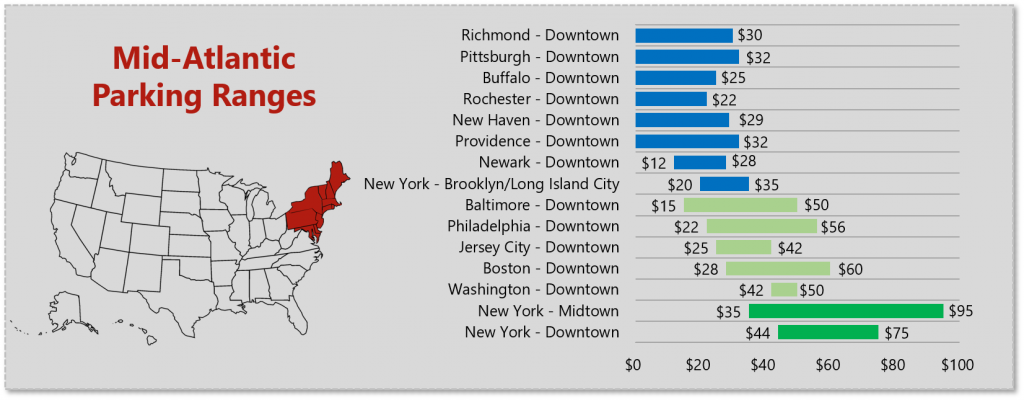
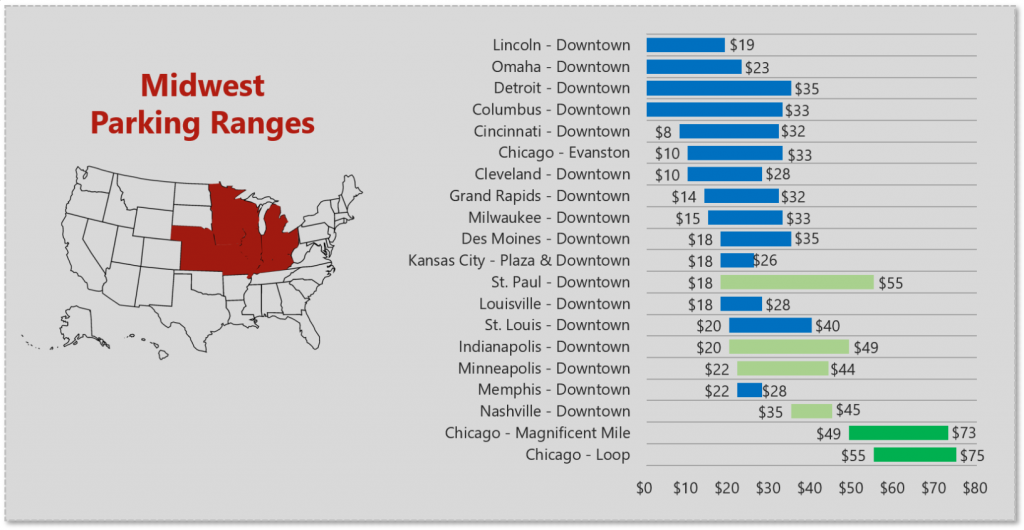
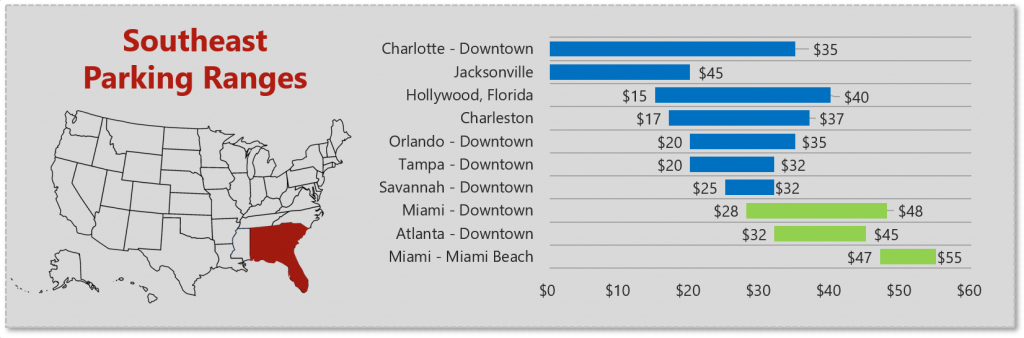
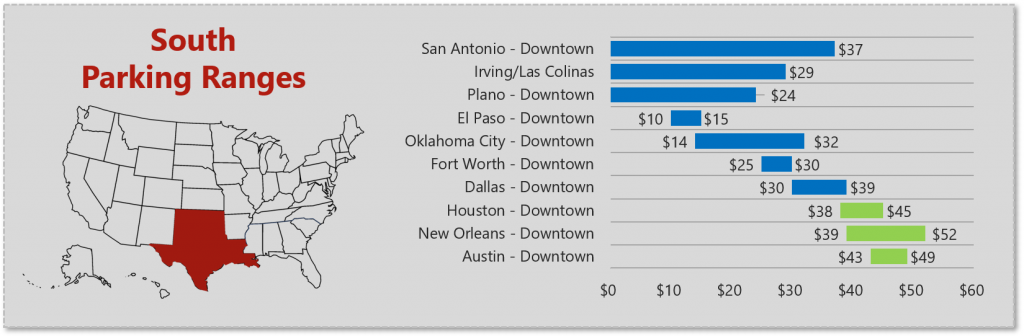
From a valuation perspective, be careful when comparing properties in city centers. A few may have major parking components (abnormal for a market) that skew a value high on a per- key basis, compared to another similarly-sized property on solely a room-count basis. It is important to inquire about garage utilization by daily and monthly users, daily parking rates, monthly contract rates, and the trends in all of the above over the last several years.
Data collection assistance provided by HVS team members Yi Ann Pan, Ziggy Hallgarten, and Bryanna Andersen.
]]>The group saw the need for common financial language and to be able to compare statistics. It would also evolve that it would help in valuing hotels which at that time was done primarily by CPA firms. The common statistical formulas such as Revenues and Costs per Available Room and per Occupied Room, what denominator a re used for calculating various percentages evolved to be critical benchmarks for owners and managers even today.
In 1961 the American Hotel & Lodging Association (AH&LA) published a separate edition for small hotels. That format, which was very similar to the larger hotel edition, was updated twice until 1996 when the two systems were combined. Until last year the copyright for the USALI was still owned by the HANYC but it recently sold the copyright to the Hotel Financial and Technology Professionals Association (HFTP) which is the successor to the original Accountant’s Committee.
Periodic revisions of the USALI, which are prepared every four to seven years, are written by the Financial Management Committee of the AH&LA. It is comprised primarily of representatives of hotel ownership and management but also includes representation from accounting, franchising, CBRE/PKF Research and Smith Travel Research.
The USALI is referenced in numerous types of agreements relating to the hotel industry such as mortgages, management agreements, franchise agreements, leases, and other documents. Important provisions in these agreements are tied to the USALI and impact base fees, termination, incentive fees, and other triggers or thresholds for both parties. Usually it is prefaced with the words, “the latest edition” in order to require the parties to keep current with latest standards. The latest edition is the 11 the Edition published in 2014. As in the past, it is consistent with US GAAP. Future editions are expected to become consistent with the International Financial Reporting Standards (IFRS).
Why are there successive editions? Because the hotel industry, its investors, the market and technology keep evolving. Think of things like market segmentation, distribution channels, telephone technology, guest room technology, etc. Also think of changes to payroll for instance, hotels don’t have Seamstresses anymore but we do have Social Media Managers.
This article is part of our Conference Materials Library and has a PowerPoint counterpart that can be accessed in the Resource Libary.
HospitalityLawyer.com® provides numerous resources to all sponsors and attendees of The Hospitality Law Conference: Series 2.0 (Houston and Washington D.C.). If you have attended one of our conferences in the last 12 months you can access our Travel Risk Library, Conference Materials Library, ADA Risk Library, Electronic Journal, Rooms Chronicle and more, by creating an account. Our libraries are filled with white papers and presentations by industry leaders, hotel and restaurant experts, and hotel and restaurant lawyers. Click here to create an account or, if you already have an account, click here to login.
]]>The capitalization rate, which is a factor that represents both the risk and the desired return associated with a given asset, is in actuality difficult to influence. Firstly, returns are market driven, which means that the capitalization rate is determined by market forces, not the will of owners. Secondly, it is the buyer’s perception of risk that influences the capitalization rate, meaning that external factors are again the determining factor. As such, the only meaningful way of putting any kind of downward pressure on the capitalization rate is to keep the property well maintained and regularly updated with properly kept maintenance records, thereby providing a buyer with a greater degree of certainty about what they are buying. This decreases some of the risk that is baked into the implied capitalization rate; however, the most benefit this can yield is that the resulting capitalization rate is as low as market forces will allow. In other words, proper maintenance is more a means of keeping the capitalization rate from increasing than a way of actually lowering the capitalization rate.
Given the intractability of capitalization rates, net income is the only viable lever that a hotel owner or manager can use to drive a significant increase in value. There are two mechanisms that an operator can employ to increase a hotel’s net income: increase revenues and decrease costs.
Revenue
At a root level, a hotel’s revenues depend on accommodated demand and rates charged (occupancy and ADR). Today, however, computerization and data analysis are creating efficiencies that were undreamed of even a decade ago. With yield-management programs, a skilled revenue manager is now able to assess a hotel’s optimal pricing structure on virtually an hourly basis. To drive value, an operator does not need to know all the intricacies of how these programs work; once installed, the tools for maximizing a hotel’s revenue are in place. Regular discussion and review of the strategy with management should serve to keep everyone’s eye on the ball.
The same yield-management discipline can be used in the food and beverage department and in other operating departments. Is the menu meeting the needs of guests? Can the market pantry or the gift shop provide items that will not only enhance the guest experience but also drive additional revenue? Are there spaces in the building that might be leased out that could generate revenue and provide additional services to guests? When it comes to maximizing yield, small changes can produce powerful results, and creativity can be rewarded.
Departmental Expenses
Labour accounts for a large component of departmental costs, so a savvy hotelier is always on the lookout for ways to efficiently manage the labour cost of the operation. Efficiencies can often be found in the staffing of the front desk and housekeeping departments—staffing levels should be tied to hotel occupancy. Efficiency gains can also be realized by cross-training staff between departments. For example, training the same staff in front desk and food and beverage or laundry operations can create a more flexible, streamlined workforce, allowing the management to shift some front desk staff to other functions during slow periods, instead of having an over-staffed front desk and bringing additional staff in to complete other hotel functions.
The supplies in the hotel should also be given careful consideration. Do the guestroom amenities add to the guest experience, or are they just an incremental cost to the daily operation? Anything that costs money but which does not add meaningful value to the guest experience should be excised.
The laundry department also represents an opportunity for reducing costs. An operational review will ensure that the proper equipment is in place to efficiently handle the volume of laundry. Alternatively, the laundry contract should be reviewed to ensure that the most cost-effective rates are still being achieved since the time of tender.
On the food and beverage side of the business, it is important that food costs are closely monitored and effectively controlled. Tweaking the hours of the establishment to better mirror guest demand is one way of limiting the cost of labour associated with operating this department.
These are just a few areas to consider when looking at reducing departmental costs. A closer look at any of them could reveal other opportunities to drive value.
Undistributed Operating Expenses
Administrative and general expense has a large component of the management and accounting staff, so looking at the payroll in this category is important. Are the functions and procedures that take place in the accounting department necessary for smooth operations, or are there redundancies or inefficiencies that can be eliminated to reduce labour costs? It is also a good idea to examine management incentives/bonuses—they should be effectively tied to the hotel’s income performance so that the GM’s compensation is aligned with the goal of driving asset value.
Marketing is also a major expense where there are opportunities to institute controls. Marketing initiatives should be carefully monitored to ensure that marketing dollars are generating a good return on investment. In this era of digital marketing, fairly modest spending on marketing can often translate into big returns. PR strategies can also be implemented to broaden the reach for the hotel with very little incremental cost.
Property operations and maintenance is a key area of the hotel that a sophisticated buyer will pay particular attention to during their due diligence process, so the maintenance team needs to be involved as a key part of any strategy to increase the value of a hotel. For many buyers, deferred maintenance is a red flag signalling a risky purchase, which reduces the number of offers that might be made. To get the highest possible offer for an asset, it is essential to keep good maintenance records and a tidy maintenance shop, in addition to well-cared-for public spaces and guestrooms.
The final undistributed operating expense to consider for improvement is utilities. Technological innovation is constantly creating new ways to substantially reduce the energy costs associated with hotel operations. An energy audit can identify areas where key savings can be made—this is essential for hotels with energy-consumption costs that are above industry norms.
Fixed Expenses
By their nature, fixed expenses offer little opportunity for adjustment, but the few channels that are available for intervention can yield considerable gains. A tax professional can determine if there is an opportunity to appeal an asset’s property assessment, which can be highly lucrative. The insurance coverage also deserves a proper review to not only assess any potential savings but also confirm that appropriate insurance is in place to mitigate risk to the operation.
Conclusion
Although it may seem that a hotel’s value is fixed and determined solely by external forces, in actuality there are hundreds of opportunities to make adjustments that increase the profit margin, resulting in an exponential improvement in value.
A CPTED survey identifies exposures within the enterprises built and natural environments and recommends enhancements that reduce risks to people, operations and facilities. The survey is a component of the risk assessment process and focuses on identifying human behaviors, along with other potential exposures within specific areas. Survey findings identify solutions that, if implemented, enhance the safety and security of various industries
CPTED involves the design use of five strategies: natural surveillance; natural access control; territorial reinforcement (using buildings, fences, pavement, signs and landscaping to express ownership); activity support (placing the right activity in the space); and maintenance (addressing the inspection, repair and general housekeeping of the space). Accepted CPTED industry strategies are described below:
- Natural surveillance. This strategy involves reducing crime by decreasing target opportunities in a space/area by placing physical features, activities and people to maximize visibility.
- Natural access control. Channeling people into, alongside or out of spaces/areas and deterring entry elsewhere along the boundary are the concepts of this principle (through the judicial placement of entrances, exits, fencing, landscaping and lighting); This concept denies access to crime targets and creates a perception of risk for adversaries.
- Territoriality. Territoriality notifies users and non-users of the boundaries of a space/area or facility. It creates a psychological deterrent to crime by notifying users of the space/area/facility that they are being watched and that the community is the space/area/facility for purposeful activities.
Other CPTED Elements
Maintenance and activity support aspects have been added to CPTED as of recent, but are often treated separately because they are not physical design elements within the built environment.
- Activity support. By encouraging authorized activities in public spaces, guests of a business understand its intended use. Criminal acts are discouraged, and an increase in safety and security of the immediate area is realized.
- Maintenance. Care and upkeep demonstrates expression of ownership for the intended purpose of the area. A lack of care indicates loss of control of a space or area and can be a sign of tolerance for disorder. The Broken Windows Theory is a valuable tool in understanding the importance of maintenance in deterring crime. Broken Windows theory proponents support a zero tolerance approach to property maintenance, observing that the presence of a broken window will entice vandals to break more windows in the vicinity. The sooner broken windows are fixed, the less likely it is that such vandalism will occur in the future. Establishing care and maintenance standards and continuing the service preserves the intended use of the space/area. CPTED maintenance and care standards also safeguard the best interests of the community and the enterprise.

The details of the horrific Mandalay Bay attack offer a clear example to the hospitality industry as to just why proactive – and often covert – security standards must be tested and implemented. The name of the game is to detect, deter or neutralize an attack before it takes place. In order to do this, smart technology and keen intelligence gathering techniques must be deployed. Well-versed analytical personnel must have unfettered access to the intelligence and offer management their professional assessment as to the threat at hand.
We note here some of the suggestions we have provided in recent conversations with hotel security personnel or in hospitality sector security associations or meetings. If implemented, these revised or updated protocols could further enhance security for guests and employees. But to be effective, they each must be studied by the hotel operator, assessed for potential legal challenges and training must be provided to employees.
Again, with the emphasis on being proactive and getting out in front of potential threats, consider the following measures:
- Ensure your hotel security personnel participate in any local or regional periodic security meetings with their peers from other hotel chains. That is a great way to share intelligence on criminal or extremist trends affecting the tourism sector and hotels in particular. Even though a particular crime trend may not have reached your geographic area or if it is affecting only brands that do not reflect your demographic, you still need to be aware of it and prepare for it. And don’t keep the intel to yourself-your staff needs to be aware and that includes employees at the worker-bee level.
- Ensure to provide meaningful and recurrent training to staff with frequent guest interface regarding possible indicators of suspicious activity. Probably the most important line of defense here is the housekeeping staff, which enters guest rooms on a daily basis, often more than once. Staff should be trained to recognize the signs of potentially unsafe or illegal activity, such as telltale signs of human trafficking or prostitution. The accumulation of several unmarked boxes, bags or suitcases inconsistent with the number of guests assigned to the room is something noteworthy as well. Any unusual or foul odor or the presence of an unknown substance in any area of the room should trigger a notification to security personnel. Again, we are reminded of the saying “see something, say something”.
- Room entry when the “do not disturb” sign hangs on the outside of the guest room should not be interpreted as a mandate not to enter. Each hotel operator will have to establish its own policy with regard to periodic staff entry and as to how long is too long before a knock or a call from the front desk is made. Entry policy should be closely coordinated with the hotel’s legal counsel.*
*Key Point: Consider adding a waiver or consent clause to your guest registration paperwork in which the room occupant specifically agrees to periodic entry by hotel staff to ensure the safety of all guests and employees.
- A clear “know your customer” policy should be established. In other words, hotel security staff or employees at the operator’s corporate headquarters need to implement a cursory background check of certain arriving guests who may seem out of place in the establishment. For example, if you are welcoming a 20 year old man or woman into your hotel and if the room is in the $400-$500 per night category, you may want to do a “Google” check or similar check on the name. The person has done nothing wrong so far and possibly never will, but in general, a 20 year old does not fit the demographic of a hotel charging that amount of money per night. You may find nothing, but you may find that the person has had a series of run-ins with the law. That of course does not necessarily mean he or she should be excluded from the premises, but it’s a nice heads up to the staff.
- The use of check-in/check-out apps has to be the most frustrating technology out there for hotel security personnel. It allows the guest to have virtually no interface with the hotel staff in that check in and out is performed electronically and billing is automatically charged to the credit card on file. Room entry is achieved with a downloaded code or barcode, which the guest holds in proximity to a reader made a part of the exterior door lock. If you use this technology at your hotel, ensure that you DO have interface with the guest during his or her stay by knocking on the door occasionally or by placing calls to the room.
There are many other proactive ways to enhance security at hotels and large venues. Various technologies are commercially available which permit iris scanning or facial recognition. Of course, with the adoption of new techniques, some privacy is given up. Individual brands and properties will determine the right mix for their locations, based on customer demographics, prior incidents, crime and terrorism trends and importantly, the law. Privacy cannot and should not be total in a hotel as guest and employee security and safety must be taken into consideration.
]]>Earlier this year, a Texas teenager, who was the unfortunate victim of human sex trafficking, filed suit in Harris County Texas against several well-known hotel chains as well various truck stop operators and the website “Backpage.com,” which was alleged to advertise and promote illicit sexual encounters. All businesses named were sued under the theory that these entities profited from the illegal sexual exploitation of a minor. This suit, along with a similar lawsuit filed last year in Pennsylvania, provides yet another cautionary tale to the hospitality industrythat the specter of human trafficking at one of its facilities raises significant concerns of civil liability to both the owner and operators of those facilities.
According to the Texas complaint, “Jane Doe,” alleges that she was involuntarily thrust into the shadowy underworld of human trafficking just prior to her 16th birthday. The suit claims that she was instructed by her trafficker to rent a hotel room, or have her exploiter rent a room, using payment methods which did not provide any identification to the hotel, i.e., a pre-paid credit card or cash. Once inside the room, Jane Doe maintains that she was sexually exploited by a “constant flow of male customers.”
Despite the warning signs raised by pre-paid credit card or cash payment, the complaint alleges that hotel management and staff failed to intervene, contact the police or otherwise prevent the sexual exploitation of minors at their properties. Essentially, Jane Doe contends that her continued sexual exploitation was caused when hotel management “turned a blind eye to the plague of human trafficking and the sexual exploitation of minors at their locations.”
Jane Doe filed her complaint utilizing a Texas law which creates liability for individuals or entities that intentionally or knowingly benefit from participating in a human trafficking venture for damages arising from such trafficking. This statute mirrors the federal Victims of Trafficking and Violence and Protection Act (TVPA) which creates civil liability for various entities, including hotels, restaurants, casinos, and bars, which “knowingly” benefit from human trafficking if it can be demonstrated that they knew or should have known about the illegal venture.
Significantly, liability under the TVPA is not restricted to hotels. Rather, as noted above, a trafficking victim may bring an action against “whoever” knowingly benefits from participation in a venture that they knew or should have known involved sex trafficking. Accordingly, businesses such as restaurants, casinos, bars, and nightclubs must take heed of the potential consequences of ignoring the signs of human trafficking.
Lawsuits filed under the TVPA, or a state counterpart, are likely to cause the hospitality industry much consternation and concern simply because of the significant potential monetary exposure and public relations/reputational risk associated with having a brand connected to human trafficking. The question thus becomes: what is a hospitality related business to do in order to properly shield itself from potential liability?
Since the legal standard is whether the business knew or should have known that human trafficking was occurring in connection with its business, it puts the onus on the business to be self-aware of what is occurring on its property. It is, therefore, crucial that a comprehensive and thorough anti-trafficking compliance program be implemented, including but not limited to, training hotel management and people working in specific departments, such as security, housekeeping, and the front desk, to identify and report human trafficking when they suspect that the illegal activity is occurring in their workplace.
One state has already taken action to ensure that businesses in the hospitality industry have a heightened responsibility in self-policing their properties. In 2016, Connecticut became the first state to pass legislation mandating that all hotel workers receive anti-trafficking training. The training instructs workers on sex and labor trafficking, the legal responsibilities of lodging establishments and practical tools for identifying signs of sex and labor trafficking. The workers also learn how to deter traffickers, report suspected crimes and help victims connect with services. Although Connecticut was the first state to require mandatory training, it is anticipated that it will not be the last. In fact, there is currently a bill before the Florida legislature which would limit the liability for businesses that can demonstrate that they had training and protocols in place to identify trafficking.
The scourge of human trafficking is not going away and will, unfortunately, continue to be synonymous with the hospitality industry. Accordingly, it is imperative that members of the industry proactively engage in anti-trafficking compliance and training in order to combat exploitation and reduce potential civil liability.
Disclaimer: This post does not offer specific legal advice, nor does it create an attorney-client relationship. You should not reach any legal conclusions based on the information contained in this post without first seeking the advice of counsel.
]]>But rather than dwell on the seemingly endless armed conflict, it’s worthwhile to take a look at the hotel bombing and emphasize once again the critical need for hotel operators to implement effective and smarter security controls aimed at detecting and neutralizing non-traditional or “asymmetric” threats to the sector. It is not enough to erect barriers outside the entrance or to have guests pass through a magnetometer, however inconvenient that may be. A wholesale rethinking of hotel security practices is necessary. Such re-crafting of the process cannot be accomplished using a “one size fits all” approach; rather, a carefully calibrated protocol must be established and implemented for each property bearing in mind the threat environment in which the establishment operates.
Last September’s mass shooting at the Mandalay Bay Resort in Las Vegas was a clarion call for the hospitality sector to take a more proactive approach to security. In the case of Las Vegas, or other tourist and convention oriented cities in the US and Europe, current protocols need to be strengthened and non-traditional measures need to be adopted. A good look at who is checking in-what is he or she about and does the potential guest mesh with the established demographic-should be priority questions. In other words, if you operate a five-star hotel and charge close to $400 per night, should you be concerned about a 21-year-old man who checks in alone? What about a single female of the same age group? And a group of student back-packers?
The answer in our view is while no particular concerns may be apparent at the time of check-in, a person who clearly looks out of place in your property may be a good candidate for a little extra screening. What type of screening can be accomplished to allay concerns about the person? Consider adopting some of the following measures:
- While not possible in every case, a cursory background computer check (think “Google”) can reveal issues that a reservationist, front desk clerk or your hotel website cannot detect at the time of reserving. Has the person got multiple weapons arrests or has he or she been cited for domestic abuse? Has the person been of concern to authorities for any reason, but especially for making threats? You are not required to house each and every guest that has a reservation and you can unilaterally cancel a reservation for security concerns.
- Has the person requested some sort of non-routine access? For example, if the guest asks for a tour of the kitchen or the back office “just to see how it operates”, that is a flag that should immediately go up. Is this pre-operational “casing”? Is it an attempt to discover employee or security protocols? Is there a robbery being planned? Many questions should come to mind here. Clear disobedience of security protocols-for example, unauthorized access to the roof, electrical boxes or rooms, fire alarms or equipment-could be cause for immediate expulsion from the property.
- That “do not disturb” sign on the exterior door handle of the guest room is of concern if it is present for more than say 8 hours at a time. The guest could be amassing weapons, as in the case of the Stephen Paddock, the Las Vegas mass shooter. Or, there could be other illegal activity taking place therein, such as prostitution or drug dealing. Remember that frequent entries and exits of unregistered visitors to the room could be a sign of either. Ensure that hotel management knocks on the door periodically, even if the sign is present. You are not required to provide 100% privacy and safety concerns must take precedence.
- More frequent, overt or covert security rounds are a great source of intelligence on guest activity. Try checking in an “undercover” employee as a guest and allow him or her to mingle with others at the bar, in restaurants, at the pool. The astute person will be able to gather a good deal of information on guest activity. An overt addition to security could be the use of trained canines to detect explosive compounds or the chemical remnants of gunpowder, which is left on weapons, magazines and clothing as a by-product of shooting ammunition. If this had been done in Las Vegas, the presence of dozens of weapons and thousands of rounds of ammunition in the shooter’s guest room might have been discovered in time to prevent the tragedy.
Finally, if you do observe or otherwise detect suspicious activity, the hotel has the right to take quick action to ensure the safety of guests and employees. An innocent person who is expelled from the hotel might be able to raise a valid claim against the property, but a reasonable expulsion of someone who just does not seem “right” or is acting in a way incompatible with security may make the difference between a safe stay for all and a tragedy of immense proportions.
There is no hard and fast, right or wrong protocol in implementing non-traditional and proactive security measures at hospitality locations. Those that are most appropriate will be dictated by events on the ground, intelligence gathered, local and national law enforcement liaison and a good deal of thinking outside the box. The important thing is to not rely exclusively on barriers and door locks. As the threat evolves, so must your security protocols.
]]>- Joint Vision/Motivated Parties – A new brand entering the U.S. has to show that it is fulfilling a niche in the market that has not already been captured. Therefore, in developing its first few hotel projects, finding the right location and developer are paramount. The brand needs to be certain that a developer will be (i) able to source a site that optimizes the brand strategy while offering significant visibility of the new brand to the market, (ii) able to complete the project on time and within their budget (to ensure the project is completed), and (iii) committed to the brand vision so that they will be equally focused on building to brand standards. But this requires quite a balancing act. For example, opening a flagship property in New York City under the new brand may provide great visibility but such a location comes with big city challenges such as union relations, greater regulation, greater cost to develop, and potentially longer lead times to open. From the developer’s perspective, it needs to make sure that the company behind the brand has the resources to support and grow the vision for the new brand and the financial commitment to overcome inevitable initial challenges in rolling out the brand so that the brand has a legitimate opportunity for long-term success.
- Brand Investment – Although existing hotel brands typically allocate their overall brand marketing costs to their hotel owners, developers for new brands will often not be willing to bear the costs of ramping up the marketing efforts of the new brand both because of the significant upfront costs to launch a brand and the lack of a sufficient portfolio of hotels within the new brand to reasonably bear the allocated costs. Also, the brand may be looking to invest marketing dollars well outside the locales of its initial branded hotels in order to extend brand awareness, and to create interest for new developers to build branded hotels in other markets. That said, developers of initial brand hotels also benefit from such initiatives, especially if their hotels are located in gateway markets, so such developers may be more motivated to contribute to marketing campaigns that do not have an immediate impact on their local market.
- Developing Vision – Another consideration for new brands is that the brand standards may not yet be fully defined or may be evolving at the time of the initial project development. This may allow an initial developer to be part of developing the brand vision or, alternatively, may allow the developer to request some concessions or changes to the standards for the project. However, this may also cause frustration between the brand and the developer as there is not a defined set of standards for the brand to point to in negotiating the agreements or requesting capital expenditures. This may be true even if the brand is already established in another market outside the US as some changes to the brand standards may be necessary to adjust the brand for the US market or to comply with US laws. To avoid unnecessary tension between the brand and its initial developers and in order to avoid development delays as these conflicts are ironed out, it is important that the brand and the developer agree upfront on what is meant by the brand’s brand standards; such as, whether there are comparable existing hotels the parties can look to in the future that set the quality level of the brand’s standards, the projected competitive set of hotels to the new hotel, and the projected costs of implementing the standards, from a hard and soft goods perspective and from an operational and staffing perspective.
- Brand Resources – Unless the brand is being launched by an established US brand or an established international brand, there may or may not be a larger platform supporting brand services for the initial hotels opening under the new brand, such as technical services, reservations, and purchasing. So the developer may be agreeing to brand services that may be developed in the future, may never be developed or may never grow beyond a small platform or a limited number of properties. For the developer, it is important to ensure that the cost of any centralized services are fairly allocated to the property (i.e., the first hotel should not bear the burden of the entire centralized services or marketing costs for an international brand and the marketing fee should be fairly allocated between US and international marketing efforts). The brand should be sensitive to these concerns and have a strategy for the timing of development of brand resources in the future to present to any potential developers.
- Brand Longevity – One of the biggest considerations for the brand and the developer is what happens if the brand does not grow or somehow misses the mark. If the hotel is not successful, then both parties may want to either end the relationship or reposition the property. It is important for the parties to discuss the parameters for any exit ahead of time as the brand’s and the developer’s interest may not be aligned once the hotel fails to hit projections.
Above all, both the brand and the developer need to keep in mind that working with a new brand is different than working with an established brand and, to ensure that the project and the brand are a success, both sides need to be flexible in addressing the inevitable challenges of launching a new brand.
]]>Some plaintiffs’ lawyers have found a lucrative niche by engaging the services of “testers” – private citizens who go from business to business looking for ADA violations. The law does not require claimants to notify a business of alleged violations so they might fix the problem prior to filing a lawsuit; hence, many businesses are caught off guard when served with the lawsuit. Worse, they will spend thousands of dollars in attorneys’ fees to resolve a case when the cost of actual compliance is very low. In fact, after the costs of enforcing the technical requirements of the law are paid and the lawyers receive their fees, the plaintiff often receives no damages for the case.
A 21st-Century Twist On The ADA
A modern twist on these standard ADA cases is becoming increasingly prevalent. Now people are using this same section of the ADA to bring allegations that business websites are inaccessible to those with disabilities. No longer do testers need to actually visit a brick-and-mortar establishment, but can merely surf on the World Wide Web looking for those businesses with websites that are not accessible for those with disabilities.
In 2010, the U.S. Department of Justice (USDOJ) issued an Advance Notice of Proposed Rulemaking on the Accessibility of Web Information and Services. The purpose: “to establish requirements for making the goods, services, facilities, privileges, accommodations, or advantages offered by public accommodations via the Internet, specifically at sites on the World Wide Web (Web), accessible to individuals with disabilities.” Although the comment period closed in January 2011, the USDOJ has still not published clear guidance or final regulations for the private sector. The latest news suggests that will happen sometime in 2018. For now, though, the lack of clear policy has left the field wide open to unfettered litigation.
The bad news is that the delay in the regulatory process has not slowed the torrent of ADA lawsuits against businesses for alleged failure to provide equal access to web-based services. This means that your hospitality business can be sued by someone who is simply surfing for a lawsuit. You should take steps now to ensure your company’s website is reasonably accommodating those with disabilities.
What You Can Do To Stop The Surfing Suits
Some of the more common website accessibility issues affect individuals with vision or hearing impairments and those who are unable to use a mouse and must navigate with a keyboard, touchscreen, or voice recognition software. Those with visual impairments may need special software to magnify the content of a page, have it read aloud, or to display the text using a braille reader. For those with hearing impairments, the issue is often that audio content on the website does not include closed captioning, or that images do not include captions. You may need to build your website to properly interact with any adaptive software or technology designed for accessibility purposes.
Fortunately, the Web Content Accessibility Guidelines (WCAG) exist to provide web designers with standards for making digital content more accessible to those with disabilities. The USDOJ has made it increasingly clear over the last several years that it considers a website “accessible” if it complies with the standards of the WCAG 2.0 AA. The agency has used this standard in settlement agreements and consent decrees with businesses it believes to have violated the ADA. There is speculation that this will be the standard adopted for the private sector in 2018.
If your company website posts menus, accepts orders, permits customer reviews and testimonials, takes reservations, provides addresses and directions to brick-and-mortar locations, accepts job applications, includes FAQs, has email or chat features, or your business has any other online presence, you should consult with your web designer about ways to make these aspects accessible to those with disabilities. It is both the right and the legal thing to do, and it could save your business the unwanted expense and stress of litigation.
For more information, contact the author at MAnderson@fisherphillips.com or 504.529.3839.
Want to read more about the ADA? Check out these articles:
]]>To address this threat, gig companies can take some relatively easy steps to prevent contractors and departing employees from taking confidential information in the first place, and to protect that information from use by competitors.
Defending Trade Secrets
Businesses in the gig economy create and retain a trove of information that could be valuable in the hands of competitors: customer lists, purchase histories, customer preferences, and all kinds of financial information. And that’s just scratching the surface. Most gig employers have policies restricting employee or contractor use of and access to such information, and most states have laws to protect employers against trade secret theft.
As of 2016, federal law also provides a civil cause of action for trade secret misappropriation. However, in order to recover punitive damages or attorneys’ fees under the law, the Defend Trade Secrets Act (DTSA) requires employees or contractors to be given notice of whistleblower immunities in all agreements dealing with trade secrets and confidential information. Gig businesses should take advantage of the trade secret protections afforded by this new law by reviewing policies and agreements to ensure they comply with the DTSA’s various provisions.
Protecting Relationships
A gig business’s relationships with its customers, contractors, and vendors are among its most valuable assets. Some employees and contractors are expected to develop lasting relationships on behalf of the company. Well-drafted agreements with these individuals should include a provision prohibiting them from soliciting customers, contractors, and vendors – especially those with whom they interact directly – for a reasonable period of time. State laws regarding the validity of non-solicit agreements can vary and can be complicated. That said, an enforceable agreement can be a potent tool to prevent individuals from poaching customers, contractors, or vendors on behalf of a competitor.
Non-Competition Agreements
One of the more sweeping measures a business can take to protect its relationships and confidential information is to ask workers to sign a non-competition agreement. These agreements generally prohibit departing workers from joining a businesses that competes with the company in a specified geographic area for a limited amount of time after their tenure with the company ends. Though a handful of businesses use non-competition agreements liberally, we generally recommend that companies limit these restrictive covenants to higher-level positions. As with the non-solicitation agreements discussed above, state laws vary widely regarding the enforceability of non-competition agreements, so well-tailored agreements are crucial.
Conclusion
With the deluge of stories about data security, now is an opportune time to review and update employment and independent contractor agreements and policies to protect trade secrets, confidential information, and relationships. On this front, an ounce of effort on the front end can save a ton of headaches in the event that an employee or contractor decides to take the company’s valuable information or relationships to a competitor.
]]>